


Conventional loans
Conventional mortgage loans aren’t backed by the government and typically require higher credit scores and lower debt-to-income ratios. They’re classified as either conforming or nonconforming, depending on whether they meet federal mortgage loan limits and terms set by the Federal Housing Finance Agency (FHFA), which oversees Fannie Mae and Freddie Mac.
With a conventional loan, buyers have the option to borrow more money and receive more flexible mortgage terms than those offered with government-backed mortgages. Conventional loans are harder to qualify for than government loans, since they require higher credit scores and lower debt-to-income (DTI) ratios.
There are several types of conventional loan programs buyers can consider in addition to traditional ones:
- Conventional 97: Conventional 97 loans are offered by Fannie Mae to first-time homebuyers for an amount up to 97% of the property value. To qualify for a conventional 97 mortgage, the property must be a single-unit home that will be used primarily as a residence. Conventional 97 loans have fixed rates and carry a term of up to 30 years. Buyers must have a credit score of at least 620 and take a homeownership education course.
- HomeReady: Offered by Fannie Mae to low- and moderate-income buyers who need to buy or refinance a home, HomeReady offers a lower down payment and borrower contribution, more affordable mortgage premiums and a flexible approval process. The HomeReady program allows family members or friends to cosign on your loan. It can also factor in income from other household members to help you qualify. To qualify, your income can’t exceed 80% of the area median income. You need a minimum credit score of 620 to qualify. A homeownership education course is required.
- Home Possible and Home Possible Advantage: Offered by Freddie Mac to low- and moderate-income borrowers, these loans are for one- to four-unit homes, condos, planned unit development homes and manufactured homes. These mortgages require a 3% down payment and credit scores as low as 660. It also has fixed or adjustable rates and carries a term of up to 30 years. Home Possible and Home Possible Advantage differ in the types of properties they cover, available interest rates, required loan-to-value ratios and maximum loan amounts.
» BUYING A MANUFACTURED HOME?: Explore chattel mortgages
Who are conventional mortgages best for?
Conventional mortgages are usually best for prospective homebuyers with a strong credit history, stable income and the ability to make a down payment of at least 5%. Conventional mortgage loans can be used to finance a primary residence, secondary home or investment property.
Conforming vs. nonconforming loans
Conforming loans are mortgage loans that adhere to guidelines set by Fannie Mae and Freddie Mac, which are government-sponsored enterprises. Loans that don’t meet these guidelines are called nonconforming loans.
For 2025, the conforming loan limit for a single-family home is $806,500. Higher limits are allowed in Alaska, Hawaii, Guam and the U.S. Virgin Islands.
Joe Perveiler, senior vice president of home lending at PNC Bank, told us: “Conforming loans meet industry standards set by Fannie Mae, Freddie Mac and the FHFA, including credit requirements and loan-size caps. Nonconforming loans do not need to meet these industry standards and are often used for bigger purchases or unique borrower situations.”
Jumbo loans
“Jumbo loans are a common example of nonconforming loans, as they exceed those spending limits set by the FHFA,” said Perveiler. The exact amount depends on the type of home and the area. With jumbo loans, buyers can finance higher-priced properties, but they must meet stricter qualification requirements.
Jumbo loan conforming limits for 2026
| Type of home | Contiguous states, Washington, D.C., and Puerto Rico | Hawaii, Alaska and U.S. Virgin Islands |
|---|---|---|
| Single-family home | $832,750 | $1,249,125 |
| Duplex | $1,066,250 | $1,599,375 |
| 3-unit property | $1,288,800 | $1,933,200 |
| 4-unit property | $1,601,750 | $2,402,625 |
Perveiler said, “Jumbo loan mortgages go beyond conforming limits set by Fannie Mae and Freddie Mac, which is currently $832,750 in most areas of the U.S.”
“Given the size of these loans, they also typically require higher credit scores, a debt-to-income ratio no greater than 43% and a more than 10% down payment. Jumbo loans do offer more buying power as long as the borrower’s financial profile is in order.”
For a jumbo loan, most lenders will require a 20% down payment, a credit score of at least 700 and a maximum DTI ratio of 45%. You may also be asked to have enough cash reserves to cover the mortgage payments for a period of time.
Fees on a jumbo loan may also be higher than on a conforming loan, especially those based on a percentage of the loan amount, and your interest rate may be higher to offset the additional risk to the lender.
» MORE: Best Jumbo Loan Lenders
Government-backed loans
When a government agency, such as the Federal Housing Administration (FHA), Department of Veterans Affairs (VA) or the U.S. Department of Agriculture (USDA), insures a home loan that’s issued by a private lender, that mortgage is considered a government or government-backed loan. All government-backed loans must fall under the maximum conforming loan limits.
The downside is that even though you might secure a better rate, government-backed mortgage loans have stricter property guidelines and higher fees. Not everyone will qualify, and even if you do, your chosen home must meet specific conditions and price standards.
FHA loans
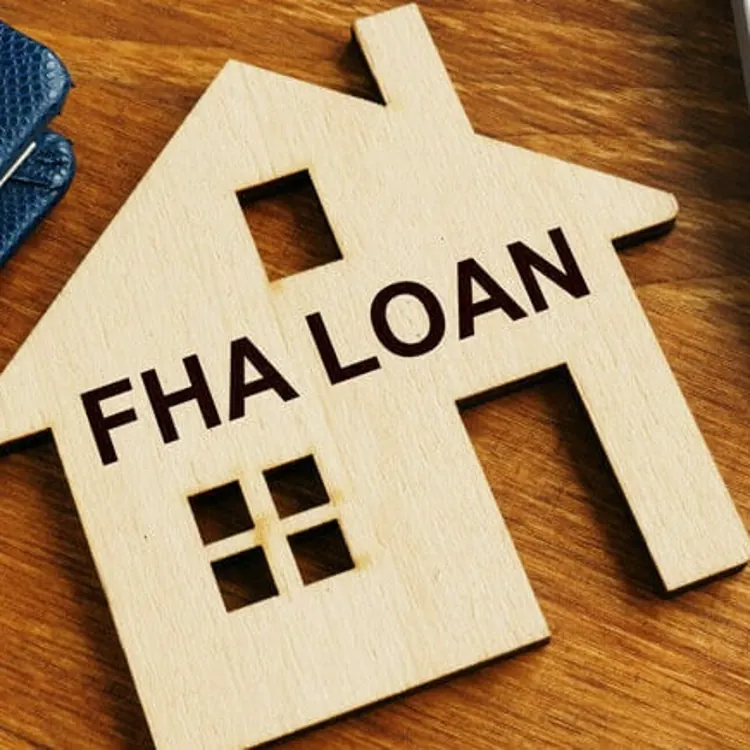
With an FHA loan, you can put down as little as 3.5%, but private mortgage insurance (PMI) is required. If your credit score is below 580, you’ll have to put down at least 10%; however, individual lenders may have their own requirements.
You must have proof of a steady income, have a DTI of under 43% and plan to use the home as your primary residence. There are no income limitations.
Maxwell Koziol, national purchase director at Chase Home Lending, said: "Qualifications will vary by lender, but generally, FHA loans are typically easier to qualify for than conventional loans because they’re backed by a government agency. While FHA loans can be popular with first-time homebuyers, you don't have to be a first-time homebuyer to qualify for an FHA loan. Current homeowners and repeat buyers can also qualify."
» COMPARE: Best FHA Loan Lenders
VA loans
VA loans are available to military members and their families and are backed by the Department of Veterans Affairs. They allow for 100% financing, meaning qualified borrowers don’t need a down payment and don’t have to pay PMI.
To qualify, you must show stable income and, while there are no DTI ratios set by the VA, it’s recommended to keep your DTI under 43%. There are no income limitations, and you can use the VA program multiple times over your life.
» COMPARE: Best VA Lenders
USDA loans
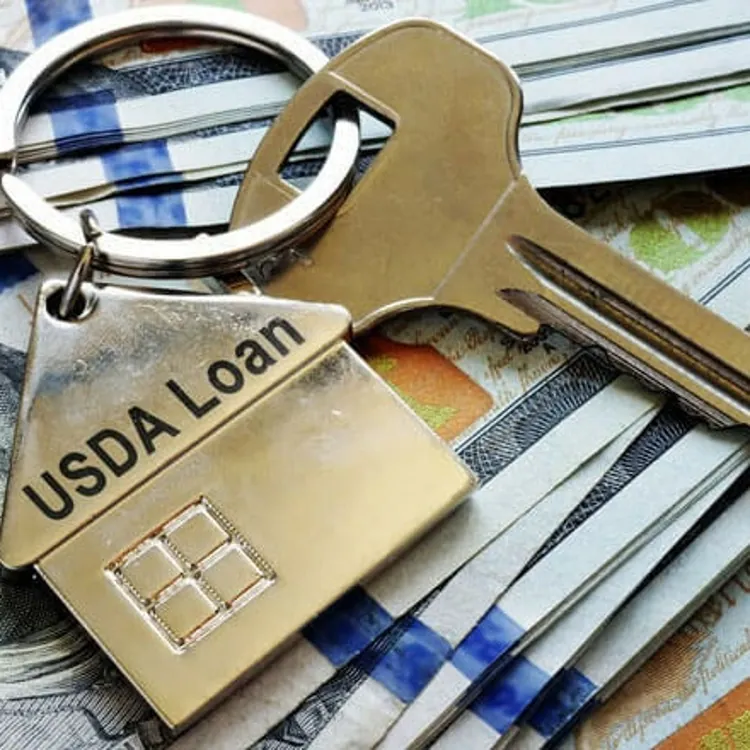
USDA loans, backed by the U.S. Department of Agriculture, are available for properties in eligible rural areas. You don’t have to make a down payment with USDA loans.
To qualify, you must be buying a property in an eligible area, have at least two years of stable income not exceeding 115% of the area's median income and meet the lender's DTI requirements.
» COMPARE: Best USDA Lenders
Who are government-backed loans best for?
If you have low to moderate income or a less-than-great credit score, government-backed mortgages are typically easier to qualify for than conventional mortgage loans. FHA, VA and USDA loans have more relaxed lending guidelines and payment terms, and they might not require a down payment.
Fixed-rate vs. adjustable-rate mortgages
Mortgage loans generally come with either a fixed or adjustable interest rate.
- Fixed-rate mortgages have a consistent interest rate throughout the life of the loan, no matter how the market trends. Fixed rates are preferred by most borrowers, especially when interest rates are low.
- Adjustable-rate mortgages (ARMs) are home loans with interest rates that change based on market conditions. An ARM will have one rate for a period of time and then adjust based on market conditions and the terms of your loan. For example, a 5/1 ARM will have a fixed rate for the first five years of the loan and then adjust once per year after that.
Pros and cons of fixed-rate loans
Pros
- Predictable monthly payments for the entire loan term
- Interest rate stays the same even if market rates rise
Cons
- No payment reduction if market rates fall
- Higher starting rates compared to adjustable-rate loans
Pros and cons of adjustable-rate loans
Pros
- Lower starting rates compared to fixed-rate loans
- Potential for lower payments if market rates fall
Cons
- Monthly payments go up if market rates rise
- Less predictable payments after the initial fixed period
Special mortgage programs
Several special mortgage programs assist borrowers in specific circumstances. Many state and local governments offer down payment assistance or other programs designed for first-time homebuyers. There are also national programs that give assistance to homebuyers of specific ethnic or economic backgrounds.
State programs
Some states offer assistance for first-time homebuyers or individuals in public service jobs, such as teachers or firefighters. These programs can include down payment and closing cost assistance, reduced interest rates or forgivable second loans.
Local programs
Local programs often reflect a community’s needs, like helping buyers in high-cost housing markets or in neighborhoods targeted for revitalization. Eligibility criteria may vary, but they often favor low- to moderate-income households, first-time homebuyers or long-time residents.
Special Purpose Credit Programs (SPCPs)
These programs are designed to increase homeownership among underserved populations. Offered by lenders under the Equal Credit Opportunity Act, SPCPs have more flexible underwriting standards to serve certain groups, including residents of historically redlined neighborhoods.
These programs may consider nontraditional credit histories, such as rent payments. They also provide easier access to down payment assistance, all with the goal of closing the wealth gap in homeownership.
Good Neighbor Next Door
The Good Neighbor Next Door program from the U.S. Department of Housing and Urban Development offers eligible teachers, law enforcement officers, firefighters and emergency medical technicians a 50% discount on the list price of homes in designated revitalization areas.
» SELF-EMPLOYED? How non-QM loans work
FAQ
How do interest rates affect mortgage payments?
The interest rate determines the amount of interest that accrues on the loan balance. The higher the rate, the more interest that will accrue, and the larger your payment will be.
Are government-backed loans easier to qualify for?
Yes, government-backed loans are easier to qualify for. With these types of loans, the government promises to repay the lender for any losses incurred if the loan is defaulted on. Because of this, the lender assumes less risk and is, therefore, willing to relax its lending standards.
What is the benefit of a fixed-rate mortgage?
There are two benefits of a fixed-rate mortgage. The first is that your payment remains the same for the life of the loan, leading to predictable and stable payments. Second, if the market interest rate rises, the interest rate on your loan stays the same.
Why might someone choose an adjustable-rate mortgage?
A borrower might choose an adjustable-rate mortgage if interest rates are high and they expect them to drop. An ARM can also make sense if you don’t plan to keep the property beyond the fixed-rate period, since the introductory rate is usually lower than comparable fixed-rate mortgages.
Article sources
ConsumerAffairs writers primarily rely on government data, industry experts and original research from other reputable publications to inform their work. Specific sources for this article include:
- Citizens Bank, “Understanding a HELOC: draw vs repayment period.” Accessed Jan. 9, 2026.
- Fannie Mae, “Loan Limits.” Accessed Jan. 9, 2026.
- Chase, “Helping put homeownership within reach.” Accessed Jan. 9, 2026.
- Wells Fargo, “FHA Loan.” Accessed Jan. 9, 2026.
- Wells Fargo, “VA Loan.” Accessed Jan. 9, 2026.
- VA.gov, “VA Home Loans.” Accessed Jan. 9, 2026.
- USDA loans, “What is a USDA Home Loan? Complete Guide to USDA Loans.” Accessed Jan. 9, 2026.
- Veterans United, “VA Home Loan Income Requirements for 2025.” Accessed Jan. 9, 2026.
- Veterans United, “Can You Use a VA Loan Twice? A Guide to How Many Times You Can Use a VA Loan.” Accessed Jan. 9, 2026.
- The Mortgage Reports, “USDA Loan Down Payment and Closing Costs.” Accessed Jan. 9, 2026.
- Consumer Financial Protection Bureau, “Special loan programs.” Accessed Jan. 9, 2026.
- HUD, “About Good Neighbor Next Door.” Accessed Jan. 9, 2026.
- HUD, “Federal Housing Administration History.” Accessed Jan. 9, 2026.
- Fannie Mae, “97% Loan to Value Options.” Accessed Jan. 9, 2026.
- Federal Deposit Insurance Corporation, “HomeReady Mortgage.” Accessed Jan. 9, 2026.
- Consumer Financial Protection Bureau, “Conventional loans.” Accessed Jan. 9, 2026.
- U.S. Department of Housing and Urban Development, “203(k) Rehabilitation Mortgage Insurance Program.” Accessed Jan. 9, 2026.
- Fannie Mae, “HomeStyle Renovation.” Accessed Jan. 9, 2026.
- Freddie Mac, “CHOICERenovation Mortgages.” Accessed Jan. 9, 2026.
- U.S. Department of Agriculture, “Upfront Guarantee Fee & Annual Fee.” Accessed Jan. 9, 2026.
- U.S. Bank, “What’s the difference between Fannie Mae and Freddie Mac?” Accessed Jan. 9, 2026.