


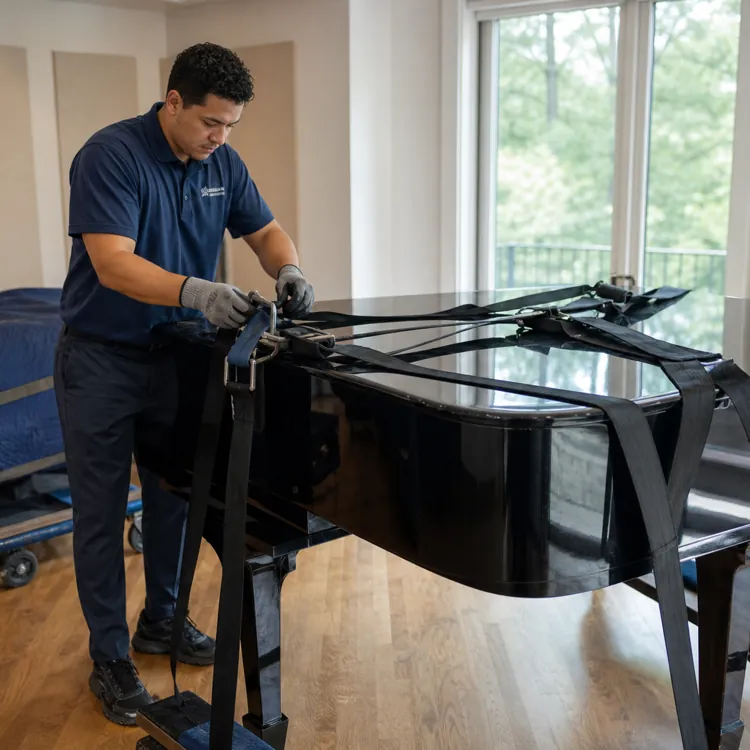
Moving a piano requires careful planning, the right equipment and at least one set of helping hands. Whether you're relocating an upright or grand piano, improper handling can lead to serious injury or costly damage. Follow these expert tips to move your piano safely and efficiently.
Why trust ConsumerAffairs?
Our editors, fact-checkers and moderators work to uphold standards for accuracy, transparency and trust.
Our editorial standards
- Our editorial team reviews and fact-checks all content before it’s published.
- We rely on expert input and trusted sources to verify our articles.
- All articles published must meet our editorial standards and independence policy.
Our review standards
- Our moderation team evaluates reviews to make sure they meet our guidelines.
- We require contact information to verify reviews come from real customers.
- Financial relationships do not influence whether we publish a consumer review.
Key insights
Without the correct equipment, moving a piano can be dangerous for both the movers and the instrument.
Jump to insightPianos can weigh anywhere from 200 to 1,200 pounds, requiring at least two people to move even a small one.
Jump to insightMake sure the dolly you use is rated to hold the actual weight of your piano.
Jump to insightStep-by-step guide to moving a piano safely
When moving a piano without the help of movers, the most important thing to remember is to take your time and plan carefully. Don’t attempt it at the last minute — you could end up hurting yourself or damaging the piano, floors, walls or door frames as you move it from one location to another.
If the following steps feel like too much, consider hiring professionals to handle the heavy lifting for you.
1. Measure your spaces
Measure all doorways, staircases and hallways the piano will pass through. Don’t forget to measure the height of the moving truck as well. Ensure the new space can accommodate the piano before you begin moving.
2. Gather the right equipment
Since pianos are bulky, heavy and delicate, they must be loaded and transported in a way that supports their weight and minimizes damage. Unlike most of your belongings, you can’t simply put your piano in a box or load it into a truck without the right equipment.
At a minimum, you need:
- A moving dolly
- Heavy-duty straps
- Padding, such as moving blankets or furniture pads
- A ramp to get the piano into the truck and up and down any stairs
3. Prepare the piano for moving
How you prepare your piano for moving depends on the type. Whether you have an upright, grand or baby grand piano, your instrument will weigh hundreds to over 1,000 pounds. That’s why it’s crucial to have at least one helper.
- Upright: Close and lock the keyboard lid, cover the piano with moving blankets, and secure it with tape. Slide the straps underneath before lifting and placing it on the dolly.
- Grand or baby grand: Close and lock all lids. Remove the legs using a screwdriver, wrapping them in moving blankets. Have at least one person hold the piano’s body as you detach the legs. Secure it on the skid board before wrapping it in padding and strapping it down.
A piano's legs are vulnerable to breakage, and if you lift a piano by its legs, the weight balance can shift, causing them to snap.”
Never move a piano by its legs. “A piano's legs are vulnerable to breakage, and if you lift a piano by its legs, the weight balance can shift, causing them to snap,” said Kate Hart, a relocation manager at Fantastic Removals.
4. Add extra cushioning, if needed
If your skid board doesn’t have sufficient padding, do the following:
- Fold a furniture pad and place it underneath for added cushioning.
- Once it’s securely on the skid, wrap the piano in moving blankets, securing it with straps, bungee cords or tape. Never put tape directly on the piano, only on your packing material.
- Lastly, use two or three straps to secure the piano to the board, using the existing slots.
5. Clear the pathway
Make sure you have an unobstructed path directly to the truck. This includes moving all furniture out of the way, rolling up rugs and ensuring any ramps are in place and secured.
6. Load and unload the piano
Moving slowly and deliberately, wheel the piano to your loading location and up the ramp into the truck. Ideally, the piano should be loaded into your moving truck first and positioned as close to the back wall as possible. This is the most secure location and will reduce shifting during transit.
Remove the piano from the dolly and strap it to the floor or walls of the moving van. Ensuring it’s strapped down securely is especially important if you’re moving a long distance.
To move your piano into its new space, you’ll basically reverse these steps — don’t forget to clear a moving path ahead of time.
» LEARN: How to pack a moving truck
Specific steps for moving upright pianos
To move an upright piano, you’ll need to take some specific steps.
- Get the right dolly. You need one that can support the size and weight of your piano. A standard dolly holds 400 to 600 pounds, while a heavy-duty furniture dolly holds 800 to 1,000 pounds. Some larger uprights can weigh up to 800 pounds, so make sure your dolly is rated accordingly.
- Get the right straps. You'll need these to hoist the piano on and off the dolly and into the truck. For smaller pianos like a spinet or console (around 200 pounds), straps alone may suffice. For all others, rent or purchase a shoulder harness or lifting belt to bear the weight safely and avoid injury or dropping the piano.
Specific steps for moving baby grand pianos
Grand pianos are significantly larger and heavier than uprights, often exceeding 1,000 pounds, and their shape makes them more difficult to maneuver. Using the right equipment and securing the piano properly reduces the risk of damage.
Secure all piano parts, including lids and covers, before moving to prevent damage.
- Close and lock all lids. This secures the parts and prevents damage before you begin.
- Remove the legs. Use a screwdriver while someone holds the piano's body steady. Wrap the legs in moving blankets and set them aside.
- Place the piano on a skid board. Carefully tilt the piano onto a piano skid board — a padded dolly specifically designed for grand pianos.
- Secure the piano. Use heavy-duty straps and a harness to prevent shifting during transport.
Expert tips for moving a piano
You might have the steps to moving a piano covered, but what about tuning? And can you use the piano’s built-in wheels to move it? We’ve compiled the best expert tips for moving a piano below.
- Rent a piano board: Buying one is expensive, but some moving supply companies rent them.
- Avoid rolling pianos on carpets: “Pushing a piano over a carpeted floor will cause the legs to break because of the extreme weight of the instrument and the surface friction of the carpet,” said Hart.
- Don’t rely on built-in wheels: Many pianos have casters, but these are only for positioning. Rolling them too far can damage the piano and flooring.
- Have at least two strong movers: An extra set of hands is helpful for positioning the dolly and clearing obstacles.
- Tune the piano after moving: Even short moves can knock the instrument out of tune.
- Choose climate-controlled storage if needed: To prevent warping, store pianos in a space between 68 and 70 degrees Fahrenheit.
» CALCULATE: How much do storage units cost?
FAQ
Is it safe to move a piano by myself?
It's possible, but only with the right equipment, including a proper dolly, heavy-duty straps, a shoulder harness and at least one helper (but ideally three or four). If your move involves stairs or tight spaces or you’re moving a 1,000-pound-plus grand piano, hiring a professional is the safer bet.
Is it worth hiring a moving company for a piano?
It depends on the piano’s value and your budget. Moving an upright piano is possible with the right tools, but a grand piano is much more difficult to move without professional help. If you’re concerned about the risk of damage and injury, hiring a moving company to move your piano is worth it.
How much does moving a piano cost?
Professional piano movers charge an average of $275 to move an upright piano and $450 to move a grand piano, according to our survey of 13 piano movers. A long-distance move will run you $500 to $2,000 on average, regardless of the type of piano being moved.
If you’re moving a piano along with the rest of your belongings, a general moving company should be able to quote you a modest upcharge for packing up your piano.
What factors affect the cost of moving a piano?
The cost of moving a piano depends on the piano’s size, the distance of the move and any obstacles along the way, like stairs or uneven terrain. Some movers charge extra for stairs or require additional equipment for difficult moves.
Does moving insurance cover pianos?
Interstate movers must offer two coverage options: released value protection and full-value protection. Released value protection provides minimal coverage, while full-value protection offers more comprehensive — but more expensive — coverage.
If your piano is particularly valuable, it should be listed separately, and additional coverage may be necessary.
Article sources
ConsumerAffairs writers primarily rely on government data, industry experts and original research from other reputable publications to inform their work. Specific sources for this article include:
- Federal Motor Carrier Safety Administration (FMCSA), “Liability & Protection.” Accessed Feb. 17, 2026.
- M. Steinert & Sons, “How to Move a Piano: Professional Piano Movers Are Best.” Accessed Feb. 17, 2026.
- Michigan State University, “The Role of Music in Stress Management.” Accessed Feb. 17, 2026.