|
CONSUMER NEWS RECALLS COMPLAINT FORM SCAM ALERTS |
| Small Claims Guide | Class Actions | Lemon Law | FAQ | Resources | Newsletters | Spanish | |
|
|
![]() |
Supreme Court Upholds AT&T Customers' Right to Day in Court |
|||
|
October 7, 2003
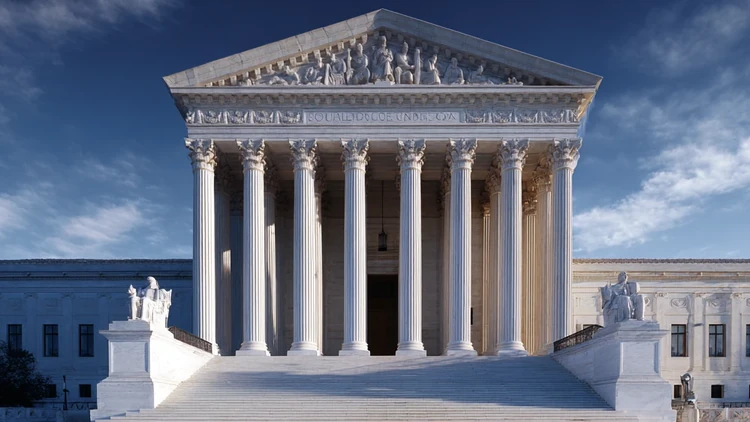
Without comment, the high court yesterday denied review of the Ninth U.S. Circuit Court of Appeals' finding that AT&T's arbitration rules were "oppressive and unenforceable." It is one of several recent cases in which state and federal courts in California have overturned major companies' arbitration rules. The basis for those rulings is an August 2000 state Supreme Court decision that one-sided arbitration programs could not be imposed on consumers or employees. AT&T adopted the mandatory arbitration rules in 2001 for its 60 million customers nationwide. The rules were written in tiny print in new contracts the company mailed to customers, basically giving them the choice to take it or leave it. Further, findings by the AT&T-controlled arbitrators were nearly impossible to appeal. The recent court decisions affect only California customers but are seen as an important development in consumers' struggle to break free of the onerous mandatory arbitration clauses that have been adopted by telecommunications and credit card companies, among others. "This is a great day. The courts have recognized that consumers are still citizens and that human beings have the same legal rights as corporations," said ConsumerAffairs.com President James R. Hood. "Not too long ago, corporations -- which are really imaginary people -- were not even recognized as having 'rights' in the same manner as living, breathing, voting citizens. Over the last few decades, they seem to have waved huge fistfuls of money and convinced everyone that they have more rights than so-called 'ordinary' citizens," he said. The appeals court ruling said AT&T's arbitration rules contained several unfair provisions, including:
The appeals court also rejected AT&T's argument that long-distance phone service must be subject to uniform national standards, saying federal law allows states to use their own laws to protect consumers. |
|||
Back to the top | News |
||||
Advertisement
|
Home |
Rogues Gallery |
Good Guys |
Complaint Form |
News |
Recalls |
Search |
Video |
FAQ |
|
Terms of Use Your use of this site constitutes acceptance of the Terms of Use
Copyright © 2003-2008 ConsumerAffairs.com Inc. All Rights Reserved. |