In brief:
Visa has offered Apple $100 million to become the new network behind the Apple Card, as Apple prepares to replace Goldman Sachs as its issuing bank.
Mastercard, Visa, and American Express are in a heated competition to power the high-profile card, which has around $20 billion in balances and deep integration with Apple’s payment ecosystem.
Apple is expected to choose a network before selecting a new bank, with the outcome potentially shaping the future of its expanding financial services.
Details
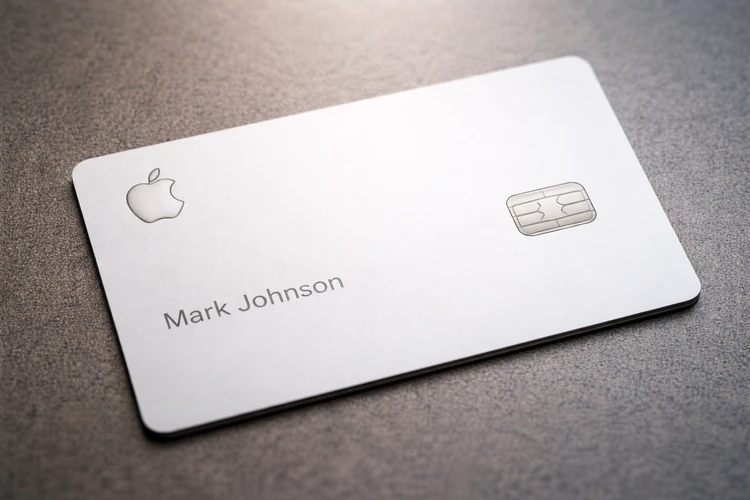
If you have an Apple Card, you may soon see a Visa or American Express logo where the MasterCard logo is right now. That's because a high-stakes battle is underway between the nation’s largest payment networks for control of one of the most coveted cards in consumer finance: the Apple Card.
With Goldman Sachs stepping away from consumer lending and looking to exit its role as the Apple Card issuer, a scramble has emerged among big-name financial institutions to take its place. But behind the scenes, a parallel and equally fierce competition is unfolding among payment networks—Visa, Mastercard, and American Express—each jockeying to power the card’s transactions.
According to sources quoted in a Wall Street Journal report, Visa has made a bold move by offering Apple a roughly $100 million upfront payment in a bid to wrest the Apple Card network partnership away from Mastercard, which currently operates the network for the sleek titanium card. That type of payment is typically reserved for the largest and most lucrative co-branded card deals.
A card worth fighting for
Launched in 2019, the Apple Card has become one of the biggest co-branded credit card programs in the U.S., with about $20 billion in balances. It has long been seen not just as a financial product, but as a key to Apple’s broader ambitions in consumer finance. Its integration with the iPhone Wallet app has made it a central part of the daily financial habits of millions of Apple users.
“Whoever wins the Apple Card deal gets more than just transaction volume — they get a front-row seat to Apple’s growing influence in payments,” said one person familiar with the negotiations.
Payment networks earn fees when purchases run over their “rails,” and Apple’s card sees high transaction volume. But more strategically, the card ties directly into Apple’s broader ecosystem of digital payments, personal finance features, and potential future banking tools.
Who’s competing?
Visa, the world’s largest payment network, is aggressively bidding with an offer Apple hasn’t seen since Costco chose its network a decade ago.
American Express is also making a play, reportedly aiming to become both the issuer and network for the Apple Card — a model it already uses for its own cards.
Mastercard, the current network partner, is fighting to retain its role, and has explored leveraging its fintech platform Finicity to expand Apple’s capabilities, such as letting users view their bank account balances directly within Apple’s system.
Apple is expected to select a new network partner before choosing the next card-issuing bank. Leading contenders for the issuer role include JPMorgan Chase and Synchrony Financial, both of which have extensive experience managing large co-branded portfolios.
Goldman’s Exit
The reshuffling stems from Goldman Sachs’ decision to retreat from consumer lending, including the Apple Card and its broader “Marcus” initiative. Talks to hand off the Apple Card have been ongoing since at least early 2023.
A final decision by Apple is expected in the coming months. Whatever the outcome, the winner will gain more than a credit card — they’ll gain a strategic foothold in the evolving world of Apple-led consumer finance.