NEWS    RECALLS    COMPLAINT FORM    SCAM ALERTS   RESOURCES  
Small Claims Guide   Class Actions   Lemon Laws   FAQ   Newsletters  
Share


Complain about a product or service

Automotive    Education    Employment    Electronics    Family    Finance    Health    Homeowners    Insurance    Pets    Shopping    Travel     Print This     Email This    


NEWS   Latest |  Archives |  Auto |  Cells, etc. |  Computers |  Financial |  Health |  Homeowners |  Parents |  Privacy |  Scams |  Seniors |  Travel

The Earnings Suspense File: Social Security's "Secret Stash"

"Money from Nowhere" Fattens Government Accounts


By Martin H. Bosworth
ConsumerAffairs.com

February 22, 2006

Identity Theft

FTC Proposes Ways to Reduce Identity Theft
"Underground Economy" for Crime Thrives, Report Says
Feds Issue New Identity Theft Recommendations
Identity Theft: One Woman's Story, Eight Months Later
Consumers Cautioned About Voter Registration Scams
Young Adults Seen As Prime Identity Theft Targets
Researchers Find Security Flaws In Online Banking Sites
'Red Flags Rules' for Identity Theft on the Way
Identity Theft: One Woman's Story
Xbox or PC Stolen? Don't Forget to Cancel Your Credit Cards
Identity Theft a Growth Industry in Texas Border Towns
FTC Warns Consumers About Tax Rebate Scams
Big Banks, Telcos Top Identity Theft List
Identity Theft Tops FTC Complaint List Again
Study Claims Identity Theft 'Continues To Decline'
650,000 Retail Customers Exposed In Data Breach
Children Becoming Prime Identity Theft Targets
FTC Finds 8 Million Identity Theft Cases
New Jersey Wants Banks to Help Fight Phishing Scams
---
More ...

Have you ever wondered what happens to all the money collected for Social Security that beneficiaries don't get?

What happens to the money assigned to people using false identities, or names matched with the wrong Social Security Number (SSN), or newlyweds who forgot to register their name changes with the Social Security administration?

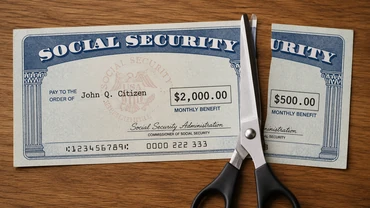
The answer lies in a little-known aspect of the Social Security behemoth known as the Earnings Suspense File (ESF).

The ESF has become a hotbed for debate over everything from immigration rights to identity theft, as it continues to accrue money at roughly $6 billion a year, with the total as of 2005 sitting at $519 billion.

As MSNBC reporter Bob Sullivan put it in an interview with ConsumerAffairs.com, the ESF is part of a "grand mystery," wherein money seems to disappear. But where does the money come from, what happens to it, and why isn't more being done about the problem?

Unmatched Earnings

The Earnings Suspense File was established to collect Social Security earnings reports from filers with mismatched names and SSNs, while the Social Security Administration (SSA) attempts to track down the filers' identities, usually through contacting the businesses they work for.

According to a new Government Accountability Office (GAO) report on the usage of SSNs, the ESF contained 250 million records as of December 2004. (That's nearly as many records as there are people living in the United States currently.)

The GAO report stated that a disproportionate number of unmatched earnings reports come from industries such as "eating and drinking establishments and construction," and that, "a small portion of employers also account for a disproportionate number of ESF reports."

The report alludes to the fact that many unmatched earnings reports come from individuals using false SSNs, or legitimate SSNs that have been stolen and resold for undocumented workers to use.

Because the file is comprised of inaccurate earnings reports, it's impossible to estimate how many reports are added because of inaccuracies such as misspelled or mismatched names, and how many come from genuine cases of SSN-based identity fraud.


News
No Social Security Cost Of Living Increase In 2010
Recession Creating New Drain On Social Security
The Earnings Suspense File: Social Security's "Secret Stash"
---
Consumer Complaints
Retirement benefits
Disability benefits
---
More about seniors ...

SSA spokesman Mark Hinkle told Congress in Nov. 2005 that the lack of identifying information on workers claiming benefits makes it impossible to discern who actually is entitled to what.

"We don't have any breakdown simply because in a lot of cases we can't tell," Hinkle said. "All we know at our end is it doesn't match. Until somebody comes forward, we simply don't know."

The ESF received a huge jolt in earnings from a measure ironically designed to curb the spread of undocumented labor. The Immigration Reform and Control Act was passed in 1986, mandating that employers demand some form of identification and penalizing those businesses which hired illegal immigrants.

The result was a sharp increase in multiple filings using the same number, usage of fake numbers, and a booming business in trading stolen or fraudulent Social Security numbers.

Roadblocks

The usage of fake or stolen Social Security numbers for illegal immigrants would seem to be an issue of national concern. However, solving the problem is even more difficult than tracking the causes.

The Social Security Administration counts its total intake -- including monies placed in the suspense file -- for its earnings reports.

If the undocumented workers using fake SSNs suddenly started claiming the benefits they were due, the total Social Security surplus would have to be recalculated, leading to a greater possibility of the fund drying up.

As it is, the current records of Social Security contributions from undocumented workers vary wildly, with figures anywhere from three to six percent representing their contributions per year.

The usage of the Social Security number as a "national identifier" makes it a prime target for identity thieves and fraudsters. More than a driver's license or birth certificate, having an SSN gives anyone a chance to get into the work force, get a credit card, and so on.

The Houston Chronicle reported on the ease with which undocumented immigrants can find "false ID kits" on the black market, including counterfeit Social Security cards, driver's licenses, and birth certificates.

It's also nearly impossible to change your Social Security number unless you've already been a victim of identity theft, fraud, or can demonstrate a serious risk of physical harm from others having access to your number.

However, the Social Security Administration and other government agencies such as the IRS have been slow to address the issue of SSN-related identity theft, and individuals sharing the same number.

An individual who finds out they are sharing a Social Security number with someone else can't look at that individual's credit file, according to credit agencies such as Equifax. Doing so would violate the other individual's privacy.

Many major banks also refuse to disclose instances of multiple individuals using the same number, citing privacy concerns.

Credit reporting agencies create "sub-files" for individuals with differing names but similar or identical SSN's. These "sub-files" are available to business requesters, such as landlords, lenders, merchants, and so on.

Consumers cannot access "sub-file" reports, and business credit reports often have very different -- and more thorough -- records on a consumer than their own credit report.

Government agencies also have strict rules that prohibit the disclosure of Social Security numbers to third parties, even to the point of restricting the information they share with each other. Both the GAO and the Social Security Administration's own Inspector General have recommended that the SSA share its records on unverified earnings with the Department of Homeland Security (DHS).

According to the Inspector General's April 2005 report, "Although SSA continues to coordinate with DHS on immigration issues, it does not routinely share information regarding egregious employers who submit inaccurate SSNs� In our opinion, any serious plan to address SSN misuse and growth of the ESF must allow SSA to share such information with DHS."

Easy Money

So why isn't more being done to police the spread of SSN theft? Because there's too much profit to be made from it, and not just by the thieves themselves.

Big business and major corporations use illegal labor because it's cheap and easily replaceable. If that means turning a blind eye to day laborers using fake or stolen SSN's, it's the price to pay for profit.

As author Sally Denton sees it, some believe that the United States benefits greatly from maintaining a steady stream of illegal workers into the country.

"Characteristically, many Americans want it all," Denton has said. "Business wants cheap labor. Consumers want low prices."

Social Security wins the game through maintaining a small pot of benefits that will never be tapped, because the workers who would receive them cannot report their earnings without fear of deportation.

Estimates conducted by the SSA's chief actuary, Stephen Goss, revealed that without the taxes levied on earnings in the suspense file, the long-term "funding hole" of the SSA benefit pool would shrink by as much as ten percent.

The IRS wins because it collects the taxes withheld from fraudulent employee accounts without having to refund any of it, since no tax return is ever filed.

In short, the earnings suspense file is the jackpot for a very profitable game in which everyone wins -- everyone, that is, except consumers who have been victims of ID theft, and the undocumented immigrants who are forced to use false ID's just to get a start in this country but who are not able to reap any of the benefits that accrue to others who pay into Social Security.

Bob Sullivan views it as "the government turning a blind eye to identity theft so that big business can get cheap labor." It's impossible to provide a concrete solution to the plague of SSN thefts without addressing the issue of immigration law as well, in his view.

"Liberals won't go after it because they support immigrant rights. Conservatives won't stop it because they support cheap labor and corporate profit ... there's no constituency" in the issue, he said.

And meanwhile, there may be as many as 1 in 50 people in America who have someone else sharing their Social Security number, helping the "secret stash" of the Earnings Suspense File to get bigger with each passing year.


Report Your Experience
If you've had a bad experience -- or a good one -- with a consumer product or service, we'd like to hear about it. All complaints are reviewed by class action attorneys and are considered for publication on our site. Knowledge is power! Help spread the word. File your consumer report now.

Share

Follow us on Twitter.

FREE CONSUMER NEWSLETTERS

The Daily Consumer
Afternoons M-F

Sign up now!


Consumer News & Alerts
Every Sunday

Sign up now!


CONSUMER NEWS

SAFETY RECALLS

Back to the top |

Advertisement


Custom Search
AUTOMOTIVE
• Dealers
• Manufacturers
• Service
• Extended Warranties
• Lemon Laws
• Recalls
• Tires
• Transporters

FAMILY
• Aging
• Children, Parenting
• Recalls
• Dating
• Education
• Entertainment
• Pets
• Weddings
FINANCE
• Annuities
• Banks
• Credit Cards
• Debt Collection
• Debt Counseling
• Insurance
• Investing
• Loans
• Mortgages
• Payday Loans
• Student Loans
• Tax Prep

HEALTH
• Doctors
• Drugs, Pharmacies
• Health Clubs
• Hearing Care
• Hospitals
• Nursing Homes
• Nutrition, Diets
• Vision Care
• Weight Loss
HOUSE & HOME
• Appliances
• Cookware
• Furniture
• Home Improvements
• Lawn & Garden
• Movers
• Pools & Spas
• Realtors, Rental Agents
• Recalls
• Utilities

ELECTRONICS
• Cable TV/DBS
• Cameras
• Cell Phones
• Computers
• Home Electronics
• Internet Access
• Local Phone Service
• Long Distance
• VoIP
SHOPPING
• In-Home
• Online
• Retail Stores
• Sporting Goods
• Supermarkets
• Telemarketers

TRAVEL
• Airlines
• Bus Lines
• Car Rental
• Cruises
• Hotels
• Travel Agents
• Trains

RESOURCES
• Class Actions
• Complaint Form
• Small Claims Guide
• Lemon Laws
CONSUMER NEWS
• Latest News
• Automotive
• Telecom
• Financial
• Health
• Homeowners
• Scams
• Seniors
• Travel
• More ...

RECALLS
• Automotive
• Children's Products
• Drugs
• Food
• Household Products
• Sporting Goods

ABOUT US
• FAQ
• Privacy Policy
• Advertise With Us
• Newsroom
• Syndication
• Terms of Use

Terms of Use Your use of this site constitutes acceptance of the Terms of Use

Advertisements on this site are placed and controlled by outside advertising networks. ConsumerAffairs.com does not evaluate or endorse the products and services advertised. See the FAQ for more information.

Company Response Welcome If complaints about your company appear on our site, we welcome your response. Please see the Response Form for more information.

For more information, see the FAQ and privacy policy. The information on this Web site is general in nature and is not intended as a substitute for competent legal advice.  ConsumerAffairs.com Inc. makes no representation as to the accuracy of the information herein provided and assumes no liability for any damages or loss arising from the use thereof. 

Copyright © 2003-2009 ConsumerAffairs.com Inc.  All Rights Reserved.    The contents of this site may not be republished, reprinted, rewritten or recirculated without written permission.