|
|
NEWS
RECALLS
COMPLAINT FORM
SCAM ALERTS
RESOURCES
Small Claims Guide Class Actions Lemon Laws FAQ Newsletters |
Share |
| Automotive Education Employment Electronics Family Finance Health Homeowners Insurance Pets Shopping Travel |
|
|
|
![]() |
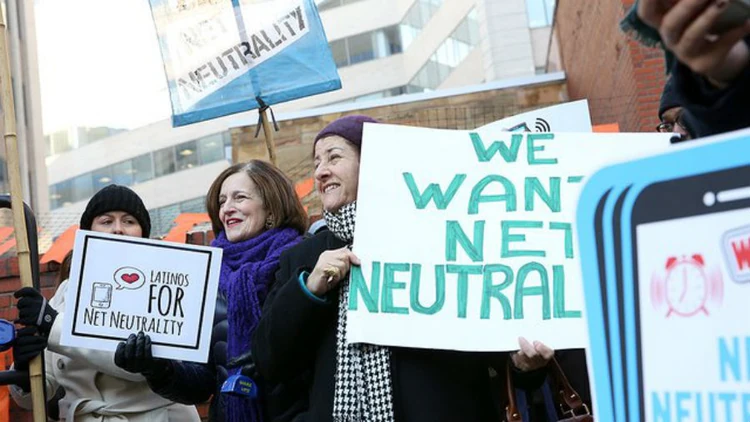
"Net Neutrality" Battle Heats UpGiant Telecoms Use Shock and Awe to Confound and Confuse |
|||||||||||||
|
By Martin H. Bosworth March 22, 2006
The phrase "level playing field" is a favorite of telecommunications providers trying to gerrymander the regulatory landscape to ensure that the field slants in their direction. It's being rolled out once again as the big-money players empty their armories to launch their latest scorched-earth crusade. The once and perhaps future monopolies have all weighed in recently against legislation to enforce net neutrality, saying that "market-oriented approaches" favor the consumer, and that companies would push customers away if they tried to enact "tiered pricing" systems for faster content access. Appearing at the TelecomNEXT convention in Las Vegas on March 20th, Walt Disney CEO Robert Iger stated, "We do not support any [Network Neutrality] legislation at this time." Verizon CEO Ivan Seidenberg concurred, saying that lightly regulated markets were "a good framework" for business and government to develop a "shared vision to vault into the markets of the 21st century." AT&T boss Ed Whitacre modified his anti-net neutrality stance at the convention. Whitacre pledged that his company would not block or degrade any customer access to applications or content on the Internet. Whitacre had previously lit up the sky by saying content providers like Google were "nuts" for trying to use AT&T's cable and broadband networks -- "my pipes," he called them -- without paying extra for them. Federal Communications Commission chairman Kevin Martin, who also attended the convention, stated that the FCC does have the authority to issue judgments in cases of Internet providers favoring content, or making content providers pay extra. But Martin shied away from supporting net neutrality outright, saying that he "favored a regulatory system where businesses can invest in their networks." Metering the WebAlthough major telecom and cable companies are claiming they support the ability of Web surfers to access content regardless of who provides it, they're simultaneously doing all they can to wring maximum profit from the usage of the broadband infrastructure in America and would clearly like to turn it into a virtual taxicab, with the meter always running. Verizon recently won what it called "regulatory relief" from the FCC, as the commission lifted a number of rules governing Verizon's pricing structure for business broadband, as well as its obligation to pay into a fund for providing low-cost broadband services to rural regions America. Verizon has said it will continue to voluntarily pay into the fund "for a time." AT&T, never one to pass up a government hand-out, has filed for similar treatment with the FCC in the hopes of an expedited resolution. As part of the 1996 Telecommunications Act, telecom and cable companies were mandated to expand their networks in order to provide broadband services to the whole of the country, in exchange for deregulation of their business and pricing. Although businesses have been able to take advantage of the expanding cable infrastructure, consumers have not been as lucky. The US ranks fifteenth in the world in rankings of broadband deployment, with only 40 percent of American households within reach of or able to afford DSL or cable Internet services. FCC commissioner Michael Copps, who opposed Verizon's regulatory relief award, recently criticized the telecoms' slow pace of deploying broadband beyond cities and urban centers. "If high-speed broadband is permitted to become a primarily urban phenomenon, the digital gap will grow wider, [resulting in] rural America being worse off," Copps said. Spin CycleVerizon is also part of the U.S. Internet Industry Association (USIIA), a trade association dealing with Internet commerce and policy. The USIIA recently launched a high-profile campaign decrying support of net neutrality as "preventing network operators from exploring ways to guarantee the reliability of advanced Internet services over a public Internet that was not designed to be reliable." In fact, the Internet was designed by Department of Defense engineers whose primary goal was reliability. Through what is called packet switching, data moves in small "packets" that can follow different routes over the network and be reassembled on the receiving end. The Internet may not be as "secure," or private, as one would like but it is extremely reliable, telecommunications observers noted. The USIIA paid for splashy ads telling readers to "protect bloggers from government regulation" on popular progressive Web sites and blogs such as the Daily Kos and the American Prospect. Ironically, progressive bloggers are one of the groups that largely favors net neutrality, joining an unlikely alliance of content providers such as Google and Yahoo, consumer groups such as the Consumer Federation of America (CFA), and AARP. The seniors' advocate group, famous for its lobbying power in Congress, joined a petition to push for Congressional support of net neutrality. AARP spokesman Mark Kitchens said that the increasing number of senior citizens active on the Internet meant that the debate directly affected their constituency. For supporters of net neutrality, the issue isn't just content, but price as well. Consumers don't want to be held hostage to overpriced service that doesn't deliver quality broadband. If infrastructure providers can block other companies from sharing their lines, and prioritize their own content in turn, users may be stuck with choosing between Verizon, AT&T, and not much else. Daniel Berninger, analyst for the telecom and IT research firm Tier1, said that ending net neutrality would spell the end of the Internet as we know it. "Network neutrality allows end users to choose winners and losers in an application meritocracy that threatens service providers long dependent on barriers to entry," he said. "The idea that Yahoo could pay Verizon to improve performance over Google means Verizon, not the end user, decides which search engine wins." Report Your Experience
|
|||||||||||||
Back to the top | |
||||||||||||||
Advertisement
|
|
Custom Search
|
||||
|
AUTOMOTIVE Dealers Manufacturers Service Extended Warranties Lemon Laws Recalls Tires Transporters FAMILY Aging Children, Parenting Recalls Dating Education Entertainment Pets Weddings |
FINANCE Annuities Banks Credit Cards Debt Collection Debt Counseling Insurance Investing Loans Mortgages Payday Loans Student Loans Tax Prep HEALTH Doctors Drugs, Pharmacies Health Clubs Hearing Care Hospitals Nursing Homes Nutrition, Diets Vision Care Weight Loss |
HOUSE & HOME Appliances Cookware Furniture Home Improvements Lawn & Garden Movers Pools & Spas Realtors, Rental Agents Recalls Utilities ELECTRONICS Cable TV/DBS Cameras Cell Phones Computers Home Electronics Internet Access Local Phone Service Long Distance VoIP |
SHOPPING In-Home Online Retail Stores Sporting Goods Supermarkets Telemarketers TRAVEL Airlines Bus Lines Car Rental Cruises Hotels Travel Agents Trains RESOURCES Class Actions Complaint Form Small Claims Guide Lemon Laws |
CONSUMER NEWS Latest News Automotive Telecom Financial Health Homeowners Scams Seniors Travel More ... RECALLS Automotive Children's Products Drugs Food Household Products Sporting Goods ABOUT US FAQ Privacy Policy Advertise With Us Newsroom Syndication Terms of Use |
Terms of Use Your use of this site constitutes acceptance of the Terms of Use
Copyright © 2003-2009 ConsumerAffairs.com Inc. All Rights Reserved. The contents of this site may not be republished, reprinted, rewritten or recirculated without written permission. |
|