|
|
CONSUMER NEWS
RECALLS
COMPLAINT FORM
SCAM ALERTS
Small Claims Guide Class Actions Lemon Laws FAQ Newsletters Spanish |
|
|
![]() |
Net Neutrality Gets Short Shrift in Congress |
|||||
|
By Martin H. Bosworth March 29, 2006
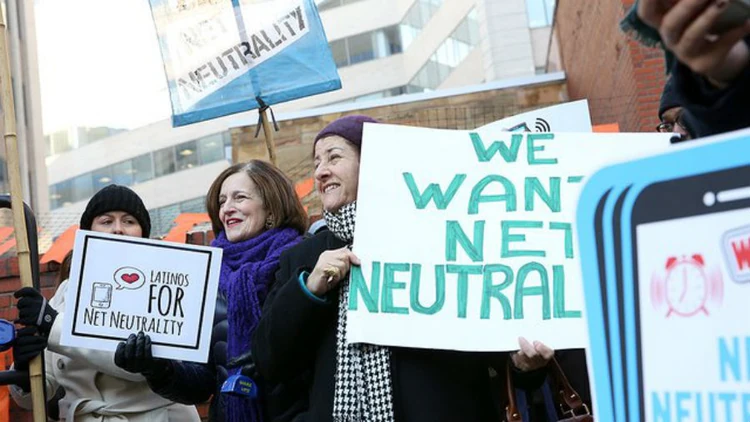
Like any mixed bag, some are happy with what they're getting, while others are not. Proponents of net neutrality, the principle of access to Internet content remaining unrestricted, were dismayed that language supporting it was deleted from the final draft. Cable companies were taking up arms at the prospect of phone companies such as AT&T being able to more easily offer cable subscription services without having to negotiate individual contracts. And local city and town governments were cheering the prospect of being able to set up their own broadband and wireless networks without waiting for their parent states to give them the go-ahead. The "Communications, Promotion, and Enhancement Act" was drafted by Rep. Joe Barton (R-TX), in his capacity as chairman of the House Energy and Commerce Committee. Barton, along with co-sponsor Rep. Bobby Rush (D-IL), hailed the new regulations as a necessary update to outdated laws, and a ticket to delivering high-quality broadband and video services to Americans. "Current law no longer reflects the technological and competitive reality," Barton said in a press statement. "Congress has a responsibility to update our communications laws." But Internet powers such as Google and Microsoft were incensed at the committee's lack of support for net neutrality. In a response letter drafted to the committee, the companies said Barton's bill would "fail to protect the Internet." The bill is scheduled for debate by the full committee on March 30th. Vying for VideoPhone companies such as AT&T and Verizon have been salivating over the prospect of providing cable-style television programming to customers who, until now, have been forced to make do with the likes of Comcast. The Barton bill grants the phone companies a provisional "national franchise" status, which would enable them to start rolling out video services without having to apply for the same local franchises as cable companies. Both sides are engaged in a high-profile publicity war. AT&T recently took issue with what it called "misleading advertisements" by the cable companies' lobby groups, such as the National Cable & Telecommunications Association (NCTA). The NCTA fired back, claiming that it was the phone companies who were "[pressuring] Congress and statehouses for one-sided legislation that would give them privileged regulatory status in the video marketplace, [while] they continue to flood the airwaves and print media with a multitude of advertising that distorts the truth." The "national video franchise" provision has some restrictions. The new competitor would not be allowed to turn away customers based on income. Wi-Fi CitywideAnother provision would allow "public provider[s] of telecommunications service, information service, or cable service" to create wireless networks in their cities in towns. If the bill becomes law, it would supersede several states' laws that prevent local communities from developing their own free Wi-Fi networks for residents to use. The issue of municipal Wi-Fi is a hot one in New Orleans, where an emergency-authorized free Wi-Fi system has enabled residents to stay in touch with missing relatives, hunt for jobs, and provide the world with information about life after Katrina. BellSouth has been campaigning to have the Wi-Fi service shut down, in order to prevent residents and employers from switching over full-time. Net In NeutralSupporters of the "net neutrality" principle were disappointed to find that the final draft of the Barton bill omitted language that specifically prevented broadband providers from blocking or impairing access to Internet content. Instead, the current draft amends the original Communications Act of 1934 to enable the FCC to adjudicate claims that content is being blocked. The new draft claims to uphold the "four principles" of broadband, espoused by former FCC Chairman Michael Powell. Powell's "four principles" included "access to the lawful Internet content of their choice," fair competition between providers, and the ability to use devices for accessing content that "did not harm the network." Current FCC Chairman Kevin Martin has not explicitly supported or opposed net neutrality, saying that he "was hesitant to adopt rules that would prevent anti-competitive behavior where there hasn't been significant evidence of a problem." Content providers and business giants alike believe there is a significant problem, enough to draft a letter of response to the Barton bill. Google, Microsoft, eBay, Yahoo, and others stated that "[c]onsumers embraced the Internet because innovation was rapid and anyone could provide lawful content without interference or permission from those companies that control the networks." "This bill would allow for such a fundamental change in the paradigm of the Internet that it would frustrate the reasonable expectations of the tens of millions of Americans who go online," the companies said. Part of the problem is that Web content companies, for all their public clout and name recognition, don't have the sheer financial capital and lobbying muscle that old-school cable and telecom companies enjoy on Capitol Hill. A CNET News study on tech firm spending in Washington found that telecom companies enjoyed a 3-to-1 spending advantage over Internet companies, with businesses such as Verizon and AT&T spending a combined total of $230 million in lobbying efforts since 1998. Google, at least, is hurrying to get into the game. The search engine giant is hiring lobbyists and public affairs consultants all over Washington in an effort to be represented around the pork barrel. Meanwhile, consumer groups such as Public Knowledge are expressing concern that the new bill, if it becomes law, won't explicitly prevent cable and telecom providers from subtly degrading service and access to content in order to favor their own offerings. Public Knowledge Gigi Sohn said in a press statement that "without stronger legislation, the cable and telephone companies will have the power to change the fundamental nature of the Internet. This bill needs significant improvement before it will preserve the open Internet that consumers and service providers expect and deserve." Report Your Experience
|
|||||
Back to the top | |
||||||
Advertisement
|
|
||||
|
AUTOMOTIVE Dealers Manufacturers Service Extended Warranties Lemon Laws Recalls Tires Transporters FAMILY Aging Children, Parenting Recalls Dating Education Entertainment Pets Weddings |
FINANCE Annuities Banks Credit Cards Debt Collection Debt Counseling Insurance Investing Loans Mortgages Payday Loans Student Loans Tax Prep HEALTH Drugs, Pharmacies Health Clubs Hearing Care Hospitals Nursing Homes Nutrition, Diets Vision Care Weight Loss |
HOMEOWNERS & RENTERS Appliances Cookware Furniture Home Improvements Lawn & Garden Movers Pools & Spas Realtors, Rental Agents Recalls Utilities ELECTRONICS Cable TV/DBS Cameras Cell Phones Computers Home Electronics Internet Access Local Phone Service Long Distance VoIP |
SHOPPING In-Home Online Retail Stores Supermarkets Telemarketers TRAVEL Airlines Bus Lines Car Rental Cruises Hotels Travel Agents Trains RESOURCES Class Actions Complaint Form Small Claims Guide Class Actions Lemon Laws |
CONSUMER NEWS Latest News Automotive Telecom Financial Health Homeowners Scams Seniors Travel More ... RECALLS Automotive Children's Products Drugs Food Household Products Sporting Goods ABOUT US FAQ Privacy Policy Advertise With Us Newsroom Syndication Terms of Use |
Terms of Use Your use of this site constitutes acceptance of the Terms of Use
Copyright © 2003-2008 ConsumerAffairs.com Inc. All Rights Reserved. The contents of this site may not be republished, reprinted, rewritten or recirculated without written permission. |
|