|
|
NEWS
RECALLS
COMPLAINT FORM
SCAM ALERTS
RESOURCES
Small Claims Guide Class Actions Lemon Laws FAQ Newsletters |
Share |
| Automotive Education Employment Electronics Family Finance Health Homeowners Insurance Pets Shopping Travel |
|
|
|
![]() |
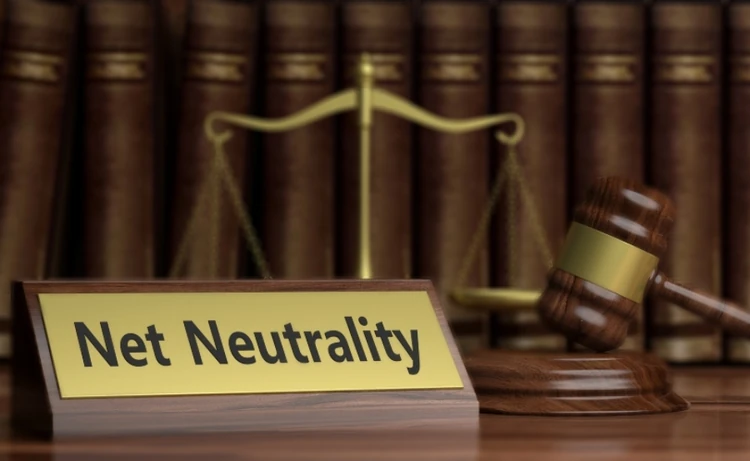
Net Neutrality May Derail Telecom Bill |
|||||||||||||
|
By Martin H. Bosworth August 2, 2006
Stevens told Roll Call that he was racing to get 60 votes in the Senate to pass the bill after Senate Majority Leader Bill Frist (R-TN) told Stevens not to bring the bill to the floor unless he was certain he had enough votes to ensure passage. However, many Senators on both sides of the aisle expressed unease about voting on the bill prior to the November elections. Some stated that they were receiving heavy feedback from constituents demanding that net neutrality protections be placed in the telecom update. A rumor that Stevens was attempting to secure a majority of votes for "cloture" on the bill, in order to shut off debate and move it to an immediate vote, was met with a furious response from bloggers who have been chronicling the net neutrality issue. Although Stevens has not expressed outright opposition to net neutrality, he voted against an amendment to the telecom bill that would have inserted basic protections for content access into the law. Stevens' comments that the Internet was "a series of tubes" and that net neutrality interfered with his staff's ability to "send him an Internet" were roundly mocked on the Web and in mainstream media both. In addition to the net neutrality issue, the telecom bill contains many issues that legislators might be afraid to face before elections, including the controversial "broadcast flag," a measure favored by the motion picture and recording industries that would prevent copying of certain content by users, even if only for personal use. Frist had gone on record as saying that he would not support passage of the bill unless the "broadcast flag" option was included. Frist's former chief of staff, Mitch Bainwol, works for the Recording Industry Association of America (RIAA), the chief lobby group for record companies. "No Free Lunch"Meanwhile, the telecommunications industry is pushing hard to ensure that the bill passes without any language or provisions favoring net neutrality. GigaOM's Katie Fehrenbacher reported that AT&T head Ed Whitacre reiterated his opposition to net neutrality in no uncertain terms during a recent speech to the National Association of Regulatory Utility Commissioners. "No one gets a free ride," Whitacre said. The American economy doesn't work that way. . . .We are not going to build this with no chance for a return. Those that want to use this will pay." Both AT&T and Verizon are pushing hard to roll out their new high-speed broadband and TV-over-Internet services in order to shore up losses from their dwindling telephone business. Verizon reported 440,000 new broadband subscribers during its second-quarter earnings call, 25 percent of which came from its new FiOS high-speed service. But Verizon also reported a loss of 553,000 traditional telephone line customers, as more and more users switched to only using cellphones for communication, or to Voice over Internet Protocol (VoIP) services such as Vonage. The telecom and cable industries strongly oppose equal access to Internet content, in order to push "tiered pricing" models to customers, where people willing to pay more can receive faster connection speeds, better service, and so on. Supporters of net neutrality believe that unless the principle of equal access to Internet content is enshrined into law, those who don't want to pay extra, or can't afford to, will be relegated to the "slow lane" of bandwith access. The battle has taken over mainstream media, with telecom company lobbyists taking out full-page ads in newspapers and penning editorials claiming that net neutrality will stifle competition. One column, written by Hands Off The Internet's Mike McCurry, claimed that "The 'neutral' proposal that companies like Google are touting will ensure that they never have to pay a dime no matter how much bandwidth they use, and consumers who may only use their computers to send e-mail and play Solitaire get to foot the bill." McCurry was criticized for not disclosing that Google, like all Internet-based companies, already pays millions of dollars per year for the bandwidth it uses, and that his lobby group was funded by major telecom and cable companies. Report Your Experience
|
|||||||||||||
Back to the top | |
||||||||||||||
Advertisement
|
|
Custom Search
|
||||
|
AUTOMOTIVE Dealers Manufacturers Service Extended Warranties Lemon Laws Recalls Tires Transporters FAMILY Aging Children, Parenting Recalls Dating Education Entertainment Pets Weddings |
FINANCE Annuities Banks Credit Cards Debt Collection Debt Counseling Insurance Investing Loans Mortgages Payday Loans Student Loans Tax Prep HEALTH Doctors Drugs, Pharmacies Health Clubs Hearing Care Hospitals Nursing Homes Nutrition, Diets Vision Care Weight Loss |
HOUSE & HOME Appliances Cookware Furniture Home Improvements Lawn & Garden Movers Pools & Spas Realtors, Rental Agents Recalls Utilities ELECTRONICS Cable TV/DBS Cameras Cell Phones Computers Home Electronics Internet Access Local Phone Service Long Distance VoIP |
SHOPPING In-Home Online Retail Stores Sporting Goods Supermarkets Telemarketers TRAVEL Airlines Bus Lines Car Rental Cruises Hotels Travel Agents Trains RESOURCES Class Actions Complaint Form Small Claims Guide Lemon Laws |
CONSUMER NEWS Latest News Automotive Telecom Financial Health Homeowners Scams Seniors Travel More ... RECALLS Automotive Children's Products Drugs Food Household Products Sporting Goods ABOUT US FAQ Privacy Policy Advertise With Us Newsroom Syndication Terms of Use |
Terms of Use Your use of this site constitutes acceptance of the Terms of Use
Copyright © 2003-2009 ConsumerAffairs.com Inc. All Rights Reserved. The contents of this site may not be republished, reprinted, rewritten or recirculated without written permission. |
|