
CONSUMER NEWS    RECALLS    COMPLAINT FORM    SCAM ALERTS  


Complain about a product or service

Small Claims Guide | Class Actions | Lemon Law | FAQ | Resources | Newsletters | Spanish
Automotive    Education    Electronics    Family    Finance    Health    Homeowners    Shopping    Travel   
NEWS   Latest |  Archives |  Auto |  Cells, etc. |  Computers |  Financial |  Health |  Homeowners |  Parents |  Privacy |  Scams |  Seniors |  Travel

"Thin-Film" Batteries May Reduce Fire Danger

Recent Laptop Recalls Energize Battery Research


By Joseph S. Enoch
ConsumerAffairs.com

September 8, 2006
A new, safer battery technology called thin-film, may be replacing the somewhat volatile lithium-ion battery. The recent Dell, Apple and Panasonic recalls of almost 6 million laptop batteries has had a catalytic affect on thin-film battery research.

Thin-film batteries have a solid lithium core compared to the liquid core of the lithium-ion batteries. That solid core makes them less vulnerable to overheating and they can be fully discharged and recharged well more than 10,000 times.

"In comparison, a typical Li-ion battery can only be cycled about 300-500 times without significant degradation in capacity," Infinite Power Solutions spokesman, Tim Bradow wrote in an e-mail.

Infinite Power Solutions (IPS), a battery company in Golden, Colo. announced yesterday that it has received $34.7 million in investments from private firms that will allow the company to begin production of thin-film batteries next year.

"This new capital will enable us to scale our technology, build state-of-the-art fabs, and ramp to high volume production," Raymond Johnson, president and CEO of IPS said in a prepared statement.

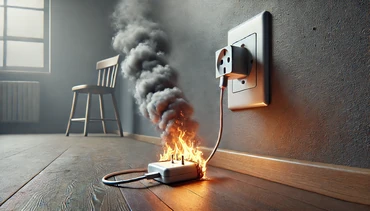
Lithium-ion batteries can generate a tremendous amount of heat while charging and can occasionally burst into flames under the right conditions. ConsumerAffairs.com reported on how the batteries in Dell laptops possibly caught a man's truck on fire and even burned another man's house down. Even the lithium-ion batteries in cell phones are suspect to overheating and fire. Thin-film batteries do not pose a fire hazard.

"Because they have a solid-state electrolyte, they will not freeze or boil," wrote Bradow. "Therefore, they continue to work at very cold temps (-50C) and will not rupture or explode at very high temps (>200C). They are fabricated in a vacuum environment, so they will not outgas in a high temp environment. They will not burn. In fact, even under a direct short circuit condition, the temperature of single cell only increases 1°C. Therefore, it is impossible to over heat and start a fire."


Related Stories
Burned LaptopFeds Warn of Fire Hazard in Remote-Controlled Airplanes, Helicopters
New Rule Limits Lithium Batteries in Baggage
Georgia Man's Dell Laptop Bursts into Flames
Nokia Joins Battery Recall
Acer Recalls Notebook Computer Batteries
Batteries Could Run on Sugar
MacBook Battery Suspected in Australian Fire
Feds Consider New Lithium Battery Restrictions on Airplanes
Lenovo Recalls ThinkPad Extended-Life Batteries
Dell Sued in Canada Over Exploding Batteries
Sony Battery Recalls Continue
Add Hitachi to Battery Recall List
Sony Battery Recall Tops 10 Million
Lenovo, IBM Recall ThinkPad Notebook Batteries
Toshiba Recalls Sony Laptop Batteries
Laptop Fires Speed Development of Safer Batteries
Panasonic Recalls Laptop Batteries
High Tech Summit To Address Hot Battery Problem
Sony: No More Battery Recalls Expected
Dell Laptop Blamed for House Fire
Dell Battery Recall May Not Be the Answer
Insider: Dell Knew of Battery Problem for Years
Dell Plans Huge Recall of Troubled Batteries
Laptop Fires Worry Airline Safety Regulators
"Exploding" Dell Laptop Destroys Truck, Imperils Outsdoorsmen
Dell Denies It Knew of Overheating Battery Problem for Years
Dell Notebook Batteries Recall Notice ---
Earlier Recalls ...
Dell Recalls Laptop Batteries
Dell Recalls Notebook Power Adapters
Dell Recalls Notebook AC Adapters (#2)
Dell Recalls Laptop Batteries

However, analysts say it could be many years before thin-film could completely replace lithium-ion.

"There is not one piece of consumer or enterprise technology that can run on thin-film battery technology," Carmi Levy, senior research analyst with Infotech Research Group in London, Ontario told The New York Times. "Every piece of circuitry must be fully re-engineered. It is a Herculean engineering feat to switch over to this."

As a result, the thin-film industry is focusing on enterprise technology markets to begin with such as radio-frequency identity (RFID) tags, smart cards, military equipment, surgical devices such as pacemakers and temperature and pressure gauges in car tires.

"It will take time to ramp production and license our technology to others for high volume manufacturing," wrote Bradow.

Thin-film batteries are extremely versatile. They can be smaller than a postage stamp and about twice its thickness, can be manufactured in various shapes and can be attached directly to a microchip.

The batteries can also have a long charge life. After being charged they can go into a standby mode for months without leaking any power. That long life would be useful for many applications including implanted surgical devices and missiles that are stored in silos for years without any activity.

"The end user will not see the battery, nor will they need to because it never needs replacement, only recharging," wrote Bradow.

Susan Eustis, president of WinterGreen Research in Lexington, Mass. has high hopes for the technology. She told the Times that with increasing cell phone sales and uses for RFID tags, the market for thin-film battery sales should approach 10 billion units by 2012.

Sony, Apple and Dell did not return phone calls for comment.


Report Your Experience
If you've had a bad experience -- or a good one -- with a consumer product or service, we'd like to hear about it. All complaints are reviewed by class action attorneys and are considered for publication on our site. Knowledge is power! Help spread the word. File your consumer report now.


Consumer News

July 4 2008

Recent Recalls & Safety Alerts

Print, mail, etc.


FREE CONSUMER NEWSLETTERS

The Daily Consumer
Afternoons M-F

Sign up now!


Consumer News & Alerts
Every Sunday

Sign up now!


Knowledge is free.
Knowledge is power.


Back to the top |

Advertisement


Home | Rogues Gallery | Good Guys | Complaint Form | News | Recalls | Search | Video | FAQ |
Consumer Resources | Small Claims Guide | Lemon Law | Newsletter | Contact Us
Advertise With Us | Testimonials | Newsroom | RSS Feeds | Radio | Job Postings


Terms of Use Your use of this site constitutes acceptance of the Terms of Use

Advertisements on this site are placed and controlled by outside advertising networks. ConsumerAffairs.com does not evaluate or endorse the products and services advertised. See the FAQ for more information.

Company Response Welcome If complaints about your company appear on our site, we welcome your response. Please see the Response Form for more information.

For more information, see the FAQ and privacy policy. The information on this Web site is general in nature and is not intended as a substitute for competent legal advice.  ConsumerAffairs.com Inc. makes no representation as to the accuracy of the information herein provided and assumes no liability for any damages or loss arising from the use thereof. 

Copyright © 2003-2008 ConsumerAffairs.com Inc.  All Rights Reserved.