CONSUMER NEWS    RECALLS    COMPLAINT FORM    SCAM ALERTS  


Complain about a product or service

Small Claims Guide | Class Actions | Lemon Law | FAQ | Resources | Newsletters | Spanish
Automotive    Education    Electronics    Family    Finance    Health    Homeowners    Shopping    Travel   
NEWS   Latest |  Archives |  Auto |  Cells, etc. |  Computers |  Financial |  Health |  Homeowners |  Parents |  Privacy |  Scams |  Seniors |  Travel

Don't Be Fooled By IRS Look-Alike Sites


By Mark Huffman
ConsumerAffairs.com

March 14, 2007


Tax Scams Proliferate In April
Mystery Shoppers Find Deceit, Incompetence Among Tax Preparers
Avoid Tax Rebate Direct Deposit Scam
Tax Rebate Goes Only to Those Who File
Instant Tax Refund Always Carries a Price
'Instant Refund' Loans an Avoidable Expense
Tax Breaks for Family Caregivers
Court Shuts Down 'Warehouse Bank'
Don't Be Fooled By IRS Look-Alike Sites
IRS Warns of Common Income Tax Scams
Poor Americans Missing Billions in Earned-Income Tax Benefits
Complex Laws Make Tax Filing Worse
Paying Taxes With Your Credit Card Can Get Expensive
Senators Push for Electronic Tax Filing
IRS Warns of Tax Scams
Taxtime - Tips for Taxpayers
Don't Overlook Earned Income Tax Credit
Tax Refund Loans "Indefensible"
H&R Block Goofs on Its Own Taxes
Class Action Challenges H&R Block's Electronic Filing Fee
Don't Ignore Tax Payment Problems
---
More about tax preparation ...

The Internet can be an unforgiving place. Make one small mistake typing in the address of the Web site you want to visit and you could end up someplace completely different.

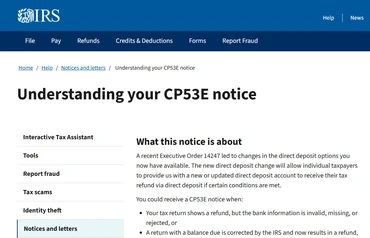
The Internal Revenue Service is warning that some sites are apparently using similar addresses and a look similar to the official IRS site -- www.irs.gov -- to confuse taxpayers.

In a warning, the tax collection agency said it has noted the proliferation of Internet sites that contain some form of the Internal Revenue Service name or IRS acronym with a ".com," ".net," ".org" or other designation in the address instead of ".gov."

Since many of these sites also bear a striking resemblance to the real IRS site, taxpayers may be misled into thinking that the site they have accessed is indeed the official IRS government site. These sites are not the official IRS Web site and have no connection to the official IRS site or to the IRS.

"There is one legitimate IRS site: IRS.gov," said IRS Commissioner Mark W. Everson. "Always check carefully and make sure you know what Web site you are using."

Because ".com," ".net" and ".org" are such common parts of Internet addresses, taxpayers may automatically or inadvertently type these extensions, instead of ".gov," into the address line of their Web browser when trying to find the genuine IRS Web site.

Following recent concerns that Internet sites may be causing confusion among taxpayers, the IRS said is working with the Treasury Inspector General for Tax Administration on this matter. TIGTA has authority to review issues protecting the integrity of tax administration, including impersonation of the IRS. The IRS and TIGTA are committed to ensuring that taxpayers are not misled.

Although the IRS Web site offers interactive features, the tax or private financial information that these features ask the taxpayer for is extremely limited. The IRS reminds consumers who access unfamiliar sites, or sites they have never dealt with before, that they should never reveal any personal or financial information, such as credit, bank account or PIN numbers, without verifying the validity of the site.

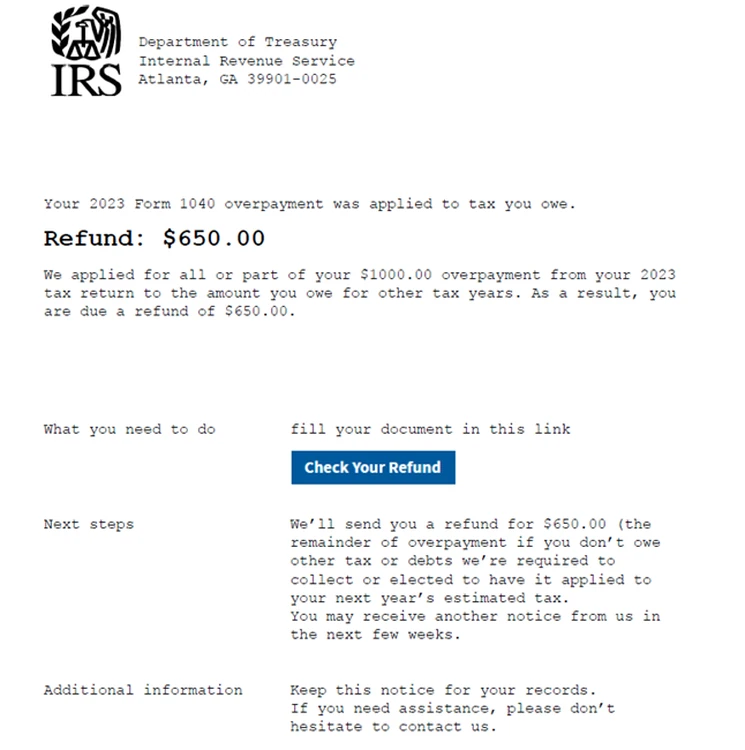
The IRS also reminds consumers to be alert to an on-going Internet scam in which consumers receive an e-mail informing them of a federal tax refund. The e-mail, which claims to be from the IRS, directs the consumer to a link -- often a Web site resembling the IRS Web site -- that requests personal and financial information, such as Social Security number and credit card information.

This scheme is an attempt to trick the e-mail recipients into disclosing their personal and financial data. The practice is called "phishing" for information.

The information fraudulently obtained is then used to steal the taxpayer's identity and financial assets. Generally, identity thieves use someone's personal data to steal his or her financial accounts, run up charges on the victim's existing credit cards, apply for new loans, credit cards, services or benefits in the victim's name and even file fraudulent tax returns.

Taxpayers who receive an unsolicited e-mail purporting to be from the IRS should never click on any links in the message, open any attachments or provide any personal or financial information to the sender.

More Scam Alerts ...

Report Your Experience
If you've had a bad experience -- or a good one -- with a consumer product or service, we'd like to hear about it. All complaints are reviewed by class action attorneys and are considered for publication on our site. Knowledge is power! Help spread the word. File your consumer report now.


Consumer News

July 9 2008

Recent Recalls & Safety Alerts

Print, mail, etc.


FREE CONSUMER NEWSLETTERS

The Daily Consumer
Afternoons M-F

Sign up now!


Consumer News & Alerts
Every Sunday

Sign up now!


Knowledge is free.
Knowledge is power.


Back to the top |

Advertisement


Home | Rogues Gallery | Good Guys | Complaint Form | News | Recalls | Search | Video | FAQ |
Consumer Resources | Small Claims Guide | Lemon Law | Newsletter | Contact Us
Advertise With Us | Testimonials | Newsroom | RSS Feeds | Radio | Job Postings


Terms of Use Your use of this site constitutes acceptance of the Terms of Use

Advertisements on this site are placed and controlled by outside advertising networks. ConsumerAffairs.com does not evaluate or endorse the products and services advertised. See the FAQ for more information.

Company Response Welcome If complaints about your company appear on our site, we welcome your response. Please see the Response Form for more information.

For more information, see the FAQ and privacy policy. The information on this Web site is general in nature and is not intended as a substitute for competent legal advice.  ConsumerAffairs.com Inc. makes no representation as to the accuracy of the information herein provided and assumes no liability for any damages or loss arising from the use thereof. 

Copyright © 2003-2008 ConsumerAffairs.com Inc.  All Rights Reserved.