


Senior Finances and Retirement

The topic of 'Navigating Senior Finances and Retirement' covers the multifaceted financial challenges and considerations that seniors face as they approach and move through retirement. It includes discussions on Social Security benefits, especially how remarriage or spouse's benefits can impact income, and the pressing concerns over the future of Social Security funding. The articles address the bipartisan worry about retirement security and the shift from pensions to 401(k) plans. Additionally, there are guides on the cost of living adjustments (COLA) and their impact on seniors, as well as the significant issue of elder financial fraud and how to avoid it. The content also explores the best and worst cities for retirement based on various quality-of-life factors and the financial risks associated with nursing home costs. Overall, the topic provides a comprehensive view of the economic landscape that seniors must navigate to ensure financial stability and security in their later years.

Latest

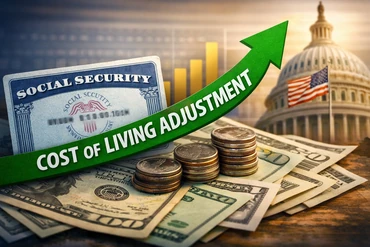
Here’s what The Senior Citizens League expects the Social Security COLA will be

Any increase would be tied to mid-year inflation

Featured Aging, Senior, and Eldercare photo

The Senior Citizens League (TSCL) projects a 2.8% Social Security COLA for 2027 — unchanged from 2026 — based on inflation data from July through September, not the full year.

Concerns are growing about Social Security’s long-term solvency, with the trust fund projected to run out by 2032, potentially triggering a 24% benefit cut unless reforms are made.

TSCL opposes proposed benefit caps like the “Six-Figure Limit” and instead supports eliminating the payroll tax cap, whi...

Read Article
Featured Aging, Senior, and Eldercare photo
2025
Article Image

Dreaming of retiring in Midland, Michigan? Maybe you should be

• Midland, Michigan, takes the top spot in U.S. News & World Report’s 2026 Best Places to Retire rankings
• Expanded analysis covers more than 850 cities, up from 150 last year
• Quality of life and retiree migration trends shape a new top 10 list


Midland, Michigan, has been named the No. 1 place to retire in the United States, according to U.S. News & World Report’s 2026 Best Places to Retire rankings, released Tuesday. The small Midwestern city rose to the top for the first time thanks to strong scores in affordability and favorable retiree tax conditions.

Midland, population about 48,000, is the corporate home of Dow Chemical Co. It's also the home of the 110-acre Dow Gardens, which features America's longest treetop canopy walk, and The Tridge, a distinctive three-legged pedestrian bridge.  

The annual rankings — now expanded to evaluate more than 850 U.S. cities, up from 150 last year — are based on how well each location meets retirees’ expectations for quality of life, affordability, health care, retiree taxes, and the job market. For the first time, U.S. News also factored in population and migration data for residents ages 55 and older.

Quality of life drives retirement choices

“Retirees are prioritizing quality of life over affordability for the first time since the beginning of the COVID-19 pandemic,” said Tim Smart, contributing editor and author of U.S. News’ retirement newsletter, YOLO: Your Smart Guide to Retirement. “Whether seeking a bustling city or a quiet town, retirees are now empowered with a more precise view of the best places to settle down.”

The 2026 rankings were weighted using results from a national survey of Americans aged 45 and older, asking what matters most when choosing where to retire. In response, U.S. News made quality of life the most heavily weighted factor, ahead of affordability.

A new mix of cities in the top 10

The expanded methodology and larger data set produced a completely reshuffled top 10 list that includes several first-time entrants. Weirton, West Virginia, ranked No. 2 for its strong scores in quality of life and affordability, while Homosassa Springs, Florida, came in third, buoyed by growth in its 55-plus population.

Top 10 places to retire in 2026

  1. Midland, Michigan

  2. Weirton, West Virginia

  3. Homosassa Springs, Florida

  4. The Woodlands, Texas

  5. Spring, Texas

  6. Rancho Rio, New Mexico

  7. Spring Hill, Florida

  8. Altoona, Pennsylvania

  9. Palm Coast, Florida

  10. Lynchburg, Virginia

How the rankings were built

U.S. News compiled its rankings using data from federal, state and local sources, including the FBI, Bureau of Labor Statistics, Bureau of Economic Analysis and its own Best Hospitals rankings. The analysis is part of the publication’s real estate coverage, which also offers tools to help consumers navigate housing markets and evaluate local economies.

The full list of 250 cities and details about the methodology are available at realestate.usnews.com/places/rankings/best-places-to-retire.


Article Image

How much money do you need to retire? Americans are lowering their goals

Key Takeaways:

  • The average American’s retirement “magic number” for 2025 is $1.26 million—down $200K from 2024, yet still out of reach for many.

  • One in four Americans with retirement savings have only one year or less of their annual income set aside.

  • More than half of Americans fear outliving their savings, but over a third have taken no steps to prevent it.

As inflation cools, Americans’ expectations for what they need to retire comfortably are shifting, but the gap between goals and reality remains fairly wide. According to Northwestern Mutual’s newly released 2025 Planning & Progress Study, the average “magic number” Americans believe they’ll need to retire has dropped to $1.26 million. That’s a $200,000 decrease from 2024’s $1.46 million estimate and roughly even with 2022 and 2023 expectations.

While this lower figure might reflect decreased anxiety over inflation—which dropped from 6% in 2023 to around 3% in 2024, it doesn’t mean people are feeling more secure. In fact, financial anxiety remains widespread. 

A full 25% of Americans with retirement savings report having only one year or less of their annual income set aside. And more than half (51%) of Americans believe it’s at least somewhat likely they will outlive their nest egg, with only 16% saying it’s “very unlikely.”

“Americans' 'magic number' to retire comfortably has come down—but it remains high, far beyond what many people have actually saved,” John Roberts, chief field officer at Northwestern Mutual, said in a press release. He added that people’s perceptions may be adjusting as inflation expectations settle, but concern about retirement preparedness has intensified.

Retirement savings: A generation gap

The study highlights troubling disparities in retirement readiness across generations. Generation X, many of whom are nearing retirement age, appear particularly vulnerable: 52% have saved three times their current income or less, and a majority (54%) don’t believe they will be financially ready to retire.

In contrast, younger generations seem both more proactive and more optimistic. Gen Z, for instance, started saving at an average age of 24, plans to retire by 61, and over a third (34%) believe they’ll live to 100. Boomers, on the other hand, began saving around age 37, expect to retire by 72, and only 23% anticipate reaching the century mark.

Gen Z is the most confident generation in terms of retirement preparedness, not surprising since they have the longest time horizon. However, they may be overlooking key aspects of financial planning.

A majority (61% of Gen Z and 60% of millennials) admit they are overly focused on investing and wealth-building while neglecting protective measures like life and disability insurance—strategies boomers are more likely to embrace.

Monthly saving goals by age

For individuals aiming to hit the $1.26 million retirement target by age 65, starting age significantly impacts required monthly contributions. Assuming a 7% annual return:

  • A 20-year-old would need to save $330/month.

  • A 30-year-old would need $695/month.

  • A 40-year-old would need $1,547/month.

  • A 50-year-old would need $3,958/month.

These figures underscore the steep cost of delayed saving—a challenge for those who started late or had interruptions in their financial journey.

Northwestern Mutual recommends replacing roughly 80% of one’s pre-retirement income, but stresses that retirement plans should be customized. Factors such as desired lifestyle, retirement age, and living location heavily influence individual needs.

“Rules of thumb are everywhere, but nothing is better than a financial plan that’s personalized and custom-built just for you,” said Roberts.

Article Image

Social Security denies paying benefits to millions of dead people

Less than 0.33% of more than three million deaths a year are errnoneously reported to Social Security, as the government works to correct records of people aged 100 and over, the Social Security Administration (SSA) said Sunday.

States primarily report deaths to Social Security, but reports also come from family members, funeral homes, federal agencies and financial institutions.

"Instances when a person is erroneously reported as deceased to Social Security can be devasting to the individual, spouse, and dependent children," SSA said. "Benefits are stopped in the short term which can cause financial hardship until fixed and benefits restored, and the process to prove an erroneous death will always seem too long and challenging."

People who might be incorrectly listed as dead should contact their Social Security office as soon as possible and bring at least one piece of current identification, the administration said.

The update on incorrectly reported deaths follows Trump and his government-efficiency adviser Elon Musk saying dead people aged more than 100 are receiving Social Security benefits.

In response, Lee Dudek, acting commissioner of Social Security, said those individuals didn't have a date associated with their death, but they weren't "necessarily receiving benefits."

"The reported data are people in our records with a Social Security number who do not have a date of death associated with their record," he said in a statement. "These individuals are not necessarily receiving benefits.

Earlier in March, the Social Security Administration said it had made "significant progress in identifying and correcting beneficiary records of people 100 years old or older."

“We are steadfast in our commitment to root out fraud, waste, and abuse in our programs, and actively correcting the inconsistencies with missing dates of death," Dudek said in a statement.

2024
2023
2022
2021