Like cockroaches, it appears that robobandits are hard to kill. A year ago, the Federal Communication Commission (FCC) had a firm grip on robocallers after it put a chokehold on carriers to put a stop to it or else.
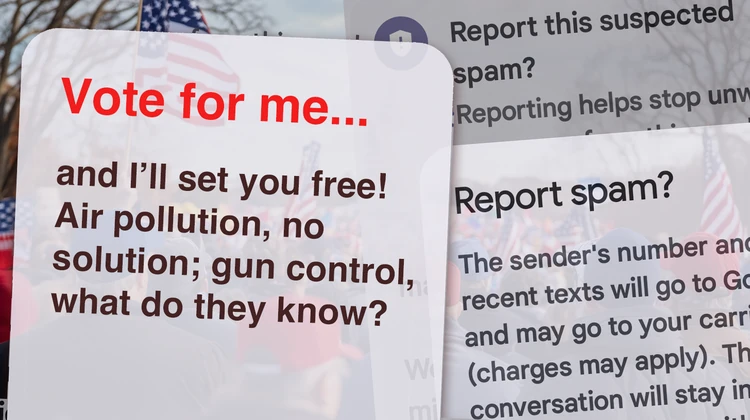
Now, a year later “or else” has returned – this time, though, the FCC is giving carriers the stinkeye about allowing scam-oriented robotexts through to Americans’ phones. The agency has a pretty solid reason going for it, too. In the last year, robotexts have jumped from 1 billion to 15.6 billion a month.
The FCC has laid down the law to seven phone companies, telling them that they will be shut down for allowing scam robocalls on their networks if they don’t put a stop to the robotext scourge. This is a big shift for the FCC’s bedside manner – in fact, it’s the first time the FCC has made such a move.
In response to these developments, Teresa Murray, Consumer Watchdog for U.S. PIRG Education Fund praised the FCC's move. “The problem is not going to be solved in a day. But these are real developments.
“Bad guys will continue to go after our information and money. Scams are a chameleon-like problem with no end in sight. Robocalls are slowing while robotexts are skyrocketing. We still see phishing emails, which started more than 20 years ago, while targeted messages through social media are becoming a bigger menace.”
What companies are included in the FCC’s demand?
The FCC has put Akabis, Cloud4, Global UC, Horizon Technology Group, Morse Communications, Sharon Telephone Company, and SW Arkansas Telecommunications and Technology on notice.
Those companies have to show cause soon, too. The agency has given them 14 days to explain why it should not remove them from the database.
But what does “removal from the database” actually mean?
When ConsumerAffairs examined the FCC’s letter to Cloud4, it said if the company didn’t straighten up its act by the end of those two weeks, “all calls from Cloud4’s customers would be blocked and therefore no traffic originated by Cloud4 would reach the called party.”
“This is a new era. If a provider doesn’t meet its obligations under the law, it now faces expulsion from America’s phone networks,” FCC Chairwoman Jessica Rosenworcel said in announcing the move.
“Fines alone aren't enough. Providers that don't follow our rules and make it easy to scam consumers will now face swift consequences.”