


NEWS    RECALLS    COMPLAINT FORM    SCAM ALERTS   RESOURCES  
Small Claims Guide   Class Actions   Lemon Laws   FAQ   Newsletters  


Complain about a product or service

Automotive    Education    Employment    Electronics    Family    Finance    Health    Homeowners    Pets    Shopping    Travel   


NEWS   Latest |  Archives |  Auto |  Cells, etc. |  Computers |  Financial |  Health |  Homeowners |  Parents |  Privacy |  Scams |  Seniors |  Travel

Drivers Impaired Just by Listening to Cell Phone

Listening drivers make mistakes similar to drunken drivers


Advertisement

March 6, 2008


Using A Cellphone? Make Sure to Stand Still
New Jersey Steps Up Cell Phone Law Enforcement
Talking While Walking May Put Kids At Risk
Car Key Jams Teen Drivers' Cell Phones
Feds Withhold Cell Phone Safety Data, Suit Charges
Cell Phone Conversations Distract Drivers, Study Finds
Texting Behind The Wheel Like Driving Drunk Or High
California Motorists Cope With New Hands-Free Law
More Teens Using Cell Phones While Driving
Drivers Impaired Just by Listening to Cell Phone
Driving While Phoning Gums Up Traffic, Study Finds
Study: Drivers Using Cell Phones As Bad As Drunks
Survey: Outlaw Cell Phone Use While Driving
Cell Phone No. 1 Driver Distraction
More Drivers Talking While Driving
Listening, Talking, Driving Don't Mix
Poll Finds Motorists Irked At Other Drivers
Crash Risk Four Times Higher When Driver is On the Phone
Cell-Phoning Drivers Get Failing Grade from Johns Hopkins
Study: Eight Percent of Drivers Are On the Phone
Feds Say Hands-Free Cell Phone Ineffective
Hands-Free Phones Safer, Study Finds
Make a Call, Get a Ticket
---

Cell Phone Hazards
Cell Phone Hazards
Study Finds Little Short-Term Cell Phone Health Risk
Cell Phones Linked to Bee Decline
Mayo Clinic Finds Cell Phones Safe in Hospitals
Origin of California Cell Phone Fire Disputed
Cell Phone Ignites, California Man Severely Burned
Study: Cell Phone Users Have Lower Sperm Counts
Study: Drivers Using Cell Phones As Bad As Drunks
Doctors Warn Against Cell Phone Use In Storms
Cell Phones Cleared in Gas Fire
Sleep With Your Cell Phone? Don't Forget the Dog
Feds Warn of Cell Phone Battery Hazards
Risk of Cell Phone Explosions Growing
Cell Phone Catches Fire
Battery Recall
Traffic Tickets
Gasoline Fires
Radiation Fears
---
Consumer Complaints

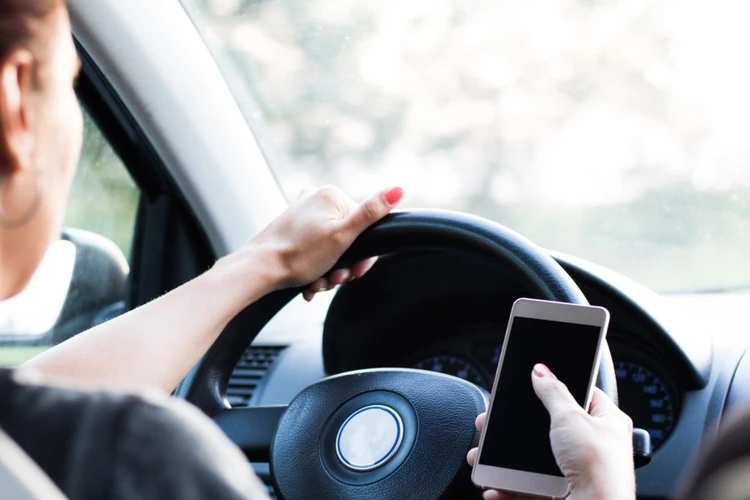
Just listening to a cell phone while driving is a significant distraction, and it causes some of the same types of mistakes as drunk drivers make, according to scientists at Carnegie Mellon University.

The use of cell phones, including dialing and texting, has long been a safety concern for drivers. But the Carnegie Mellon study, for the first time, used brain imaging to document that listening alone reduces by 37 percent the amount of brain activity associated with driving.

This can cause drivers to weave out of their lane, based on the performance of subjects using a driving simulator.

The findings, to be reported in an upcoming issue of the journal Brain Research, show that making cell phones hands-free or voice-activated is not sufficient in eliminating distractions to drivers.

“Drivers need to keep not only their hands on the wheel; they also have to keep their brains on the road,” said neuroscientist Marcel Just, director of the Center for Cognitive Brain Imaging.

Other distractions, such as eating, listening to the radio or talking with a passenger, also can divert a driver. Though it is not known how these activities compare with cell phone use, Just said there are reasons to believe cell phones may be especially distracting.

“Talking on a cell phone has a special social demand, such that not attending to the cell conversation can be interpreted as rude, insulting behavior,” he noted. A passenger, by contrast, is likely to recognize increased demands on the driver’s attention and stop talking.

The 29 study volunteers used a driving simulator while inside an MRI brain scanner. They steered a car along a virtual winding road at a fixed, challenging speed, either while they were undisturbed, or while they were deciding whether a sentence they heard was true or false.

Just’s team used state-of-the-art functional magnetic resonance imaging (fMRI) methods to measure activity in 20,000 brain locations, each about the size of a peppercorn. Measurements were made every second.

The driving-while-listening condition produced a 37 percent decrease in activity of the brain’s parietal lobe, which is associated with driving. This portion of the brain integrates sensory information and is critical for spatial sense and navigation. Activity was also reduced in the occipital lobe, which processes visual information.

The other impact of driving-while-listening was a significant deterioration in the quality of driving.

Subjects who were listening committed more lane maintenance errors, such as hitting a simulated guardrail, and deviating from the middle of the lane.

Both kinds of influences decrease the brain’s capacity to drive well, and that decrease can be costly when the margin for error is small.

“The clear implication is that engaging in a demanding conversation could jeopardize judgment and reaction time if an atypical or unusual driving situation arose,” Just said. “Heavy traffic is no place for an involved personal or business discussion, let alone texting.”

Because driving and listening draw on two different brain networks, scientists had previously suspected that the networks could work independently on each task. But Just said this study demonstrates that there is only so much the brain can do at one time, no matter how different the two tasks are.

The study emerges from the new field of neuroergonomics, which combines brain science with human-computer interaction studies that measure how well a technology matches human capabilities. Neuroergonomics is beginning to be applied to the operation of vehicles like aircraft, ships and cars in which drivers now have navigation systems, iPods and even DVD players at their disposal.

Every additional input to a driver consumes some of his or her brain capacity, taking away some of the resources that monitor for other vehicles, lane markers, obstacles, and sudden changes in conditions.

“Drivers’ seats in many vehicles are becoming highly instrumented cockpits,” Just said, “and during difficult driving situations, they require the undivided attention of the driver’s brain.”


Report Your Experience
If you've had a bad experience -- or a good one -- with a consumer product or service, we'd like to hear about it. All complaints are reviewed by class action attorneys and are considered for publication on our site. Knowledge is power! Help spread the word. File your consumer report now.

Asterpix

CONSUMER NEWS

SAFETY RECALLS


PRINT, ETC.

Print This

Email This


FREE CONSUMER NEWSLETTERS

The Daily Consumer
Afternoons M-F

Sign up now!


Consumer News & Alerts
Every Sunday

Sign up now!

MOST-VIEWED PAGES

NEW COMPLAINTS

Hey there! ConsumerAffairs.com is using Twitter.
Twitter is a free service that lets you keep in touch throughout the day. Join today to start receiving ConsumerAffairs.com's updates.


Back to the top |

Advertisement


Custom Search
AUTOMOTIVE
• Dealers
• Manufacturers
• Service
• Extended Warranties
• Lemon Laws
• Recalls
• Tires
• Transporters

FAMILY
• Aging
• Children, Parenting
• Recalls
• Dating
• Education
• Entertainment
• Pets
• Weddings
FINANCE
• Annuities
• Banks
• Credit Cards
• Debt Collection
• Debt Counseling
• Insurance
• Investing
• Loans
• Mortgages
• Payday Loans
• Student Loans
• Tax Prep

HEALTH
• Doctors
• Drugs, Pharmacies
• Health Clubs
• Hearing Care
• Hospitals
• Nursing Homes
• Nutrition, Diets
• Vision Care
• Weight Loss
HOMEOWNERS & RENTERS
• Appliances
• Cookware
• Furniture
• Home Improvements
• Lawn & Garden
• Movers
• Pools & Spas
• Realtors, Rental Agents
• Recalls
• Utilities

ELECTRONICS
• Cable TV/DBS
• Cameras
• Cell Phones
• Computers
• Home Electronics
• Internet Access
• Local Phone Service
• Long Distance
• VoIP
SHOPPING
• In-Home
• Online
• Retail Stores
• Sporting Goods
• Supermarkets
• Telemarketers

TRAVEL
• Airlines
• Bus Lines
• Car Rental
• Cruises
• Hotels
• Travel Agents
• Trains

RESOURCES
• Class Actions
• Complaint Form
• Small Claims Guide
• Lemon Laws
CONSUMER NEWS
• Latest News
• Automotive
• Telecom
• Financial
• Health
• Homeowners
• Scams
• Seniors
• Travel
• More ...

RECALLS
• Automotive
• Children's Products
• Drugs
• Food
• Household Products
• Sporting Goods

ABOUT US
• FAQ
• Privacy Policy
• Advertise With Us
• Newsroom
• Syndication
• Terms of Use

Terms of Use Your use of this site constitutes acceptance of the Terms of Use

Advertisements on this site are placed and controlled by outside advertising networks. ConsumerAffairs.com does not evaluate or endorse the products and services advertised. See the FAQ for more information.

Company Response Welcome If complaints about your company appear on our site, we welcome your response. Please see the Response Form for more information.

For more information, see the FAQ and privacy policy. The information on this Web site is general in nature and is not intended as a substitute for competent legal advice.  ConsumerAffairs.com Inc. makes no representation as to the accuracy of the information herein provided and assumes no liability for any damages or loss arising from the use thereof. 

Copyright © 2003-2009 ConsumerAffairs.com Inc.  All Rights Reserved.    The contents of this site may not be republished, reprinted, rewritten or recirculated without written permission.