|
CONSUMER NEWS RECALLS COMPLAINT FORM SCAM ALERTS |
| Small Claims Guide | Class Actions | Lemon Law | FAQ | Resources | Newsletters | Spanish | |
|
|
![]() |
Airline Industry Gets Record Low Rating from ConsumersAir Tran picked as #1 in annual quality survey |
||||||
|
By Mark Huffman March 7, 2008
Following Air Tran in the top five of the AQR were Jet Blue, Southwest, Northwest and Frontier. Overall, the news for airlines wasn't particularly good. The industry's overall rating was the worst on record, according to the AQR researchers. The second worst was for calendar year 2000. There are similarities between 2000 and 2007, specifically:
The AQR is a summary of month-by-month quality ratings for the largest domestic U.S. airlines operating during 2007. Co-researchers Brent Bowen, professor at the University of Nebraska at Omaha (UNO) Aviation Institute/School of Public Administration, and Dean Headley, associate professor and chair of marketing at Wichita State University (WSU), used 15 elements important to consumers when judging the quality of airline service. Taken as an entire industry, the airlines declined in all areas of performance, Bowen said. "I don't expect to see better airline performance in the near future. There's no incentive," Headley said. "The airlines are losing money. Fuel prices are high. They're cutting back on services. They're cutting back on people. Everything it takes to run an airline is more expensive, and the airlines want less of that expense." Sixteen airlines were studied for the 2008 ratings report. The Airline Report Card is a unique figure that shows each airlines' individual rating since the AQR began 18 years ago. This visual aid offers invaluable historical reporting opportunities, Bowen said. It is available on-line at aqr.aero. Researchers at the UNO Aviation Institute and the W. Frank Barton School of Business at WSU conduct the ratings annually. The AQR, as an industry standard, provides consumers and industry watchers a means to compare quality among airlines using objective performance-based data. It is a joint research project funded as part of faculty research activities at UNO and WSU. The AQR scores for the largest airlines for 2007 resulted in the following ranking:
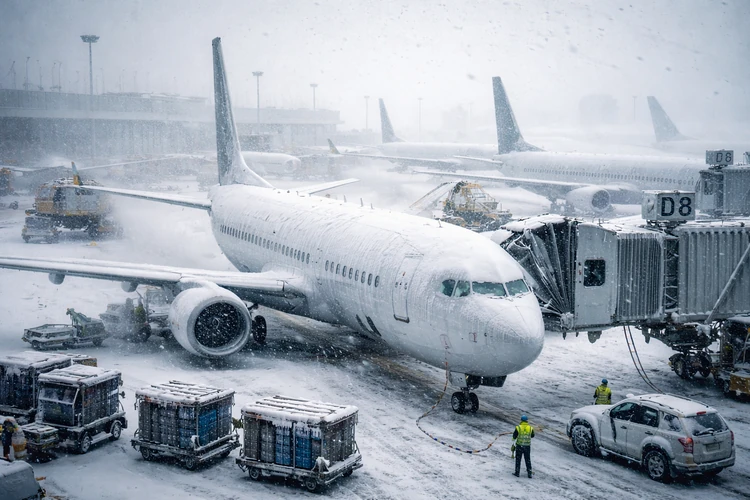
SkyBus late last week became the third U.S. airline within seven days to declare bankruptcy and go out of business, and today, the Federal Aviation Administration (FAA) is expected to propose new safety rules that would eventually apply to about 1,200 widebody jetliners thought to be prone to engine icing. There've been at least 14 instances of jet engines shutting down suddenly since 2002. Researchers say ice can form inside the engines under certain conditions, leading to unexpected and potentially disastrous shut-downs, known as "flame-outs." The new rule will require pilots to turn on engine de-icers more frequently. Additional procedures may be ordered in the future. BankruptciesFinancial flame-outs are an increasingly prevalnet problem. ATA and Aloha airlines also announced they were ending operations last week. While SkyBus had been in existence less than a year, the two other decedents were long-established carriers. ATA had been in operation for 35 years, Aloha for 60 years. In all three cases, soaring fuel costs were sited as a reason for their demise. Aloha filed for bankruptcy April 1 after saying it could not find a buyer or a lender willing to provide the financing it required to keep flying. ATA, based in Indianapolis, and a major partner of Southwest Airlines, folded April 2. Besides fuel costs, it cited the loss of a major military contract. Skybus apparently got hit with a triple whammy; not only is it hard to launch a new business past the first year of operation, it had to contend with rising jet fuel costs and a slowing economy. It was a fairly small airline, serving just 15 cities. Rising fuel pose a significant problem for all airlines. According to the International Air Transport Association, the cost of jet fuel is up more than 60 percent in the last year. For consumers, the result is likely to be chaotic, especially heading into the already crowded summer travel season. The loss is also significant because all three airlines served mostly smaller, secondary airports that are not served by the major carriers. With a number of consumers scrambling to salvage their spring Hawaii vacations, Aloha pilots have offered to transport stranded Mainland-bound and Merrie Monarch passengers and reiterated their standing offers to help Aloha Airlines continue its cargo operation until a buyer can be found and approved. "We are going to keep trying to help our community and our company during this difficult shut-down process," said David Bird, Aloha MEC Chairman, "It is ridiculous that there are stranded passengers in Hilo trying to get home from the Merrie Monarch Festival while idle aircraft sit empty on the ramp with pilots available and willing to fly." The pilots union says the airline "responded negatively" to the offer. Report Your Experience
|
||||||
Back to the top | |
|||||||
Advertisement
|
Home |
Rogues Gallery |
Good Guys |
Complaint Form |
News |
Recalls |
Search |
Video |
FAQ |
|
Terms of Use Your use of this site constitutes acceptance of the Terms of Use
Copyright © 2003-2008 ConsumerAffairs.com Inc. All Rights Reserved. |