NEWS    RECALLS    COMPLAINT FORM    SCAM ALERTS   RESOURCES  
Small Claims Guide   Class Actions   Lemon Laws   FAQ   Newsletters  
Share


Complain about a product or service

Automotive    Education    Employment    Electronics    Family    Finance    Health    Homeowners    Insurance    Pets    Shopping    Travel     Print This     Email This    


NEWS   Latest |  Archives |  Auto |  Cells, etc. |  Computers |  Financial |  Health |  Homeowners |  Parents |  Privacy |  Scams |  Seniors |  Travel

Supreme Court Strikes Down Mandatory Credit Card Arbitration

Decision is big victory for consumers


By Jon Hood
ConsumerAffairs.com

March 9, 2009

Forced Arbitration

Three Class Actions Filed Against Leading Arbitrator
National Arbitration Forum Backs Off Consumer Arbitrations
Homebuilders Stack Deck Against Buyers With Arbitration
Court Rules Lawsuit Against AT&T/Cingular Can Proceed
Consumer Group Seeks End To Forced Arbitration
Supreme Court Strikes Down Mandatory Credit Card Arbitration
Democrats May Shelve Mandatory Arbitration
Court Rules Credit Card Arbitration Lawsuit Can Go Forward
Court Throws Out T-Mobile's Forced Arbitration Clause
Mandatory Arbitration Stacks Deck Against Consumers
Appeals Court Shreds AT&T Arbitration Clause
Court Rules for Consumers in Arbitration Challenges
Texas Court Invalidates KB Home's Forced Arbitration
North Carolina Court Strikes Down CitiFinancial's Arbitration
Suit Says Banks Conspired to Force Consumers Into Arbitration
Arbitrator Declares Class-Action Ban Unfair
Homeowners Hung Out To Dry By Arbitration Clauses
Supreme Court Upholds AT&T Customers' Right to Day in Court
AT&T Can't Require Arbitration, Court Rules
Judge Overturns PayPal Arbitration Policy
W. Va. Court Rejects Forced Arbitration
Chevy Chase Ruling Casts Doubt on Arbitration Clauses
Consumers Unwittingly Giving Up Their Right to Sue

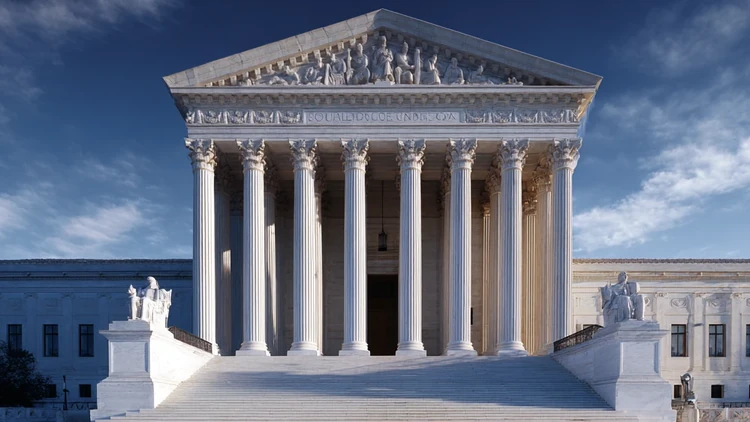
In a victory for consumers, the Supreme Court held today that credit-card holders can sometimes fight mandatory arbitration agreements, giving them a better prospect of victory in claims brought by banks and creditors.

The decision arose from a 2003 suit filed by Discover in Maryland state court, trying to recover $10,000 in past-due charges from cardholder Betty Vaden. In a class-action counterclaim, Vaden asserted that Discover's finance charges, interest, and late fees violated Maryland state law. Discover filed a motion in federal court to compel arbitration, citing a mandatory arbitration clause in Vaden's cardholder agreement. Discover argued that Vaden’s state claims were preempted by federal banking laws, meaning that state and federal laws contradicted one another. In such a situation, federal law takes precedence and federal courts have jurisdiction of the claim.

The Fourth Circuit said that they would disregard the intricacies of the parties' pleadings to determine whether the underlying substantive controversy involved federal law. The court found that it did, and that, accordingly, they had jurisdiction over the matter. The Supreme Court agreed that underlying federal issues were enough to get a case into federal court, but said that Vaden's counterclaims alone weren't enough under that standard. Justice Ginsburg, writing for the majority, said that Discover’s suit "was triggered by Discover's garden-variety, state-law debt-collection claim against Vaden," and thus belonged in state court.

It is a well-established rule that federal jurisdiction must be based on the initial controversy, rather than on a counterclaim or anticipated defense. Otherwise, a defendant could "forum-shop" by bringing a federal counterclaim, avoiding state court altogether. The Supreme Court affirmed this rule in its opinion, saying that "a federal court may not entertain a [claim] based on the contents, actual or hypothetical, of a counterclaim." A dissent in the Fourth Circuit's earlier decision made the same argument, asserting that "[t]here was no 'properly invoked federal question' in the underlying state case."

Boiled down, the decision means that credit card holders can't be as easily forced into mandated arbitration — a major victory for consumers, since arbitration forums tend to overwhelmingly favor credit card companies. A study by consumer advocacy group Public Citizen found that a staggering 94 percent of credit-card arbitration cases were decided against consumers. In its findings, the group said that "binding mandatory arbitration is a rigged game in which justice is dealt from a deck stacked against consumers." The study analyzed California cases brought by credit card company MBNA, and heard by the National Arbitration Forum.

Credit card companies attempt to justify mandated arbitration by arguing that it is more efficient and less expensive than protracted litigation. They also point out that many state courts don't want to give up the suits, and fight to keep them out of arbitration.


Report Your Experience
If you've had a bad experience -- or a good one -- with a consumer product or service, we'd like to hear about it. All complaints are reviewed by class action attorneys and are considered for publication on our site. Knowledge is power! Help spread the word. File your consumer report now.

Share

Follow us on Twitter.

FREE CONSUMER NEWSLETTERS

The Daily Consumer
Afternoons M-F

Sign up now!


Consumer News & Alerts
Every Sunday

Sign up now!


CONSUMER NEWS

SAFETY RECALLS

Back to the top |

Advertisement


Custom Search
AUTOMOTIVE
• Dealers
• Manufacturers
• Service
• Extended Warranties
• Lemon Laws
• Recalls
• Tires
• Transporters

FAMILY
• Aging
• Children, Parenting
• Recalls
• Dating
• Education
• Entertainment
• Pets
• Weddings
FINANCE
• Annuities
• Banks
• Credit Cards
• Debt Collection
• Debt Counseling
• Insurance
• Investing
• Loans
• Mortgages
• Payday Loans
• Student Loans
• Tax Prep

HEALTH
• Doctors
• Drugs, Pharmacies
• Health Clubs
• Hearing Care
• Hospitals
• Nursing Homes
• Nutrition, Diets
• Vision Care
• Weight Loss
HOUSE & HOME
• Appliances
• Cookware
• Furniture
• Home Improvements
• Lawn & Garden
• Movers
• Pools & Spas
• Realtors, Rental Agents
• Recalls
• Utilities

ELECTRONICS
• Cable TV/DBS
• Cameras
• Cell Phones
• Computers
• Home Electronics
• Internet Access
• Local Phone Service
• Long Distance
• VoIP
SHOPPING
• In-Home
• Online
• Retail Stores
• Sporting Goods
• Supermarkets
• Telemarketers

TRAVEL
• Airlines
• Bus Lines
• Car Rental
• Cruises
• Hotels
• Travel Agents
• Trains

RESOURCES
• Class Actions
• Complaint Form
• Small Claims Guide
• Lemon Laws
CONSUMER NEWS
• Latest News
• Automotive
• Telecom
• Financial
• Health
• Homeowners
• Scams
• Seniors
• Travel
• More ...

RECALLS
• Automotive
• Children's Products
• Drugs
• Food
• Household Products
• Sporting Goods

ABOUT US
• FAQ
• Privacy Policy
• Advertise With Us
• Newsroom
• Syndication
• Terms of Use

Terms of Use Your use of this site constitutes acceptance of the Terms of Use

Advertisements on this site are placed and controlled by outside advertising networks. ConsumerAffairs.com does not evaluate or endorse the products and services advertised. See the FAQ for more information.

Company Response Welcome If complaints about your company appear on our site, we welcome your response. Please see the Response Form for more information.

For more information, see the FAQ and privacy policy. The information on this Web site is general in nature and is not intended as a substitute for competent legal advice.  ConsumerAffairs.com Inc. makes no representation as to the accuracy of the information herein provided and assumes no liability for any damages or loss arising from the use thereof. 

Copyright © 2003-2009 ConsumerAffairs.com Inc.  All Rights Reserved.    The contents of this site may not be republished, reprinted, rewritten or recirculated without written permission.