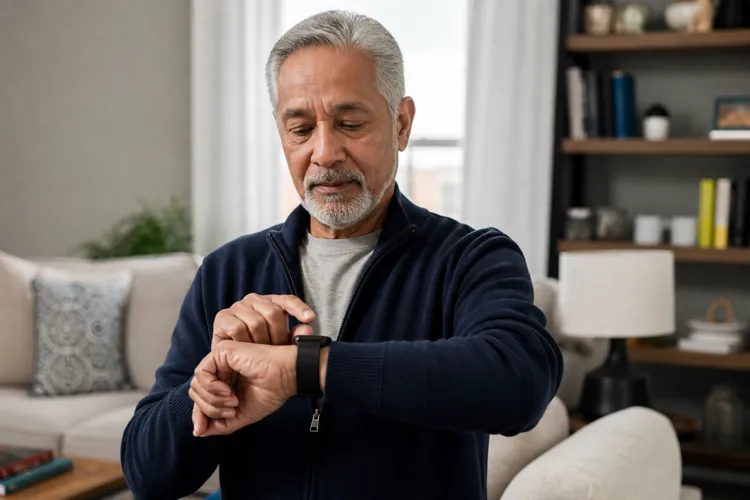
Senior Health and Wellness

The content explores various factors contributing to healthy aging and cognitive well-being among seniors. It emphasizes the importance of cognitively stimulating jobs, social connections, and healthy lifestyles in reducing the risk of dementia and loneliness. Studies highlight the benefits of activities like playing musical instruments, engaging in regular physical exercise, and maintaining strong social ties. The articles also delve into the impacts of medications on cognitive health, with specific attention to drugs that may increase dementia risk. Additionally, practical advice is offered on how to support aging parents, manage health insurance after job loss, and recognize early signs of cognitive decline. Overall, the theme centers on promoting activities and lifestyle choices that support mental and physical health in older adulthood.

Latest

Structured lifestyle programs may help older adults stay healthier as they age

New research suggests coaching and accountability could make healthy habits more effective

Featured Aging, Senior, and Eldercare photo

A two-year clinical trial found that structured lifestyle programs improved measures of frailty in older adults.

Participants who received coaching, goal-setting support, and regular check-ins saw greater benefits than those following a self-guided approach.

Researchers say combining healthy eating, exercise, social engagement, and cognitive activities may help support healthier aging.

Many people know that eating well and staying active are important parts of healthy aging...

Read Article
Featured Aging, Senior, and Eldercare photo
2025
Article Image

Where you live may determine how long you live

  • Yale researchers developed two indices—GERi-State and GERi-County—to measure how state and county-level conditions impact the health of older Americans.

  • Seniors living in the bottom 20% of these indices are at significantly higher risk for early mortality, frailty, dementia, and disability.

  • The indices focus on modifiable, policy-relevant variables like physician density, poverty rates, and tobacco taxes to inform targeted health interventions.


New research from Yale School of Medicine has identified how where older Americans live may directly influence their health and longevity. Two recently published studies, led by Dr. Robert Becher, reveal that geographic disadvantage, rooted in economic, social, and policy factors, can significantly increase the risk of death and disability among Americans aged 65 and older.

Becher and his team developed two novel indices to better understand these risks: the GERi-State index, which assesses health policy and socioeconomic disadvantage at the state level, and the GERi-County index, which captures multi-dimensional disadvantage at the county level.

These tools were designed using measurable, modifiable factors like preventable hospitalizations, median income, physician availability, and tobacco taxes.

Geography, not genetics

The researchers found that older adults living in the lowest 20% of both indices faced the greatest health threats. Specifically, those in disadvantaged counties had higher rates of frailty, dementia, and disability, as well as a 10% increased risk of premature death across two separate five-year periods. 

Meanwhile, those in disadvantaged states showed an 11% to 14% increased risk of early mortality.

These findings underscore the idea that “place matters,” a theme Becher has observed in his surgical practice. “One of the most consistent findings in the medical literature is that place matters,” Becher said in a press release, noting that the built environment and policy context can serve as "fundamental determinants" of older adults’ health.

The research team, made up of experts from Yale’s School of Medicine, School of Public Health, and Faculty of Arts and Sciences, constructed the indices using data from 2006 to 2019 and focused on variables that policymakers could change. For instance, low physician density, high poverty rates, and suboptimal health policies were all linked to worse health outcomes.

Using these indices, the researchers identified 10 states and 627 counties across the U.S. as disadvantaged, with most of the affected states located in the South. Disadvantaged counties were more broadly dispersed, including in the South, Southwest, and Western U.S.


Article Image

Home health monitoring can reduce hospitalizations, study finds

Key Takeaways:

  • Hospitalizations cut by 59% for high-risk patients using University of Michigan’s home monitoring program.

  • $12 million return on investment achieved through reduced readmissions, making the program cost-effective.

  • Largest and longest study to date confirms benefits of remote patient monitoring for various chronic conditions beyond COVID-19.

The number of staffed hospital beds has decreased from approximately 802,000 before the COVID-19 pandemic to around 674,000 post-pandemic—a 16% decline, according to the Healthcare Leadership Portal. But a new study from the University of Michigan reveals that remote patient monitoring (RPM) can drastically reduce hospital readmissions for high-risk individuals—cutting hospitalization rates by more than half in the six months following program enrollment. 

The findings, published in Telemedicine and E-Health, suggest transformative potential for healthcare systems strained by overcrowding and rising costs.

The study examined the Patient Monitoring at Home (PMH) program, launched at the height of the COVID-19 pandemic in April 2020. Patients with heart failure, uncontrolled hypertension, severe COVID-19, and other high-risk conditions were sent home with a kit containing a tablet, thermometer, blood pressure monitor, pulse oximeter, and scale. This technology enabled them to regularly transmit vital signs and symptom updates to clinicians at U-M Health, which monitored the data in real time and intervened as needed.

"These are promising results for hospitalization prevention," Dr. Sara Margosian, lead author and a geriatric medicine faculty member at U-M Health, said in a press release. "This program targets the people at highest risk for rehospitalization, and the ability to have an intervention that works is really exciting."

Scalable model

The study tracked outcomes from over 1,700 patients, making it the largest and most extensive evaluation of an RPM initiative to date. Among its striking results:

  • A 59% overall reduction in hospitalizations after enrollment.

  • A 49% reduction even when excluding COVID-19 patients.

  • A $12 million net savings through avoided hospitalizations—making the initiative not only clinically effective but financially sustainable.

Patients used the monitoring kits for one to two months on average, yet the benefits endured well beyond the monitoring period, the researchers found.

U-M partnered with Health Recovery Solutions to develop an accessible system that doesn’t require home internet. The tablet connects to each monitoring device via Bluetooth and transmits data via a secure cellular signal. Patients are prompted to take daily readings and complete disease-specific surveys, which are reviewed by a clinical team that includes nurses, nurse practitioners, and physicians.

As the program matured, adherence improved markedly—by the third year, patients were logging vital signs 75% of the time and completing surveys 71% of the time.

Article Image

Statins don't affect kidney function, researchers find

Many older people develop chronic kidney disease and are also likely to be on cholesterol-lowering drugs known as statins. There has been speculation that the statins could interfere with kidney function but a new study finds that's not the case.

A University of Iowa research team examined the association between statin use in older adults and changes in two important indicators of kidney function — estimated glomerular filtration rate and urine albumin-to-creatinine (protein-to-waste) ratio.

“The data supports the kidney safety of statins in older adults with or without chronic kidney disease,” the authors write. They suggest that “the decision to use a statin for other indications should not be limited by concerns related to potential kidney harm.”

About the study

The researchers used data collected from a previous research trial that studied use of daily low-dose aspirin in more than 18,000 older adults from the United States and Australia between 2010 and 2017. Among that population, one in five participants had chronic kidney disease. The median age was 76 in participants with chronic kidney disease and 74 in those without.

Examining the data, the Iowa researchers found statin use did not improve kidney function, as had been hypothesized in some previous scientific studies. The drugs also had no ill effects.

Statins are commonly prescribed to older adults to help lower the risk of heart disease.

“While older adults are at greatest risk of cardiovascular events and kidney function decline, they are also the population at highest risk of adverse effects from medications; therefore, evidence demonstrating no negative association between statin use and kidney function provides an equally important message to one of kidney benefit,” the authors wrote.

The study, “Effects of statins on kidney function in older adults,” was published online on Dec. 18 in the Journal of the American Geriatrics Society. The research team was led by clinical professors Michelle Fravel and Michael Ernst, in the College of Pharmacy, 

2024
2023
2022