



What is a solar lease?
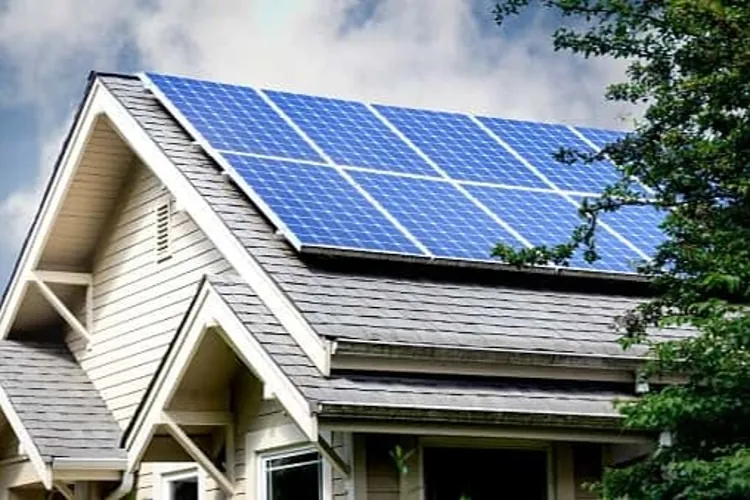
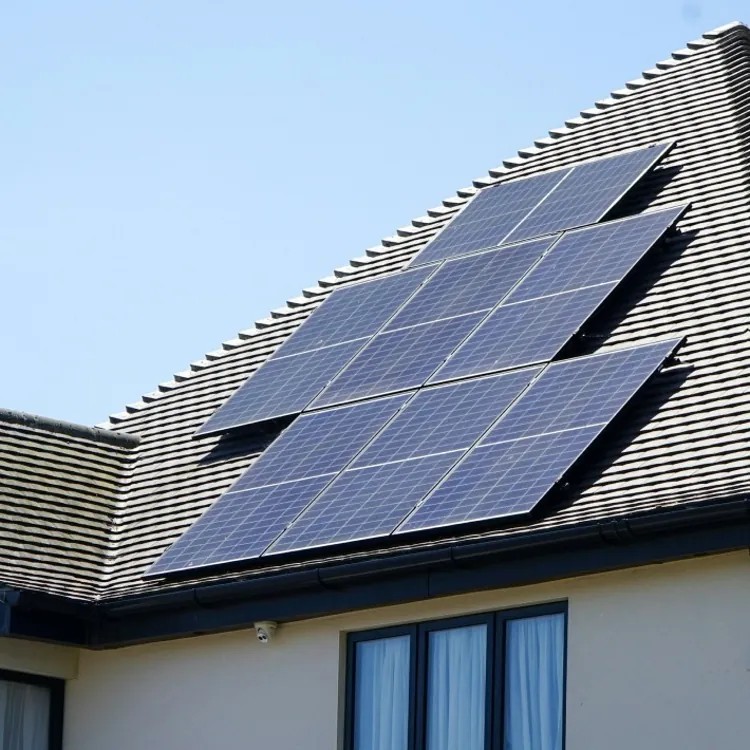
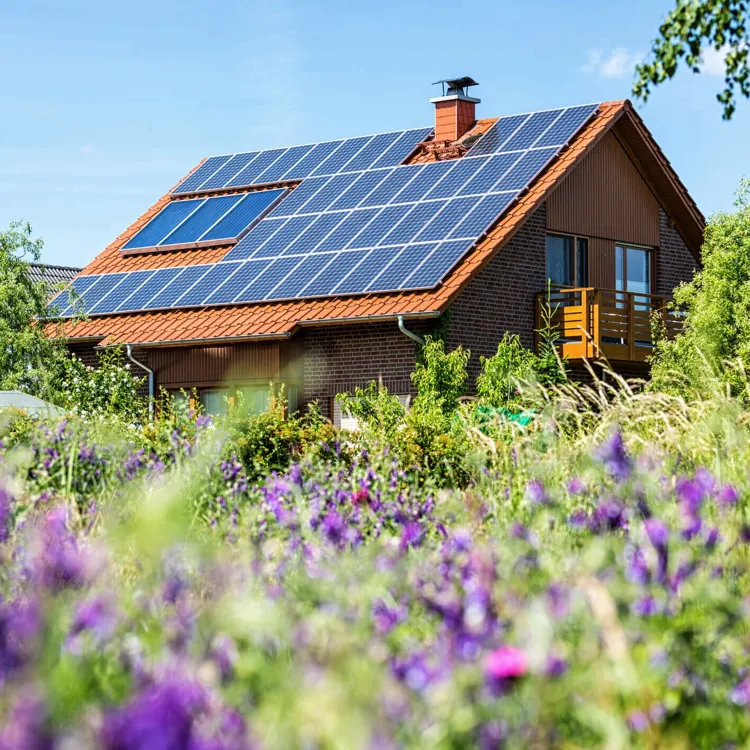
A solar lease is a long-term contract between a homeowner and a solar provider. The contract usually lasts 20 to 25 years and includes a fixed monthly payment, sometimes with small annual increases.
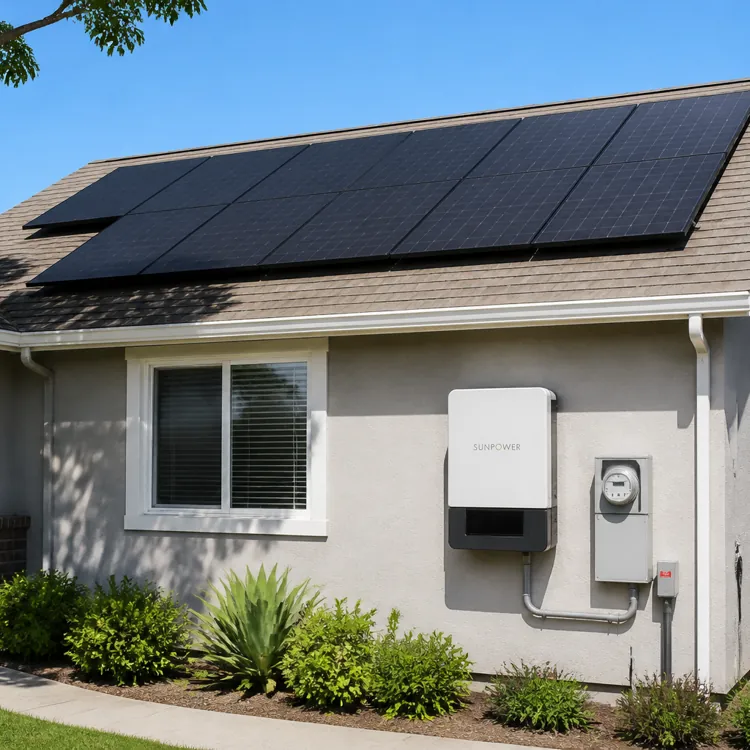
The company provides the solar panels, installation, system monitoring and usually maintenance and repairs. Since the company owns the system, it’s responsible for keeping it operational.
How solar panel lease agreements work
You pay for the right to use the solar system installed on your home. The solar leasing company provides the equipment and keeps ownership of it.
You qualify based on your credit, roof condition and past electricity usage. Then the company designs a system sized to your home. The solar company handles permits, installation, inspections and utility approval before the system is turned on.
Can a solar company put a lien on your house?
Solar lease companies usually don’t place a traditional lien on your home, but they often file a UCC-1 financing statement.
This isn’t a mortgage lien, but it is a public record showing the company owns the solar equipment attached to your property. That’s why if you sell your home, the lease typically must be transferred or bought out before the filing is removed.
What to know before you sign a contract
Before signing a solar lease, it’s important to understand what is — and isn’t — covered. Most leases include monitoring and basic maintenance, meaning the company fixes equipment if it fails. However, homeowners are still responsible for their roof, insurance coordination and costs related to roof repairs or panel removal if needed.
Monitoring vs. production guarantees
The short version: Monitoring shows you what’s happening. A production guarantee promises a minimum result and provides compensation if it’s not met.
- Monitoring is a tracking service that measures how much electricity your system is producing. It lets you (and often the company) see performance data, but it does not guarantee any specific production level.
- A production (or performance) guarantee is a promise in your contract that the solar system will produce a certain amount of electricity over time. If it doesn’t meet that guaranteed level, the company must compensate you — usually with a payment, bill credit or system fix.
What happens at the end of a solar lease?
At the end of your solar lease term, you may be able to renew the contract, upgrade to a newer system or have the system removed from your home. In some cases, you may also purchase the system at fair market value.
How much does a solar lease cost?
Solar lease costs per month typically range from $150 to $250. The size of your system, the condition of your roof and your credit score are major factors that determine lease prices.
Some lease contracts include annual rate increases, often around 1% to 3%. In some areas, these escalators can increase your energy costs at a faster rate than your local utility company. This potentially eliminates long-term savings over time, depending on local utility rate trends.
Pro tip
Consider having a qualified professional review the contract before signing any solar lease contract to ensure transparency and fair terms.
Is a solar lease worth it?
Going solar is generally worth it if you want lower electric bills and more energy independence. A solar lease can make going solar more accessible because it requires little to no upfront cost.
If you buy a system outright, a typical solar panel system costs between $12,600 and $33,376 in 2026. That’s a lot of money for the average homeowner, and a lot of people don’t want to take on more debt right now.
Some homeowners who lease solar panels report saving 20% to 40% compared to their previous utility bills.
For some, the savings are immediate. Landon Wimmer, CEO of Empower Home Services, shared a California example with ConsumerAffairs: A homeowner with a 2,500-square-foot house was paying $500 to $1,100 per month in electricity. After switching to a solar lease, their costs dropped to $300 per month plus a $50 supplemental utility bill. According to Wimmer, they are saving $200 to $750 per month without waiting years to break even.
What ConsumerAffairs reviewers say
We’ve heard from a lot of homeowners who have gotten into solar leases. Experiences vary widely.
Some homeowners report smooth installations, lower electric bills and responsive customer service. As Pamela in New Jersey told us: “It's been a win-win for us. Our bills are $5 or $6 a month and there have been months where we had credits.”
When a solar lease doesn’t work out
Others have had very different experiences. Common complaints include misleading sales promises, confusing contract terms, escalating payments, poor communication and difficulty with buyouts or transfers. In more serious cases, reviewers describe unexpected buyout amounts or repair disputes:
- Dan in Illinois said he was locked into a 25-year lease with a buyout exceeding $35,000 and higher-than-expected payments.
- Laurinda in Pennsylvania reported that her provider failed to properly monitor or repair her system despite contractual promises.
- Doris in Massachusetts pays about $203 per month to lease solar panels and still gets a National Grid bill. Some months, those combined costs exceed what she had been paying before going solar. She said she didn’t fully understand that solar supplement (not replace!) her utility service, and now feels stuck in a 25-year contract.
Why you may still get a utility bill with solar
Solar panels don’t disconnect you from the power grid. If your system doesn’t produce enough electricity — especially at night or in winter — you’ll still buy power from your utility company. Most utilities also charge delivery or connection fees, even if your panels cover most of your usage.
Pros and cons of solar leases
Solar leases can be a good fit for some homeowners, but they come with trade-offs. Here’s a clearer look at the benefits and drawbacks, based on ConsumerAffairs reviews and expert insight.
Pros
- Low upfront costs
- Maintenance usually included
- Predictable monthly payments
- Possible local incentives
- Transferable and expandable systems
Cons
- You may not save as much as expected
- Maintenance isn’t always seamless
- Payments may increase over time
- Property taxes may increase
- Selling your home can be more complicated
Solar lease vs. PPA vs. loan vs. cash
With a solar lease, you’re not buying the panels, and you’re not directly paying per unit of electricity. You’re paying to use the system itself.
Solar PPAs are not available in all states.
A power purchase agreement (PPA) is similar, except you pay per kilowatt-hour (kWh) that the system produces. If you pay upfront or finance solar panels, you own the system and may be eligible for federal and state tax incentives, if you qualify.
How is a solar lease different from a solar loan?
The key difference between solar leases and loans is ownership. With a loan, you own the system once it's paid off, while with a lease, the solar company retains ownership throughout.
Solar leases vs. loans
| Solar lease | Solar loan |
|---|---|
| Third party owns system | Homeowner owns system |
| Ongoing monthly lease payment | Loan payment toward ownership |
| Considered a lease obligation | Considered secured debt |
How is a solar lease different from a solar PPA?
Solar leases are similar to power purchase agreements (PPAs) in that they offer an alternative to the outright purchase of solar equipment. Both have few upfront costs, but monthly costs may increase over time.
The biggest difference between solar leases and PPAs comes down to what you’re actually paying for. PPAs have variable payments for the power that the panels generate. That means your payment varies based on how much electricity the system produces.
Solar leases vs. power purchase agreements
| Solar lease | Solar PPA | |
|---|---|---|
| What you pay for | Use of the solar equipment | The electricity the system produces |
| How payments work | Lease payments are consistent each month | Payments are based on kilowatt-hours (kWh) of electricity generated |
| Does your bill change with production? | No | Yes |
| Who owns the system? | Solar company | Solar company |
| Contract length | Usually 20 to 25 years | Usually 20 to 25 years |
| Maintenance responsibility | Solar company | Solar company |
| Risk of low production | Company may cover shortfall if there’s a production guarantee | You automatically pay less if the system produces less |
| Best for | Homeowners who want predictable payments | Homeowners who want to pay only for what’s produced |
Compare solar leasing options
Read our guide to the best solar energy companies for more information.
| Company | Customer rating | Payment options | Max. panel efficiency | Panel warranty | In-house installers | Availability | Year founded | |
|---|---|---|---|---|---|---|---|---|
 Sunrun | Get Started | 4.3 | Cash, loan, lease | 22% | 20 years |  | Some states | 2007 |
 Sunlux | Get Started | 4.7 | Cash, loan and lease | 19.7% | 25 years | | California | 2015 |
 Blue Raven Solar | Learn More | 3.0 | Cash, loan, lease | Varies | 25 years | | Some states | 2014 |
FAQ
What are the advantages of a solar lease?
Many homeowners choose a solar lease because it reduces their responsibility when it comes to maintenance and repairs.
- Low upfront cost: Most solar leases require little to no money down, making solar accessible without a large upfront investment. Instead of paying thousands of dollars to buy a system, homeowners can start using solar with a predictable monthly payment. Some companies may require a down payment, so it’s important to review the contract carefully.
- Maintenance and repairs are usually included: Because the solar company owns the system, it’s typically responsible for monitoring, maintenance and repairs due to normal equipment failure. This hands-off approach appeals to homeowners who don’t want to manage the system themselves.
- Predictable monthly payments: Lease payments are usually fixed or increase at a known rate, which can make monthly energy costs easier to budget for. “Despite using more electricity this year, my payment remains straightforward — $19 plus a $43 lease, which I find convenient,” L. in Illinois told ConsumerAffairs. Similarly, William in Illinois described his solar lease as “easy and affordable.”
- Transferable and expandable systems: Many leases can be transferred to a new homeowner, which can help when selling a home. Some companies also allow homeowners to expand their systems. “At first, my home had an existing lease with 18 panels, but it wasn’t enough,” Vanessa in California told us. “I decided to lease 21 more panels along with two backup batteries. Last summer I was paying around $700 a month. This summer, it dropped to about $80.”
- Possible local incentives: In some areas, leased systems may qualify for state or utility incentives, though this is less common than with system ownership.
» EXPLORE: Solar incentives by state
What are the disadvantages of a solar lease?
A solar lease isn’t ideal for every homeowner; make sure to consider the disadvantages before you sign on for this option.
- You may not save as much as expected: Solar leases don’t guarantee savings. If your electricity rates are already low or your system is poorly sized, your combined solar and utility bills could be similar to — or higher than — what you paid before. For instance, Edward in New York said his electric bill remained high even after going solar. “On top of all of this, they increased the lease fee by $17 a month,” he wrote.
- Maintenance isn’t always seamless: While maintenance is often included, some homeowners report difficulty getting timely service. After months of paying for a system that barely worked, Robert in Washington said he spent more than nine hours and 20 phone calls just to get partial repairs. Nearly eight months later, his system was still underperforming.
- Payments may increase over time: Some leases include annual escalators that raise your monthly payment. Several reviewers say they weren’t fully aware of these increases when signing. Erika in Pennsylvania discovered her transferred lease included a 2.9% annual escalator. When she asked about removing it, she was told she’d have to pay $2,512 upfront to buy it down. That’s an expensive surprise fee.
- Property taxes may increase: In some areas, leased solar systems are still factored into property assessments. Nancy in New Hampshire told us, “Although I’m leasing the system, it was picked up in the property assessment, affecting my property taxes.”
- Selling your home can be more complicated: A solar lease must usually be transferred, bought out or paid off when selling a home. This can delay closings or scare off buyers. John in Colorado said transferring his lease was “very long and painful,” and later delayed the sale of his home.
» MORE: Solar energy pros and cons
How much is a solar lease per month?
Generally speaking, most leases require a monthly rate between $150 and $250. The monthly cost of a solar lease per month varies depending on the size of the system, the location, your credit score and other factors. This amount may increase by a small percentage each year. Some leasing companies require a down payment, but most don’t.
In some cases, lease payments may be lower than previous electricity bills. Certain incentives may also apply depending on where you live, but these are usually limited to solar panel owners.
Is it worth buying a house with leased solar panels?
Buying a house with leased solar panels may be worth it if the monthly payments are lower than the average electricity bills in your area. According to Cy Yablonsky, vice president of PowerLutions Solar in New Jersey: “The viability of an existing solar lease depends on its terms and conditions compared to current market offerings. Potential homebuyers should review the lease price, duration, escalation rates and other term details.”
Also, consider that an existing solar lease means you don’t have complete control over the system and may not be able to customize it. You’ll also have to meet the solar company’s qualification requirements, which may include having a minimum credit score of 700.
What happens at the end of a solar lease?
At the end of a solar lease, the lessee has several options. Depending on the terms of the agreement, you may be able to renew the contract and keep the equipment for an additional term or lease new equipment to update the system. Depending on the solar company, you also may be able to purchase the system outright.
If you decide to move out and terminate the lease earlier than expected, most companies require that all payments are made in full and any outstanding balances are paid off before transferring ownership. That said, you may be able to transfer the lease to the new homeowners. This typically means the buyers have to meet stringent qualification requirements.
Bottom line
Solar leases can be a good option for households looking to switch to solar energy without the significant upfront costs associated with outright panel purchases. Solar leasing typically requires less upfront money than buying the system outright, but consider all factors involved before committing to a solar lease. Not all areas offer the same financial benefits, and there are potential drawbacks.
Article sources
ConsumerAffairs writers primarily rely on government data, industry experts and original research from other reputable publications to inform their work. Specific sources for this article include:
- U.S. Department of the Treasury, “Before You Sign a Solar Lease Agreement.” Accessed Feb. 17, 2026.
- NREL, “Homeowners Guide to Leasing a Solar Electric System.” Accessed Feb. 17, 2026.
- United States Environmental Protection Agency, “Understanding Third-Party Ownership Financing Structures for Renewable Energy.” Accessed Feb. 17, 2026.
- Federal Trade Commission, Consumer Advice, “Solar Power for Your Home.” Accessed Feb. 17, 2026.