



Compare the best business credit cards
No matter which business credit card you pick, it’s important to remember that it will come with all the same responsibilities as any other credit card.
| Credit card | CTA | Our pick for | Annual fee | Rewards | 0% intro purchase APR | Regular purchase APR:* | Recommended credit |
|---|---|---|---|---|---|---|---|
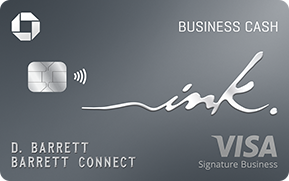
| Chase Ink Business Cash | Visit page | Office expenses | $0 | 1% to 5% cash back | 0% for 12 months | 16.74% to 24.74% (variable) | Good to excellent |
| Capital One Spark Cash | Visit page | Flat-rate cash back | $0 first year; $95 after | Unlimited 2% cash back | None | 24.49% (variable) | Excellent |
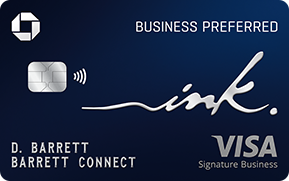
| Chase Ink Business Preferred | Visit page | Business travel | $95 | 1X to 3X points | None | 17.74% to 26.74% (variable) | Good to excellent |
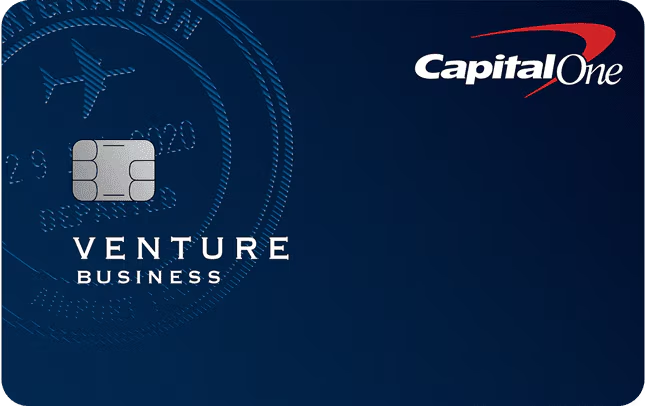
| Capital One Venture Business | Visit page | Simple travel rewards | $95 | Unlimited 2X miles | None | 24.49% (variable) | Excellent |
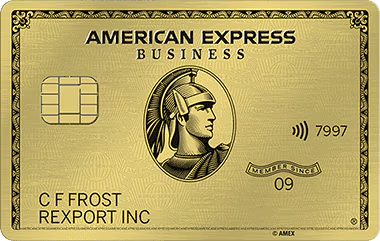
| Amex Business Gold | Visit page | High business spending | $375 | 1X to 4X points | None | 17.74% to 28.49% (variable) | Good to excellent |
*Rates and card terms are accurate as of publishing and may change.
Chase Ink Business Cash
Capital One Spark Cash

Chase Ink Business Preferred
Capital One Venture Business
Amex Business Gold
Best business credit cards buyers guide
Much like a personal credit card, a business credit card is a financial tool that can help a company build a credit profile, organize funds and earn rewards for purchases. Businesses of all sizes can benefit from a business credit card.
Key insights
Business credit cards can help separate business and personal expenses while providing access to a revolving line of credit and rewards on eligible purchases.
Jump to insightYour personal credit may affect whether you qualify for a business credit card, and many issuers require a personal guarantee that makes you responsible for unpaid business debt.
Jump to insightYou don’t necessarily need an LLC, corporation or EIN to apply for a business credit card. Freelancers, sole proprietors and people with side hustles may also qualify.
Jump to insightHow do business credit cards work?
Business credit cards give entrepreneurs access to convenient capital. An employer identification number isn’t required to apply for a business credit card, though having one will make the application process easier.
A business credit card can make it easier to separate your business and personal funds. For example, freelance photographers can use a business credit card to develop film or pay for lighting equipment.
Business credit cards provide what’s known as a revolving line of credit, which means that your access to funds is renewed every time you pay off the balance. Interest rates on business credit cards are typically a little higher than interest rates on personal credit cards, but it can be worth it for the expense planning tool and rewards programs.
There are three general types of business credit cards:
Revolving business credit cards: With revolving business credit cards you have the option to pay your balance each month or pay your balances over time with interest. The most common type of business credit card, revolving cards come with a pre-set credit limit based on your personal or business credit and finance history.
Business charge cards: Business charge cards are similar to revolving business credit cards, except you must pay your balance off each month and there is not a pre-set spending limit. Like revolving business credit cards, business charge cards also earn rewards and bonuses.
Secured business credit cards: Similar to a secured loan, a secured business credit card requires you put down a deposit or some other collateral, which largely determines your spending limit.
Business credit card benefits
Business credit card benefits include:
Free accounting features
Extra cards for employees
Rewards accumulation
Just like with a personal credit card, you can earn cash back rewards and bonuses when you use the card on purchases that you make all the time. Business credit card issuers often have additional reward programs for business accounts, like rebates and discounts with affiliate partners.
What is a good business credit card?
Any business credit card can help you manage expenses and improve your business’s credit score. When you’re comparing business credit cards against each other, it’s important to pay attention to the annual fee.
Plenty of business credit cards don’t have an annual fee, but the ones that do usually come with rewards programs and other benefits to make the fee worth it. Often, business credit cards come with generous sign-up bonuses — consider these a perk, but don’t apply for a credit card just for the sign-up bonus.
What distinguishes a lot of these cards from one another is their rewards programs. Which one is best for you will depend on your financial situation and business needs over the short and long term.
Compare business credit cards
| Card | Rewards rate |
|---|---|
| Chase Ink Business Unlimited | 1.5% cash back on all purchases |
| Chase Ink Business Cash | 5% cash back on business essentials |
| Chase Ink Business Preferred | 3X rewards on travel and business |
| Capital One Spark Cash | 2% cash back on all purchases |
| Capital One Venture Business Card | 2x miles on every purchase |
| American Express Gold Business Card | 4X rewards points on select categories |
How to get a business credit card
Business credit cards are often easier to qualify for than other types of credit cards and business loans. If approved, your business has access to a line of credit for expenses, and you can earn extra rewards on the purchases your business needs to make anyway. Luckily, it’s relatively simple to apply for a business credit card.
Determine your eligibility
You aren’t required to have an LLC or corporation to apply for a business credit card. Even if you’re a freelance or part-time contract worker, you should consider applying for a business credit card.Check your credit score
Knowing your credit score will help determine which business credit cards you can qualify for. Most issuers like to see a personal credit score above 640, and you’ll need a personal credit score of around 750 to get the best rates and reward benefits.Compare business credit cards
Your credit score will help you narrow down your options before you start comparing the fine print. Look at rewards factors and fees to see which one is the best fit for you. For example, some business credit cards earn more rewards on a particular category, like office supplies. If you don’t make many purchases in that category, then you won’t be getting the most out of that card.Fill out the application
Card issuers must evaluate your personal financial history plus your business’s revenue and monthly expenses. The card issuer will want to understand your business, your role and responsibilities within the company, how long your business has existed, how many employees you have, annual revenue and estimated monthly expenses.Sign a personal guarantee
It’s possible to get a credit card for a new business without having built up any business credit. Most new business owners will have to sign a personal guarantee to get approved for commercial credit. A personal guarantee is a legally binding contract stating you will be personally responsible for repaying debts if your business is unable to.Get your new business credit card in the mail
Depending on the issuer, you should receive your new business credit card through the mail in two to 12 days if you’re approved.
How do you build business credit?
Just like with personal credit, business credit can be improved by keeping credit utilization ratios low and paying off the balance every month. Keep in mind that more than one late payment can trigger a high penalty APR, which makes it even tougher to get back on track.
The three business credit bureaus, Equifax, Experian and Dun & Bradstreet, calculate business credit scores similar to consumer credit bureaus, except on a scale of 0 to 100 instead of 300 to 850.
Most credit experts suggest keeping credit utilization below 30 percent. If you need to tap into funds for an expense that exceeds 30 percent of your credit utilization ratio, consider applying for a business loan instead of a business credit card.
Alternatively, if you find yourself coming close to your credit limit every month, ask your issuer about raising your limit, or explore business cards without pre-set spending limits.
FAQ
Do business credit cards affect personal credit?
Yes, business credit cards can affect your personal credit, particularly when you apply or if you personally guarantee the account. Many issuers check your personal credit when you apply, which can result in a hard inquiry on your credit report.
After you open the account, whether your business card activity appears on your personal credit report depends on the issuer and its reporting policies. If you sign a personal guarantee, you’re personally responsible for the debt if your business can’t repay it. Late payments or defaults may therefore hurt your personal credit.
Can I use my Employer Identification Number (EIN) to get a business credit card?
Yes, you can use an EIN when applying for a business credit card. Many business credit card issuers require small-business owners to provide both an EIN and personal information to verify the applicant’s identity and evaluate their creditworthiness.
Can I get a business credit card without a business?
Yes, you can get a business credit card without a business. You don’t need to own a corporation or LLC to qualify for a business credit card. Sole proprietors, freelancers, independent contractors and people with side businesses may qualify.
What credit score do you need for a business credit card?
Credit score requirements vary by card issuer and product. Because many business credit card issuers consider the applicant’s personal credit, having good or excellent personal credit can give you access to more cards, better rewards and more favorable terms. If your credit is limited or poor, a secured business credit card may be an option.