Pest Control Statistics (2026 Data)

+2 more


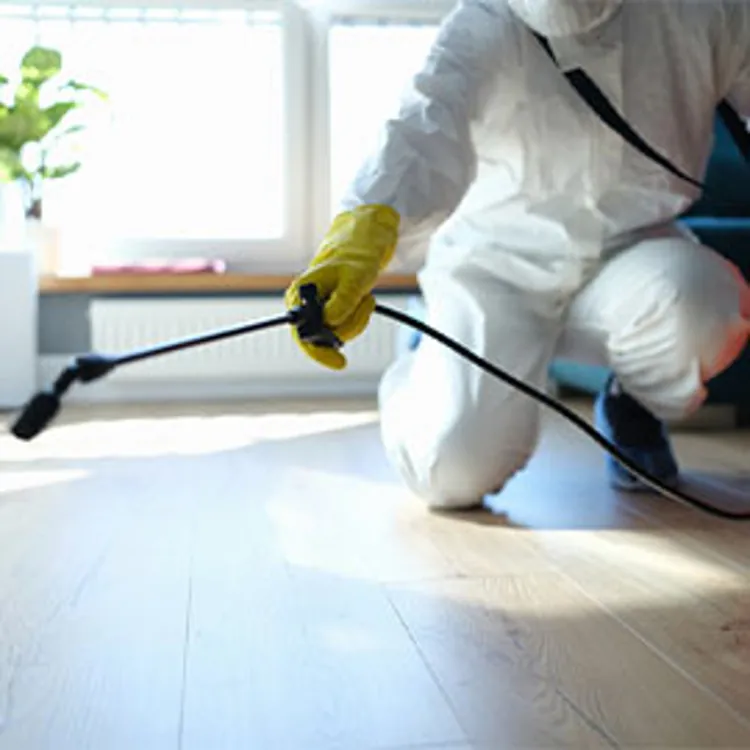
Pest infestations, particularly by ants, spiders, mice and roaches, are a common source of concern for homeowners and renters in the U.S. While ants are often perceived as simply annoying, certain species like carpenter ants and fire ants can cause significant property damage and health issues. Spiders, though harmless, can trigger anxiety due to their erratic movements, while roaches repulse people due to their slimy appearance and rapid movements. Beyond these pests, termites, mosquitoes and ticks pose substantial threats, causing structural damage and transmitting diseases like West Nile virus, Eastern Equine Encephalitis, and Zika. The presence of these pests underscores the vital role of the pest control industry in addressing both property damage and public health concerns posed by these pervasive insects.
The most concerning pests for homeowners and renters alike are ants, spiders and roaches.
Jump to insightThere are over 167,000 pest control specialists employed across the U.S., and more than 31,000 businesses.
Jump to insightRollins, the parent company of Orkin, was the highest-earning pest control company in 2021 at $2.5 billion.
Jump to insightTermites and mosquitoes are particularly dangerous to humans, as termites cause billions of dollars in structural damage to structures, and mosquitoes carry deadly diseases that kill hundreds of thousands every year.
Jump to insightGeneral pest control statistics
As homeowners struggle to ward off pest infestations of all types, the significance of the pest control industry becomes increasingly apparent. More than 31,000 pest control businesses are currently in operation, employing 167,232 pest control specialists. For an average 3,000-square-foot, 3-bedroom, 3-bathroom house, pest control can cost customers an average of $400 to $950. This can vary depending on the size of the home, the severity of treatment and the number of visits required, as well as the type of pest. Bedbugs and termites are the most expensive pests to treat, as prices can run up to the thousands.
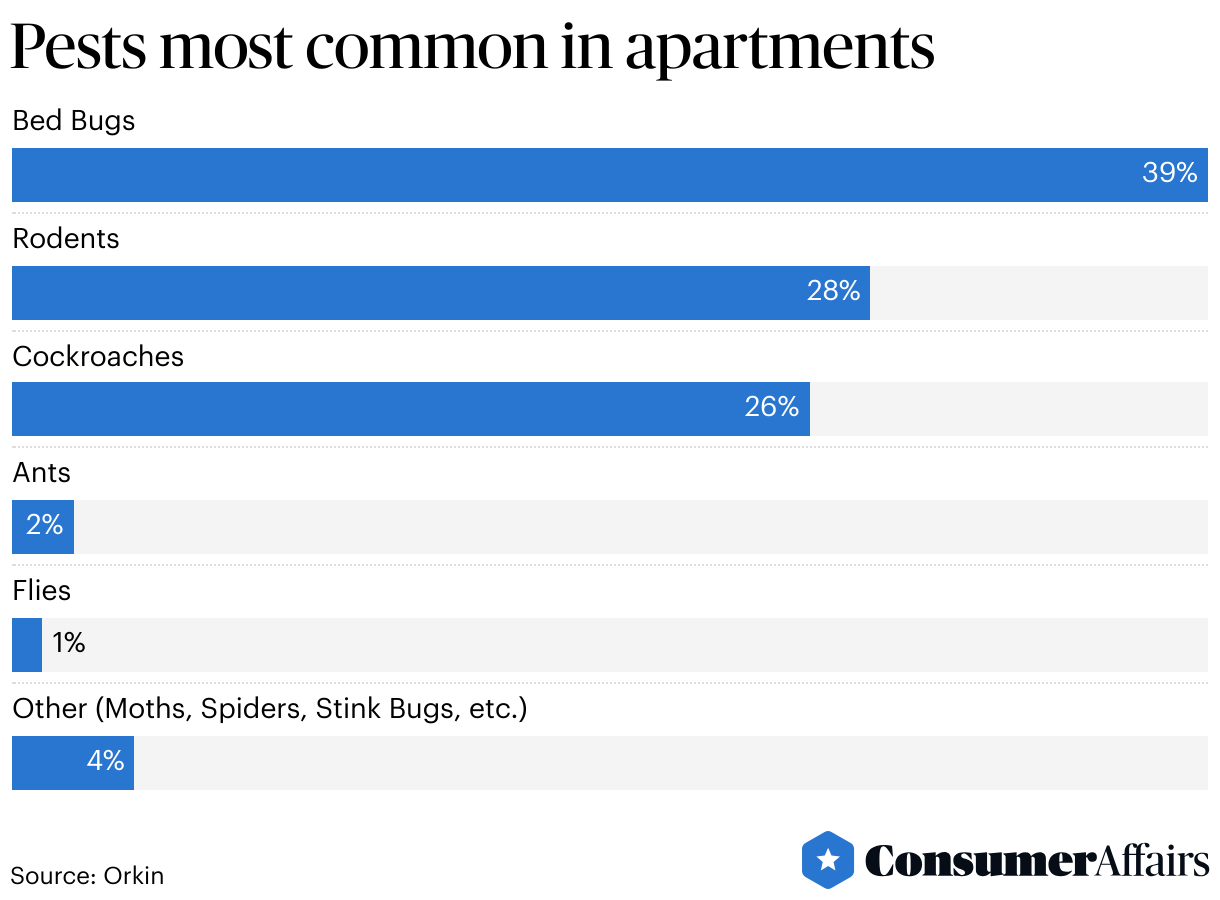
Termites, mosquitoes and ticks pose the most significant threats to people in the U.S.
Ants are often considered to just be a nuisance, but some species pose a threat to your property or health. Carpenter ants bite through wood with their strong jaws and can cause as much damage as termites. For those with allergies, fire ant bites can cause severe pain and localized reactions.
Not surprisingly, spiders also ranked as a serious concern for most people, although the majority of U.S. species are harmless. Psychologists believe that spiders trigger anxiety in people because of their erratic movements and “legginess.” For similar reasons, we find roaches repulsive because they appear slimy and, like snakes, move faster than it appears they should.
However, termites, mosquitoes and ticks pose the most significant threats to people in the U.S. Termites cause structural damage that can be expensive to repair, while mosquitoes and ticks can be vectors for disease and cause significant health issues. Pest control treatment costs are also high.
Most common pests by region
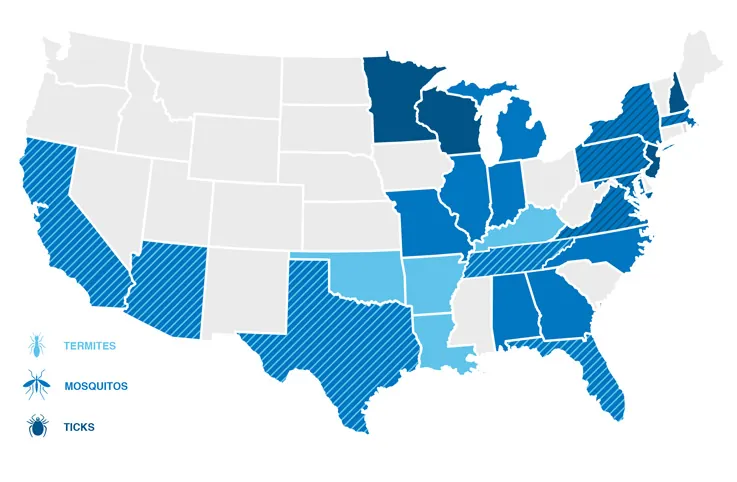

Where are mosquitoes most common?
Mosquitoes thrive in warm, humid climates with high rainfall. They lay their eggs in pools of water and mature from the egg to adult stages in a matter of days to weeks. According to mosquito-borne disease statistics from the World Health Organization (WHO), mosquitoes are most likely to bite humans during warmer months around dusk. We based our ranking on the number of Orkin mosquito customers from April 1, 2022, to March 31, 2023.
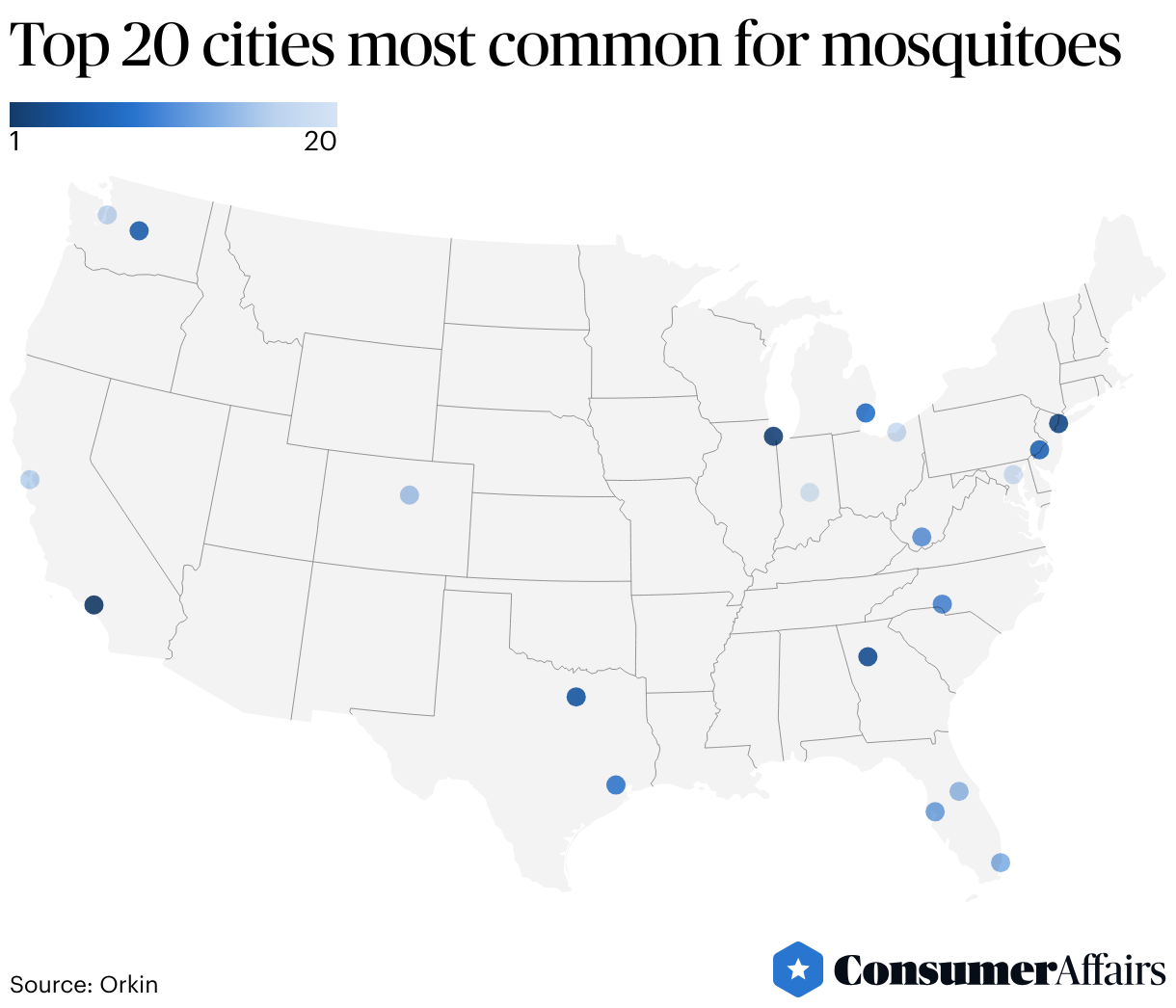
Mosquito statistics
The mosquito spreads more diseases than any other type of insect and is responsible for several million deaths and hundreds of millions of illnesses each year, according to the WHO. West Nile Virus, Eastern equine encephalitis (EEE) and Zika are the biggest mosquito threats in the U.S.
- West Nile virus: West Nile virus is most commonly transmitted to humans by a mosquito that has fed on an infected bird. Symptoms appear in three to 14 days and include fever, body aches, headache, rash and swollen lymph nodes. There is no specific antiviral treatment or vaccine. According to the CDC, in 2023, there were 2,406 cases of West Nile in the U.S and Statista notes 93 deaths in 2022.
- Eastern Equine encephalitis: EEE is a rare but deadly disease in humans. Symptoms usually occur four to 10 days after the bite and include fever, headaches, muscle aches, vomiting, joint pain and fatigue. Like West Nile, there is no vaccine or specific antiviral treatment for EEE. In 2023, there were seven cases of EEE. Recent EEE cases have been reported in Louisiana, Alabama, Georgia and Florida. According to CNN, in one case, the victim became brain-dead just nine days after exhibiting symptoms.
- Zika virus: In the U.S., Zika is transmitted by Aedes aegypti, aka the yellow fever mosquito, which is also responsible for the dengue virus, chikungunya virus and yellow fever. Symptoms occur within seven days and include mild fever, rash, muscle or joint pain, and conjunctivitis. Those with Zika virus are at a higher risk for neurological complications, including Guillain-Barré syndrome, neuropathy and myelitis.

Where are termites most common?
Generally, termites are most prevalent in the Mid-Atlantic, Southeast and Gulf Coast regions, as well as Midwest and Pacific states. Three termite species — drywood, Formosan and subterranean (the most harmful species) — thrive in warm climates. They are primarily attracted to moisture and wood and invade properties through cracks in building exteriors. We based our ranking on the number of Orkin termite customers from February 1, 2022, to January 31, 2023.
Termite statistics
Termites are small but mighty when they work toward a common goal — and that goal often causes structural damage to your house. On average, a homeowner with termites spends $3,000 to repair the damage. According to Orkin, each year in the United States, termites:
- Infest approximately 600,000 homes
- Cause more than $5 billion in property damage
- Are responsible for $30 billion in damage to crops and infrastructure

Termite statistics
Termites are small but mighty when they work toward a common goal — and that goal often causes structural damage to your house. On average, a homeowner with termites spends $3,000 to repair the damage. According to Orkin, each year in the United States, termites:
- Infest approximately 600,000 homes
- Cause more than $5 billion in property damage
- Are responsible for $30 billion in damage to crops and infrastructure
Where are ticks most common?
Ticks live in every state, but tick-borne diseases occur most frequently in populations in the Northeast, Mid-Atlantic and Upper Midwest. We based our ranking on “Vital Signs: Trends in Reported Vectorborne Disease Cases — United States and Territories, 2004 - 2016,” published in 2018 by the Centers for Disease Control and Prevention (CDC).
Top 10 states most common for ticks
Ticks live in every state, but tick-borne diseases occur most frequently in populations in the Northeast, Mid-Atlantic and Upper Midwest.
| Rank | State | Number of tick-borne disease cases* |
|---|---|---|
| 1 | Pennsylvania | 73,610 |
| 2 | New York | 69,313 |
| 3 | New Jersey | 51,578 |
| 4 | Massachusetts | 50,234 |
| 5 | Connecticut | 36,727 |
| 6 | Wisconsin | 33,255 |
| 7 | Minnesota | 26,886 |
| 8 | Maryland | 22,166 |
| 9 | Virginia | 16,454 |
| 10 | New Hampshire | 13,710 |
Tick statistics
Cases of Lyme disease, spotted fever rickettsiosis (which can lead to Rocky Mountain spotted fever), anaplasmosis/ehrlichiosis, tularemia, babesiosis and Powassan virus are on the rise, according to the CDC. The total reported cases of tick-borne diseases increased from 22,527 in 2004 to 59,349 in 2017.
Additionally, in 2017 scientists identified a new tick species — Haemaphysalis longicornis, aka the Asian longhorned tick. Currently, this tick species can be found in Arkansas, Connecticut, Delaware, Georgia, Indiana, Kentucky, Maryland, Massachusetts, Missouri, New Jersey, New York, North Carolina, Ohio, Pennsylvania, Rhode Island, South Carolina, Tennessee, Virginia and West Virginia. As of April 2023, no harmful germs have been collected from this tick species in the U.S., but there has been evidence of serious illnesses in people and animals in other countries. Researchers have also found that while this tick is not likely to spread the bacteria that causes Lyme disease, it can carry Rocky Mountain spotted fever bacteria.
Pest control industry trends
The U.S. pest control industry has grown by 2.8% in the last five years. The industry is projected to generate $17.4 billion in revenue by 2023, according to Statistica.
- Chicago is the most rat-infested city in the U.S., followed by Los Angeles, New York, Washington, D.C. and San Francisco.
- Houston, Texas is the most cockroach-infested city in the U.S., followed by San Antonio, Tampa, Phoenix and Las Vegas.
- Chicagois the most bedbug-infested city in the U.S., followed by New York,, Philadelphia,, Cleveland and Los Angeles.
- Spotted lanternflies are an invasive species in 17 states: Connecticut, Delaware, Illinois, Indiana, Kentucky, Maryland, Massachusetts, Michigan, New Jersey, New York, North Carolina, Ohio, Pennsylvania, Rhode Island, Tennessee, Virginia and West Virginia. Spotted lanternflies aren’t dangerous to people, but infestations can cause honeydew secretions at the base of trees, which blacken the surrounding soil with fungal mats.
- Brown marmorated stink bugs are native to China, Japan and Korea but have been damaging crops in the northeastern and western U.S. since the early 1990s. In just one year, brown marmorated stink bugs caused $37 million in damage nationwide to apple crops. These bugs are a nuisance to people because they tend to swarm in large numbers, are attracted to indoor areas, and can cause severe allergic reactions.
- Each year in the U.S., an average of seven people die from spider bites. By comparison, hornets, bees and wasps are responsible for nearly 80 human fatalities per year. Small children, the elderly and those with compromised immune systems are the most at risk for death from spider bites.
- Roaches, stink bugs, ants, rats and mice are the most common pests in the White House, according to NBC Washington reporters who obtained a White House pest control order.
- All 50 states have designated official state insects. Most commonly, official state insects are the relatively wholesome honeybee or a type of butterfly. Meanwhile, New Mexico boasts the tarantula hawk — a kind of wasp that paralyzes tarantulas and lays its eggs in the spider’s abdomen. Eventually, the baby wasps eat the tarantula (still alive!) when they hatch.
- Neonicotinoid pesticides are a type of insecticides chemically related to nicotine. Neonicotinoid insecticides have gained popularity in the pest control industry because they are water-soluble and effective against sap-feeding insects, beetles, fleas, flies, cockroaches and some wood-boring pests. However, neonicotinoid insecticides are also potentially toxic to honeybees. UThe use of neonicotinoid pesticides has been restricted across the U.S. and European Union.
- Nationwide, about 74% of homeowners perform some type of DIY pest control, compared to 69% of renters.
FAQ
What pests should I be concerned about in my home?
According to our studies, homeowners are the most concerned about ants, spiders, mice, and termites, while renters are worried about ants, spiders, roaches and bedbugs.
How much does pest control cost?
The cost of pest control services depends on several factors, including the size of your home, the severity of the infestation, and what type of pests you have. Treatment for bedbugs and termites can cost several thousand dollars and multiple visits.
Can I handle pest control on my own?
Do-It-Yourself (DIY) pest control can be faster, less costly and more easily accessible than using a professional service. However, if applied incorrectly, these products can have harmful effects on your health and may exacerbate other pest problems that may be hiding in your home. While professional pest control can be more costly and time-consuming, pest control specialists have training and expertise that help them address the true causes of an infestation, rather than the symptoms, leading to longer-term relief than many DIY methods.
Article sources
ConsumerAffairs writers primarily rely on government data, industry experts, and original research from other reputable publications to inform their work. Specific sources for this article include:
- CNN Health. “Nine people have died from rare EEE infection.” Accessed Jan. 8, 2024.
- Terminix. “Termite Statistics.” Accessed Jan. 8, 2024.
- World Health Organization. “Executive Summary.” Accessed Jan. 8, 2024.
- Centers for Disease Control and Prevention. “Lyme Disease.” Accessed Jan. 8, 2024.
- NBC Washington. “White House Work Orders Reveal Mice, Roaches, Redecorating.” Accessed Jan. 8, 2024.
- The Revelator. “Neonicotinoid Pesticides Have Caused a Huge Surge in the Toxicity of U.S. Agriculture.” Accessed Jan. 8, 2024.
- Orkin. "MOSQUITOES ARE READY FOR THEIR CLOSE-UP: LOS ANGELES RANKS #1 FOR THIRD CONSECUTIVE YEAR ON ORKIN’S TOP MOSQUITO CITIES LIST." Accessed Feb. 7, 2024.
- Centers for Disease Control and Prevention. "Historic Data (1999-2022)." Accessed Feb. 7, 2024.
- Orkin. "Termite Infested Cities." Accessed Feb. 7, 2024.
- Statista. "Number of pest control businesses in the United States from 2013 to 2023." Accessed Feb. 7, 2024.
- Statista. "Number of people employed in the pest control industry in the United States from 2013 to 2023." Accessed Feb. 7, 2024.
- Statista. "Market value of the pest control industry in the United States from 2012 to 2023." Accessed Feb. 7, 2024.
- Statista. "Leading pest control companies in the United States in 2022, based on revenue." Accessed Feb. 7, 2024.
- Architectural Digest. "How Much Does Pest Control Cost? (2024)." Accessed Feb. 7, 2024.
- World Health Organization. "Vector-borne diseases." Accessed Feb. 13, 2024.
- Orkin. "OH, RATS! CHICAGO TOPS ORKIN’S RATTIEST CITIES LIST FOR NINTH CONSECUTIVE YEAR." Accessed Feb. 13, 2024.
- Orkin. "THE WINDY CITY CAN’T BLOW BED BUGS AWAY: CHICAGO RANKS #1 FOR THIRD CONSECUTIVE YEAR ON ORKIN’S BED BUG CITIES LIST." Accessed Feb. 13, 2024.
- Centers for Disease Control and Prevention. "West Nile Virus." Accessed Feb. 13, 2024.
- Animal and Plant Health Inspection Service. "Spotted Lanternfly." Accessed Feb. 13, 2024.
- Penn State University. "Brown Marmorated Stink Bug." Accessed Feb. 13, 2024.
- Centre for Agriculture and Bioscience International. "Study highlights mass rearing capabilities of an important natural enemy to fight brown marmorated stink bug pest." Accessed Feb. 13, 2024.
- Sage Pest Control. "What Are the Most Dangerous Types of Spiders?" Accessed Feb. 13, 2024.
- Centers for Disease Control Prevention. "QuickStats: Number of Deaths from Hornet, Wasp, and Bee Stings* Among Males and Females — National Vital Statistics System, United States, 2011–2021." Accessed Feb. 13, 2024.
- Natural Resources Defense Council. "Neonicotinoids 101: The Effects on Humans and Bees." Accessed Feb. 13, 2024.
- Terminix. "Professional Pest Control vs DIY." Accessed Feb. 13, 2024.
Figures