How Many People Move to Florida Every Day (2026)

+2 more



As Americans move farther away from home than ever before, many have relocated to Southern states. Florida is a top destination — it had the second-highest numeric and percentage population growth in 2024. Sandy beaches and amusement parks aren’t the only factors that make this state an attractive place to live. It has a lower cost of living than New York and California, as well as large populations of both Hispanic and elderly people.
In 2024, a lower percentage of moving Americans settled in a different county or state than in 2023.
Jump to insightFlorida is a popular destination for movers — in 2024, the state’s population grew by 1.8%, or 411,322 residents, the second-highest population growth in the U.S.
Jump to insightFlorida has the 13th-highest personal consumption expenditure, which measures the cost of goods and services for a household, in the U.S.
Jump to insightFlorida has the third-highest Hispanic population and the second-highest population of people 65 and older in the U.S.
Jump to insightGeneral moving statistics
Data suggests that Americans are on the move. But how far they move and where they move to varies.
How many people move in the U.S. each year?
About 25.6 million Americans moved in 2024, according to the U.S. Census Bureau, slightly less than in 2021, when roughly 27 million Americans moved. Overall, the number of Americans moving has generally decreased incrementally each year since 1985, when more than 46 million people moved.
In 2024, only 11.8% of Americans moved residences. In 1985, by contrast, more than 20% relocated.
How far do they move?
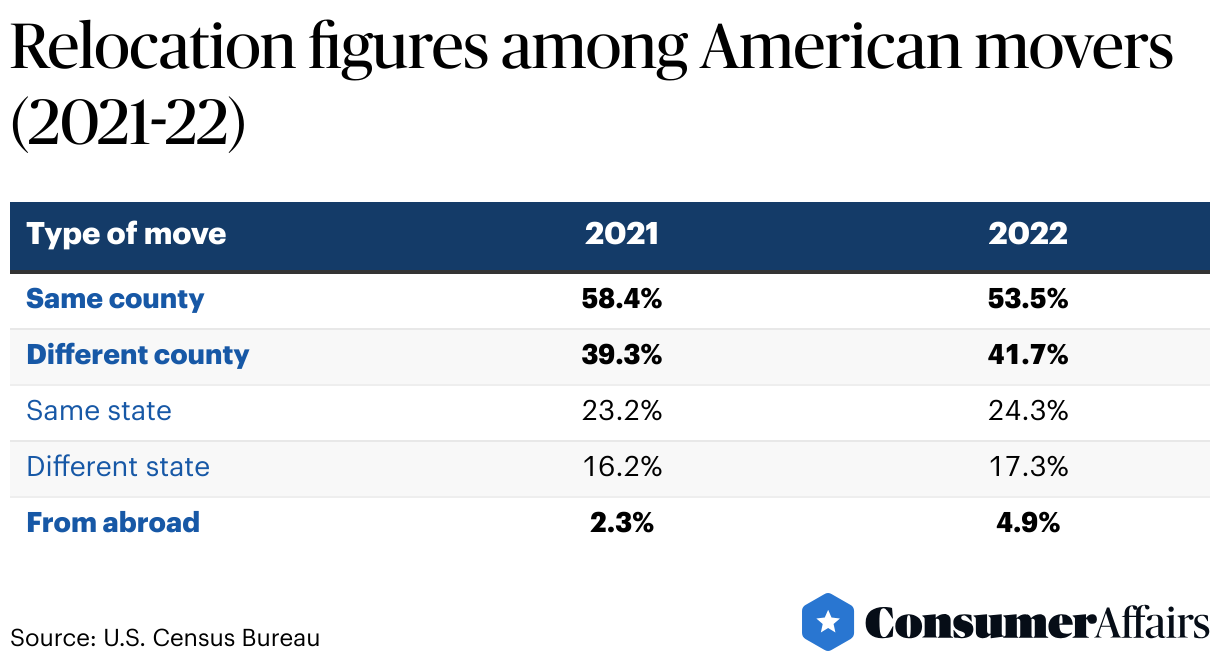
More Americans than ever before are moving to a new county or even a new state. In 2022, less than 54% of Americans who moved remained within the same county, the lowest share of inner-county moves the census has ever recorded.
Of those leaving their county, 24.3% moved to a different county in the same state, while 17.3% moved to a different state entirely. In 2024, of the Americans who moved residences, 2.1% moved to a different state.
What states are seeing the most migration in or out?
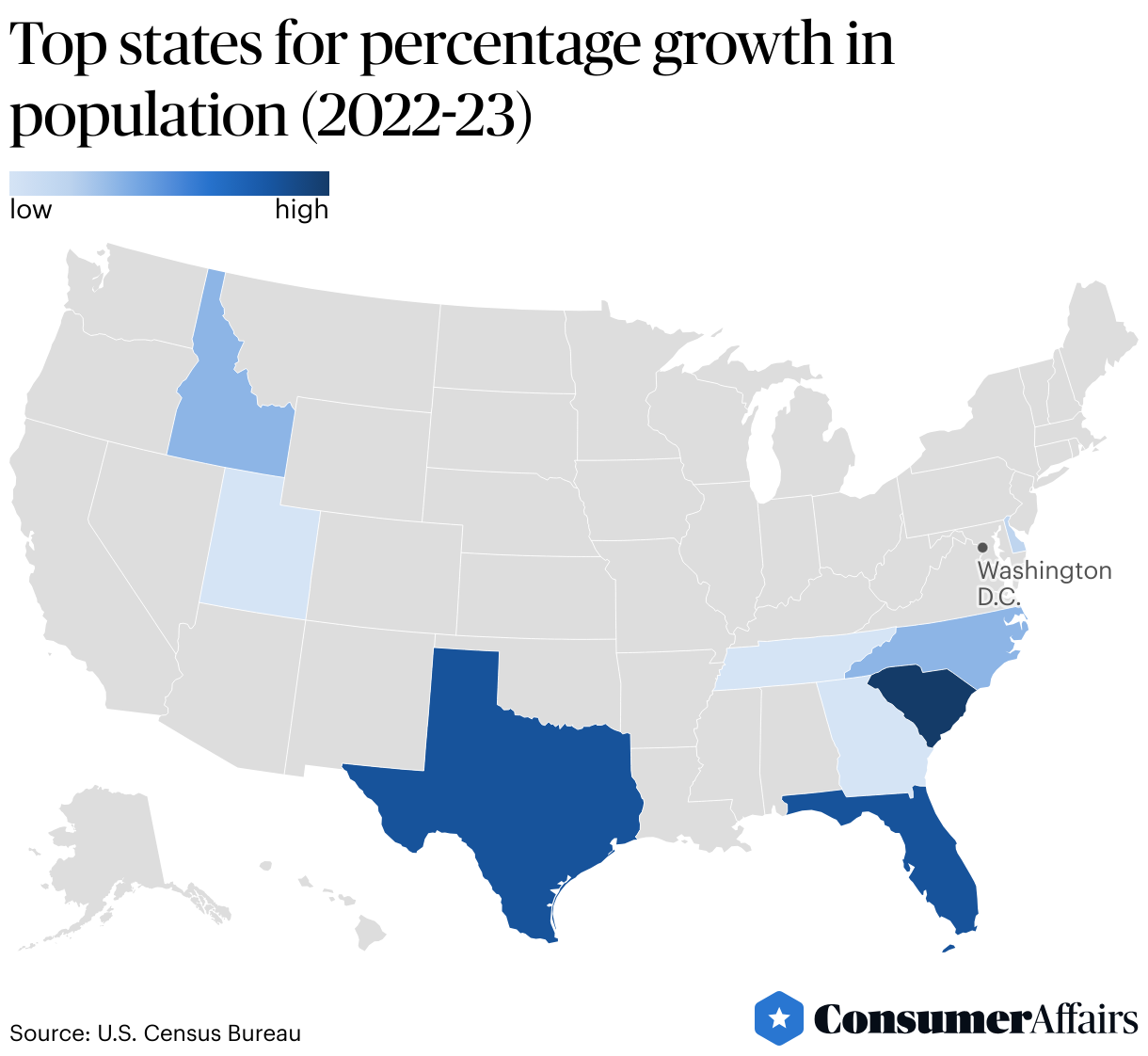
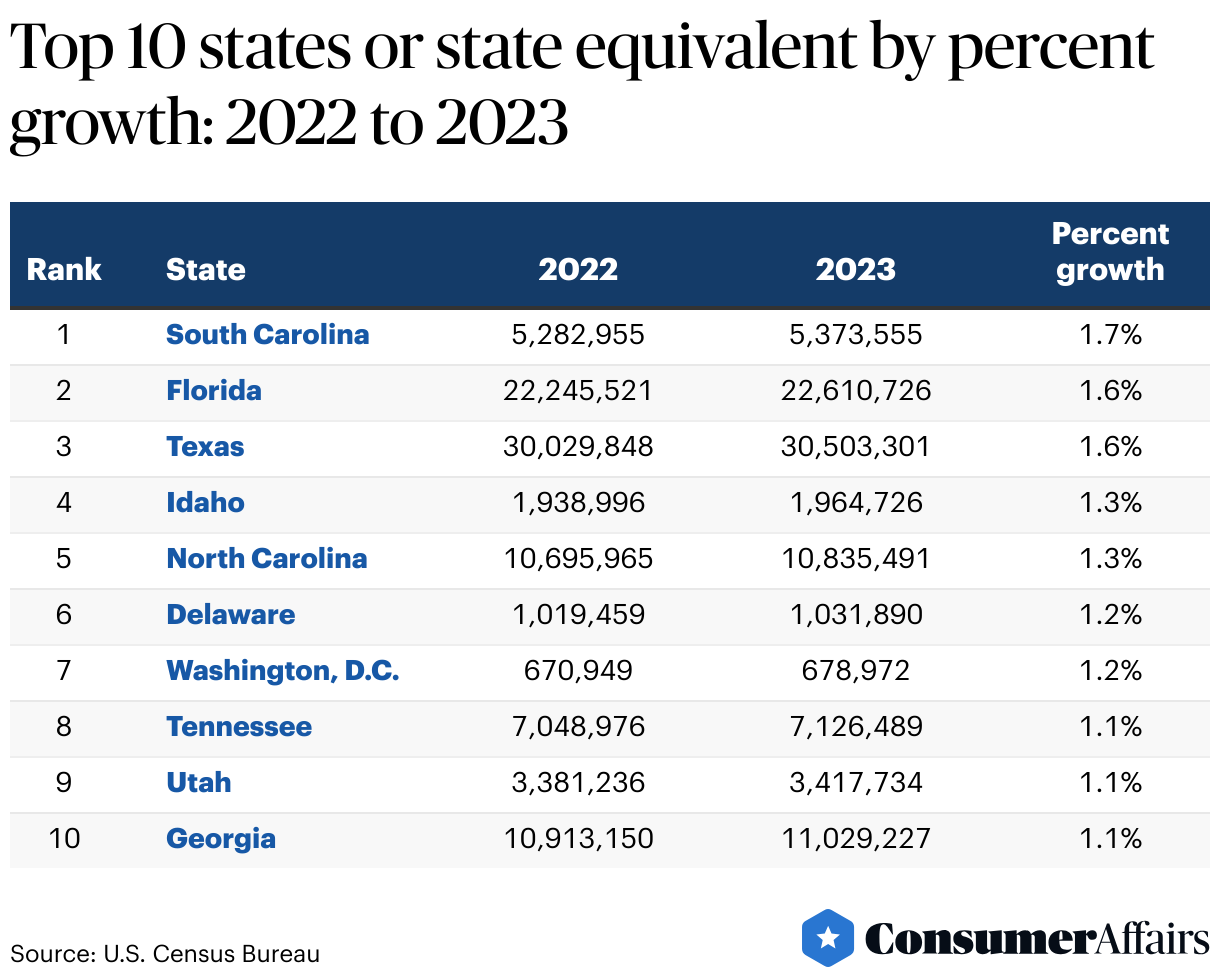
From 2023 to 2024, Florida, Texas and Washington, D.C., had the greatest percentage growth in population, according to the U.S. Census Bureau.
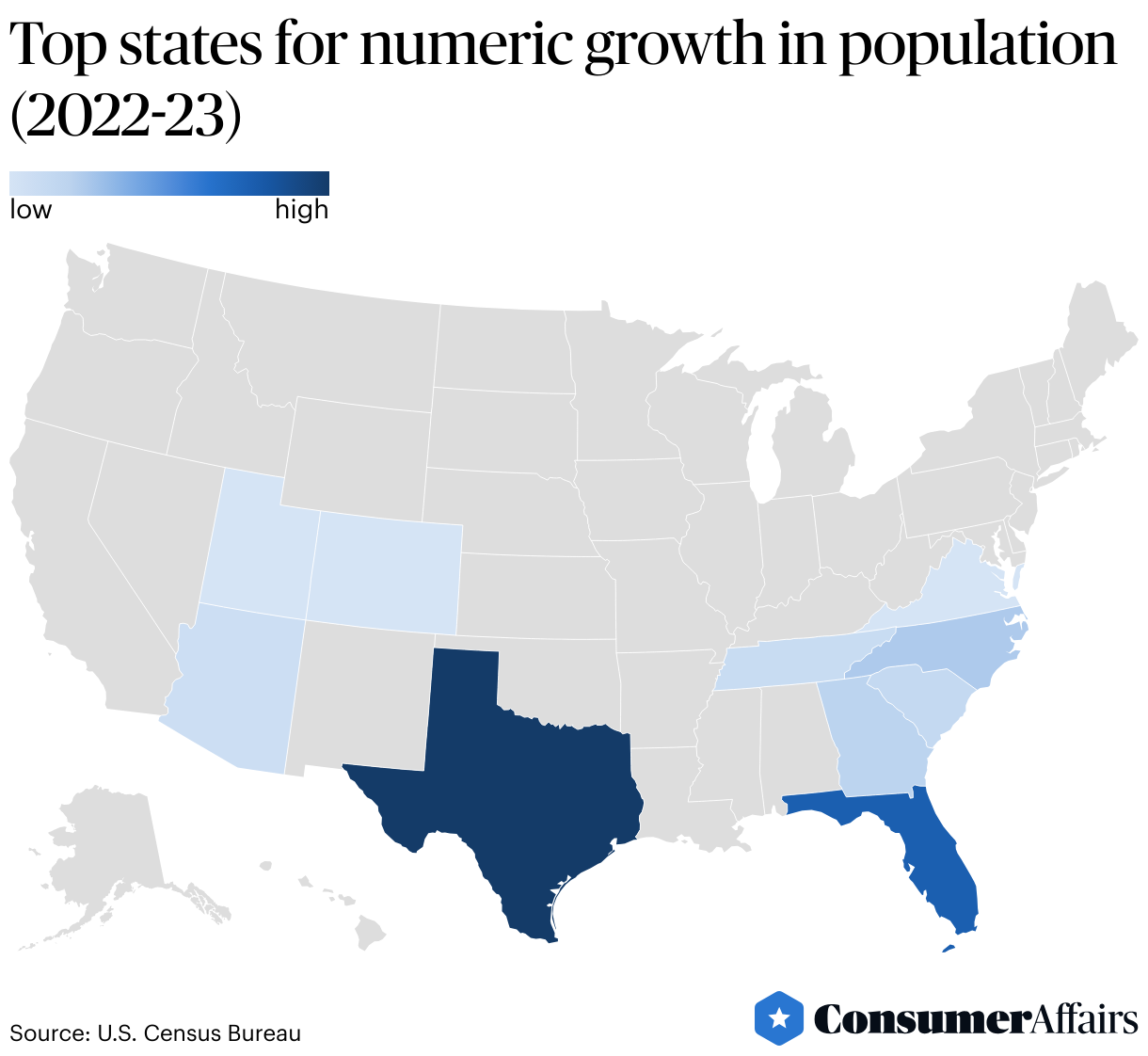
In terms of numeric growth, the populations of Texas, Florida and California grew the most.
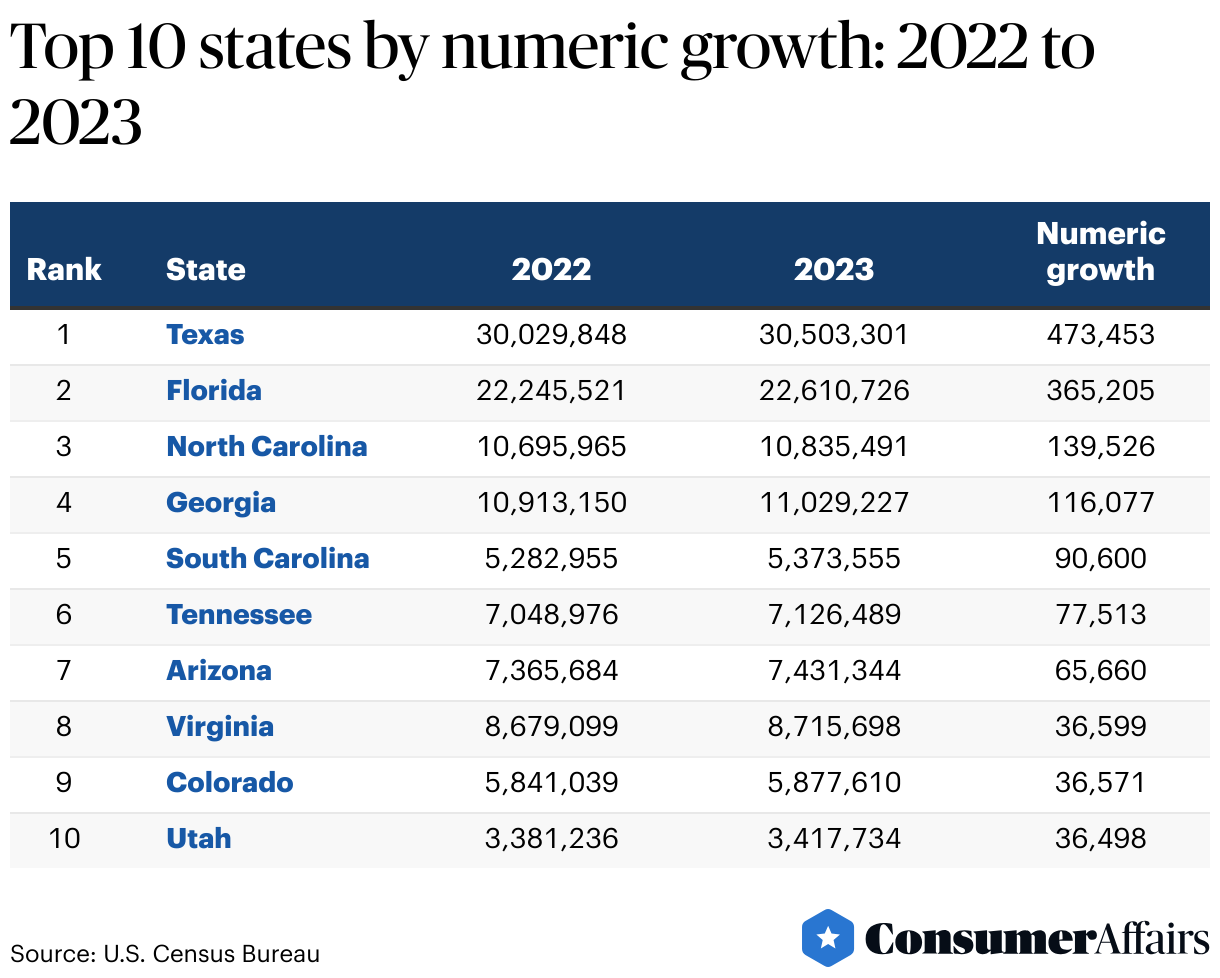
Throughout the year, more than 1.8 million people moved to Southern states.
Vermont, Mississippi and West Virginia, on the other hand, lost the most residents in 2024.
Florida migration by the numbers
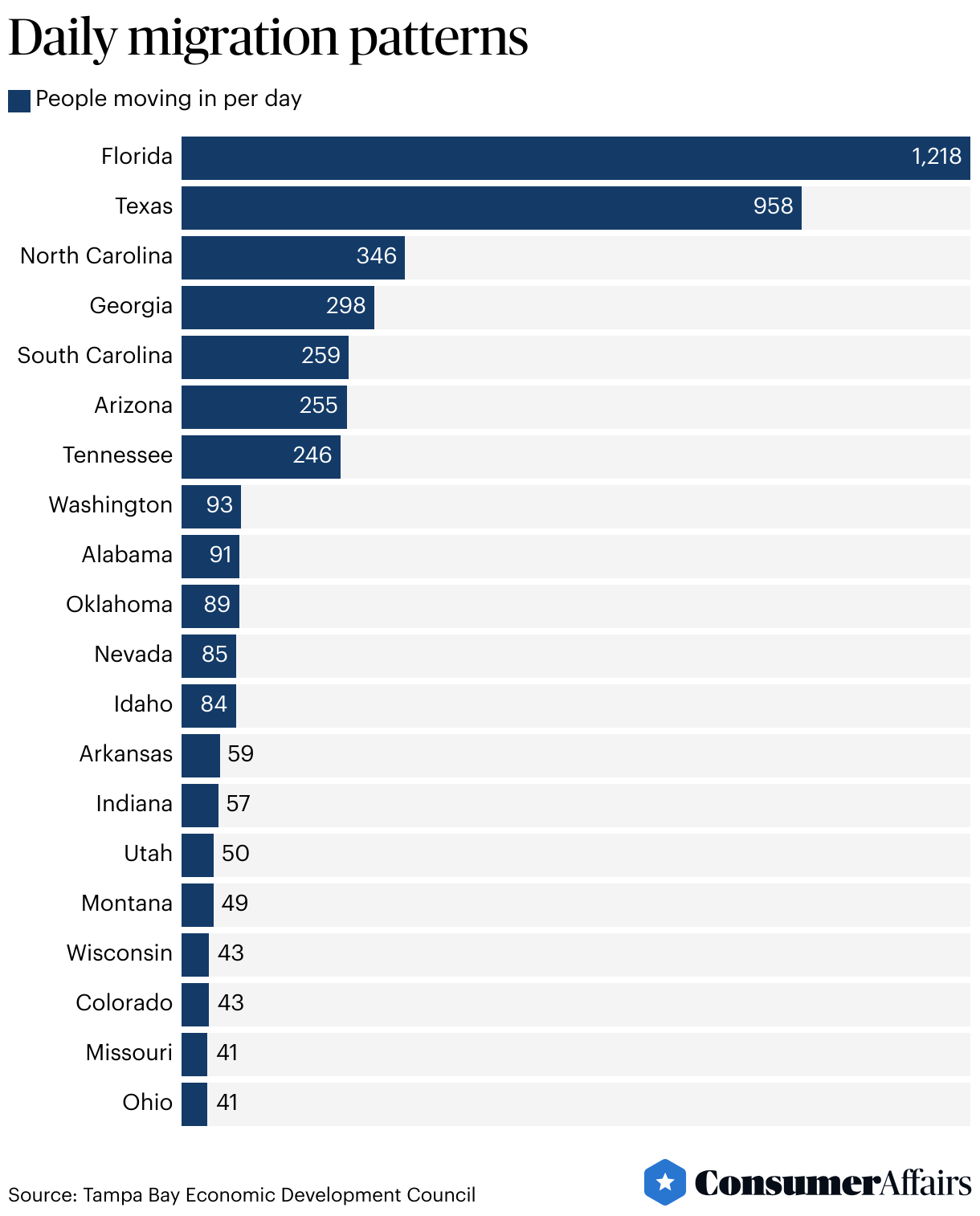
On average, more than 1,200 people moved to Florida per day between July of 2021 and July of 2022, according to the Tampa Bay Economic Development Council. In 2024, Florida had the highest total net migration in the U.S. — ranking first in domestic and international migration. The majority of Florida’s 411,322 new residents were international migrants.
With about 23 million residents, Florida has the third-largest total state population after California and Texas.
Florida outnumbered California in international migration in 2024 — 411,332 to 361,057 new international migrants, respectively.
Florida cost of living
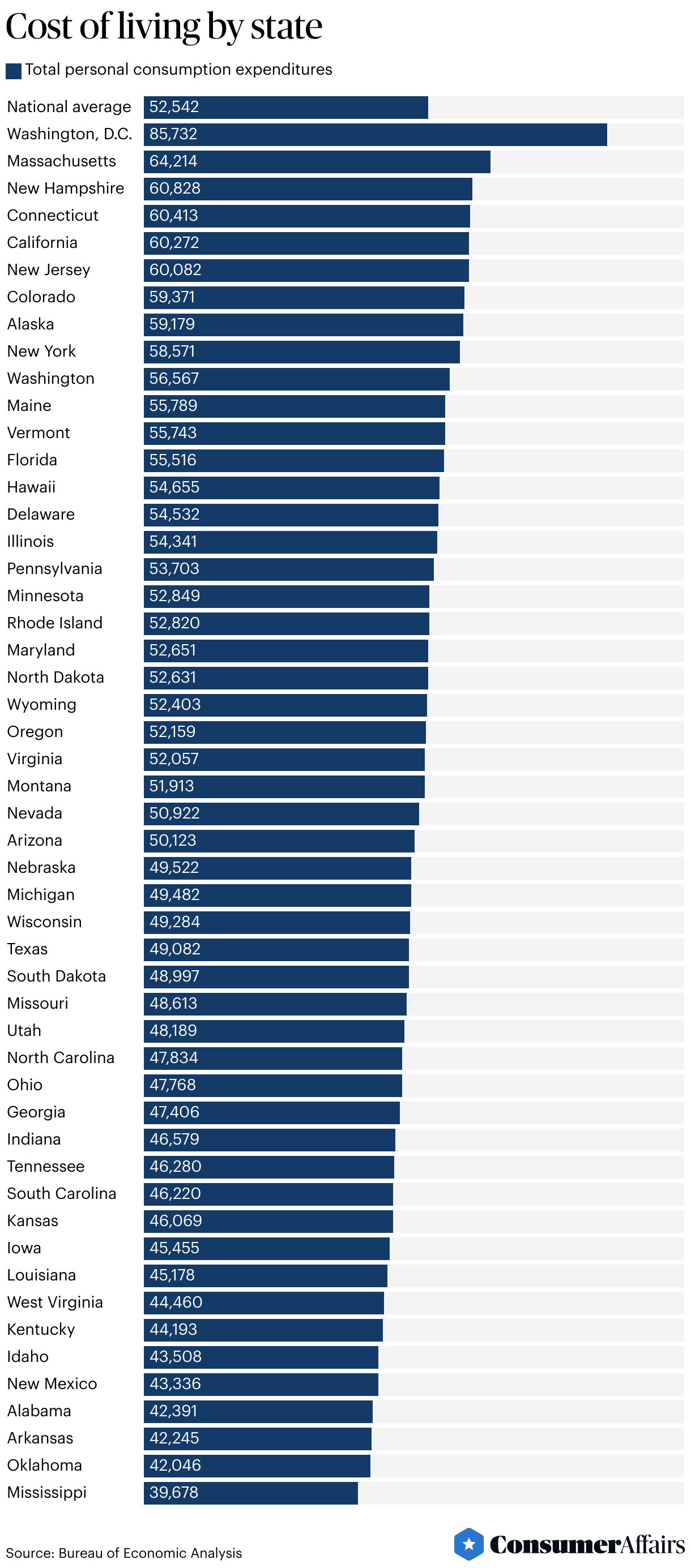
In Florida, as of 2023, the personal consumption expenditure (PCE), which measures how much a typical household spends on goods and services, was $55,516 per year according to the Bureau of Economic Analysis. By 2024, Florida’s PCE grew by 7%, the most of any state. It’s the 13th highest PCE in the country, about $3,000 higher than the national average.
In 2022, Washington, D.C., had the highest PCE in the country, followed by the Northeastern states Massachusetts, New Hampshire and Connecticut. California and New York also tallied higher PCEs than Florida, but Texas ran about $6,400 less per year than Florida.
Florida demographics
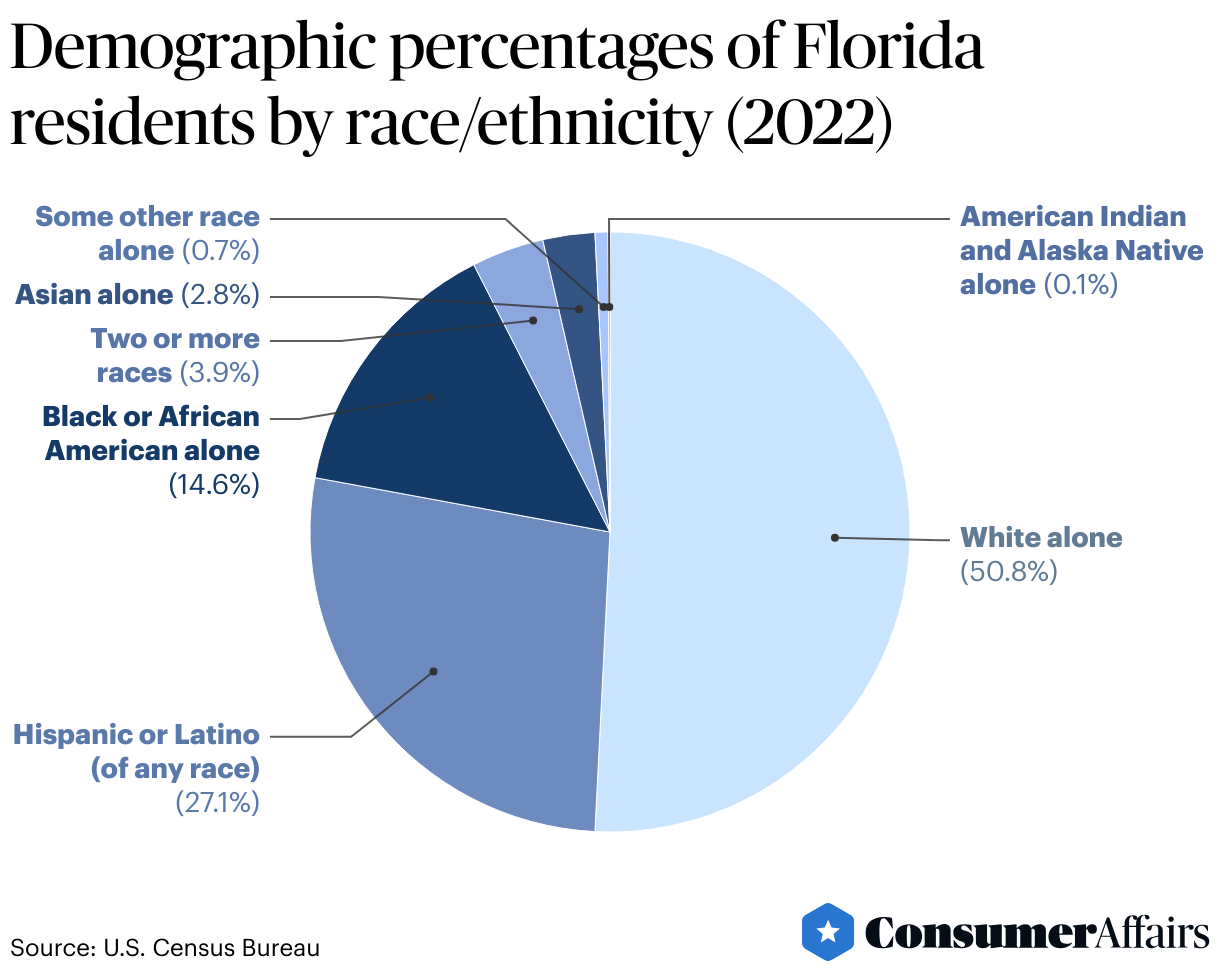
Florida is a diverse state with a large Hispanic population, making up 28.7% of residents as of 2024, the third largest in the nation. Florida is a diverse state — it has a notably large Hispanic population in Miami-Dade County and Osceola County, where more than half of residents are Hispanic. Florida has the third-largest Hispanic population in the nation behind California and Texas, with about 6.7 million Hispanic people in 2024.
Race and ethnicity
As of 2024, around 54.2% of residents are white, 28.7% are Hispanic or Latino, and 17.6% are Black or African American.
13.9% of Florida's population was born in another country.
It is also a popular retirement destination, with 20.9% of its population aged 65 or older, the second largest senior population in the U.S., and the median household income is $69,303.
Income, education and employment
As of 2024, the median household income in Florida is $77,734, about $5,500 less than the national average. Around 34.3% of Floridians have a bachelor’s degree or higher, and the employment rate is 56.8%.
Older population
Florida is also well known as a retirement destination — it had 5 million residents ages 65 or older in 2024, about 21.8% of its total population, making it the second largest senior population in the U.S. behind California.
Most populated cities in Florida
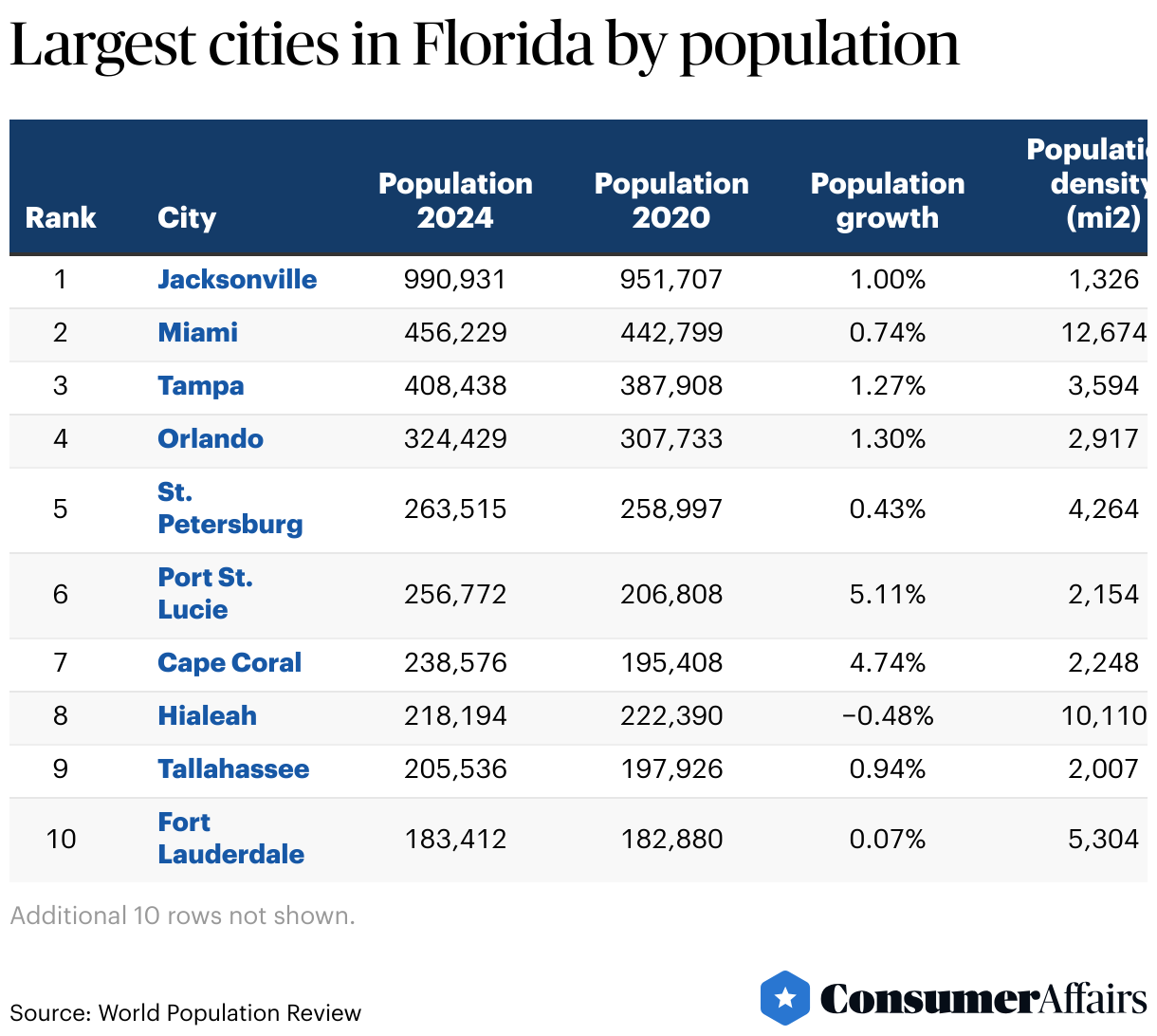
As of 2025, Jacksonville is by far the biggest city in Florida with an estimated population of about 1,024,310 people, according to World Population Review. It’s more than double the size of Miami, Florida’s second most populous city, which has a population of roughly 456,000 people.
Out of the top 20 largest cities in Florida, Port St. Lucie, Cape Coral and Palm Bay saw the largest population growth from 2020 to 2024. In terms of population density, the cities of Miami, Hialeah and Coral Springs have the greatest number of people per square mile.
FAQ
How will climate change affect living in Florida?
Because of climate change, Florida is projected to have 10 to 40-plus additional extreme heat days (temperatures at or above 95 degrees Fahrenheit) each year by 2050, and sea levels are expected to rise 16 to 23 inches by the same year, according to the Florida Climate Center.
What is Florida’s homeowner insurance crisis?
As of 2025, the average Floridian pays more than $5,761 a year for home insurance, which is triple the national average.
In 2022, six insurance companies went under in Florida, causing several more to pull back from the state, or in some cases, leave entirely. National home insurers Farmers Insurance and AAA made headlines last year by also limiting their business in Florida. Experts generally agree that this crisis is due to two major factors: expensive hurricane damage and high levels of insurance fraud.
How many visitors travel to Florida each year?
A total of 143 million visitors came to Florida in 2024, slightly more than 2023. Most domestic visitors traveled to Florida from Georgia, New York or Texas. The top origin country of international visitors was Canada, followed by the United Kingdom and Brazil.
Article sources
ConsumerAffairs writers primarily rely on government data, industry experts and original research from other reputable publications to inform their work. Specific sources for this article include:
- United States Census Bureau, "Why People Move." Accessed Oct. 30, 2025.
- United States Census Bureau, "U.S. Population Trends Return to Pre-Pandemic Norms as More States Gain Population." Accessed Oct. 30, 2025.
- Tampa Bay Economic Development Council, "How many people moved to Florida this past year?" Accessed Oct. 30, 2025.
- U.S. Bureau of Economic Analysis, "Personal Consumption Expenditures by State, 2022." Accessed Oct. 30, 2025.
- United States Census Bureau, "Florida Profile." Accessed Oct. 30, 2025.
- World Population Review, "Florida Cities by Population 2025." Accessed Oct. 30, 2025.
- Florida Climate Center, Office of the State Climatologist, "Climate Change." Accessed Oct. 30, 2025.
- Insurance Information Institute, "Trends and Insights: Addressing Florida’s Property/Casualty Insurance Crisis." Accessed Oct. 30, 2025.
- The Associated Press, "After devastating 2022 hurricane season, AAA not renewing some insurance policies in Florida." Accessed Oct. 30, 2025.
- United States Census Bureau, "ACS 1-Year Comparative Demographic Estimates." Accessed Oct. 30, 2025.
- United States Census Bureau, "American Community Survey." Accessed Oct. 30, 2025.
- Visit Florida, "Research." Accessed Oct. 30, 2025.
- United States Census Bureau, "Hispanic or Latino (of any race) - Total population." Accessed Oct. 30, 2025.
- United States Census Bureau, "United States Migration/Geographic Mobility At A Glance: American Community Survey 1-Year Estimates." Accessed Oct. 30, 2025.
- North American Van Lines, Inc., "Moving Statistics and Trends in Moving." Accessed Oct. 30, 2025.
- United States Census Bureau, "Net International Migration Drives Highest U.S. Population Growth in Decades." Accessed Oct. 30, 2025.
- Newsweek, "Map Shows States With Fastest-Growing Immigrant Populations." Accessed Oct. 30, 2025.
- U.S. Bureau of Economic Analysis, "Gross Domestic Product by State and Personal Income by State, 2nd Quarter 2025 and Personal Consumption Expenditures by State, 2024." Accessed Oct. 30, 2025.
Figures